












Fact-checked: composition and sources on our Facts & evidence page.
- 4.9/5 from over 5,000 reviews
- Lifetime warranty
- Free returns
- Free shipping
PFAS, or "forever chemicals," show up in more kitchen products than most people realize. Here's what they are, where they hide, what the science actually says, and how to shop for cookware that's genuinely PFAS-free.
The essentials in 30 seconds
- PFAS are a family of man-made chemicals that persist in the environment and in the body
- Teflon-type nonstick coatings are made with PTFE, a PFAS, and can degrade when scratched or overheated
- FDA and independent testing bodies monitor PFAS exposure, but full health effects are still being studied
- HexClad's class action settlement shows marketing claims of 'non-toxic' aren't always backed by testing
- Titanium, stainless steel, cast iron and ceramic are naturally PFAS-free cooking surfaces
What PFAS Are, in Plain Terms
PFAS stands for per- and polyfluoroalkyl substances — a family of thousands of man-made chemicals used since the 1940s for their ability to repel water, oil, and stains. They're called forever chemicals because the carbon-fluorine bond at their core barely breaks down, in the environment or in the human body.
PFAS aren't one single compound. PFOA and PTFE (the base of Teflon) are two well-known members of this large family. That's part of the confusion: a product can legally say "PFOA-free" while still containing other PFAS compounds, including PTFE.
Good to know
A scratched nonstick pan doesn't automatically mean you've been poisoned, but a flaking coating is a sign it's time to retire the pan. A solid metal surface with no coating at all removes that question entirely.

Where They Hide in the Kitchen
PFAS show up far beyond the obvious nonstick pan. They're used wherever a surface needs to resist grease, water, or sticking.
- Nonstick and ceramic-coated pans (PTFE-based coatings)
- Parchment paper and some baking mats
- Fast-food wrappers, pizza boxes, and microwave popcorn bags
- Stain-resistant textiles, including some oven mitts and aprons
- Certain food packaging and takeout containers
This is why a single "PFAS-free pan" purchase doesn't eliminate exposure on its own — it's one source among several in a typical kitchen.
What Studies and Health Authorities Actually Say
The FDA and other food safety bodies have studied PFAS migration from food contact materials for years. Separately, FDA testing on plutonium-era cookware and some import cookware has flagged lead and other heavy metals as a related but distinct concern — worth noting because consumers often lump all "toxic cookware" worries together, when the chemistry involved is different.
On the legal side, HexClad agreed to pay into a settlement fund after a class action alleged the brand had marketed certain cookware as "non-toxic" and "PFOA-free" without the testing to back that claim fully. That case didn't prove the pans were dangerous to use as directed — it centered on marketing claims not matching third-party verification. It's a useful reminder: a label saying "non-toxic" is a marketing category, not a certification, unless it's backed by actual lab results.
Research on long-term PFAS exposure (via drinking water, packaging, and other everyday sources) links high blood PFAS levels to effects on cholesterol, immune response, and in some studies, certain cancers. Most of this research concerns cumulative, long-term exposure from multiple sources — not a single meal cooked in a nonstick pan. The honest answer is that scientists are still working out exact thresholds and mechanisms; the chemicals persist and bioaccumulate, and that persistence is the core reason for caution.
« forever chemicals polluting... »
Reddit, r/cookware
The Case of Teflon and Nonstick Coatings
Yes — Teflon is a brand name for PTFE, which is a PFAS compound. A new, undamaged Teflon pan is generally considered low-risk under normal cooking temperatures. The problem shows up over time:
- Scratches from metal utensils or stacking pans let tiny bits of coating flake off into food
- Overheating an empty nonstick pan (well above normal searing temperatures) can release fumes
- Once the coating is damaged, the pan has lost its only protective layer, since the base metal underneath isn't meant to touch food directly
This is the structural issue with any coated pan, PFAS or not: the coating is a layer applied on top of a different base metal, and all coatings degrade with contact, heat, and metal utensils. It's not a flaw unique to one brand — it's how coatings work.
PFAS-Free Alternatives: Stainless Steel, Cast Iron, Titanium, Ceramic
Several cookware materials are naturally free of PFAS because there's no fluoropolymer coating involved at all.
| Material | PFAS-free | Needs seasoning / oil | Scratch behavior | Maintenance |
|---|---|---|---|---|
| Stainless steel | Yes | Yes, to prevent sticking | Can show surface scratches but can stick without enough fat/preheat | Low, dishwasher safe |
| Cast iron | Yes | Yes, requires seasoning | Durable, but needs re-seasoning over time | High, hand wash only |
| Ceramic coating | Usually, but it's still a coating | Helpful early on | Nonstick quality fades with use | Moderate, coating wears over years |
| Titanium (solid surface) | Yes | Yes, preheat + a bit of oil | Can get surface scratches, but nothing flakes into food | Low, no re-seasoning needed |
A titanium cooking surface is not a coating at all — it's a pure grade 1 titanium cooking surface, uncoated, with no PTFE, PFOA, or PFAS anywhere near the cooking surface. The underlying layers (recycled aluminum cores for heat distribution, a stainless steel base for induction) are what make it conductive and lightweight, but the part that touches your food is titanium through and through. It's honest to say this surface isn't magic: titanium does scratch over time with metal utensils, and like stainless steel, it needs a proper preheat and a little fat to release food well. The difference is that those scratches are cosmetic and don't release anything into food — there's no coating to flake off, because there was never a coating to begin with.
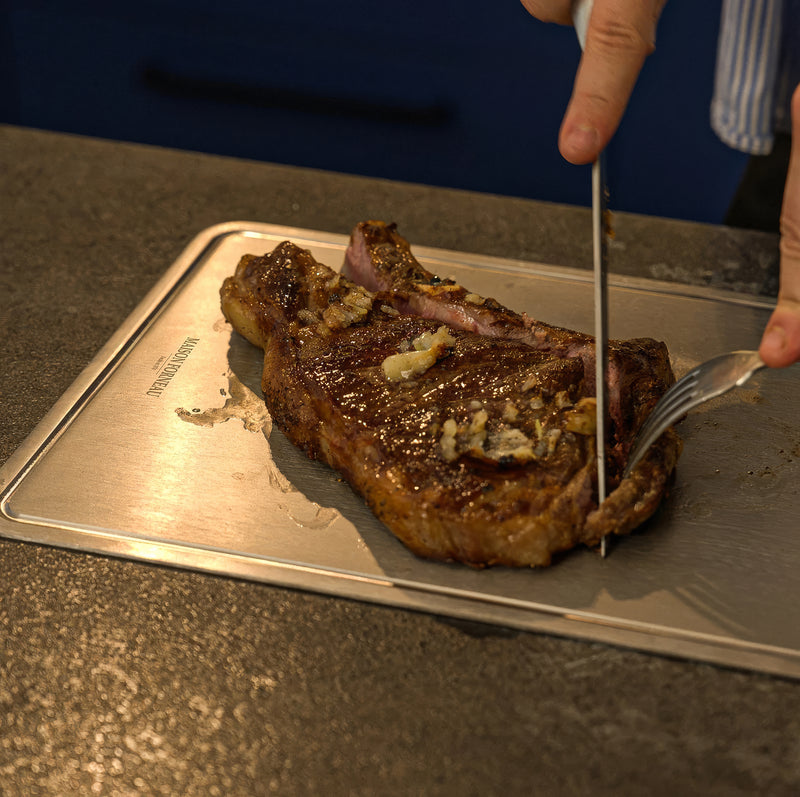
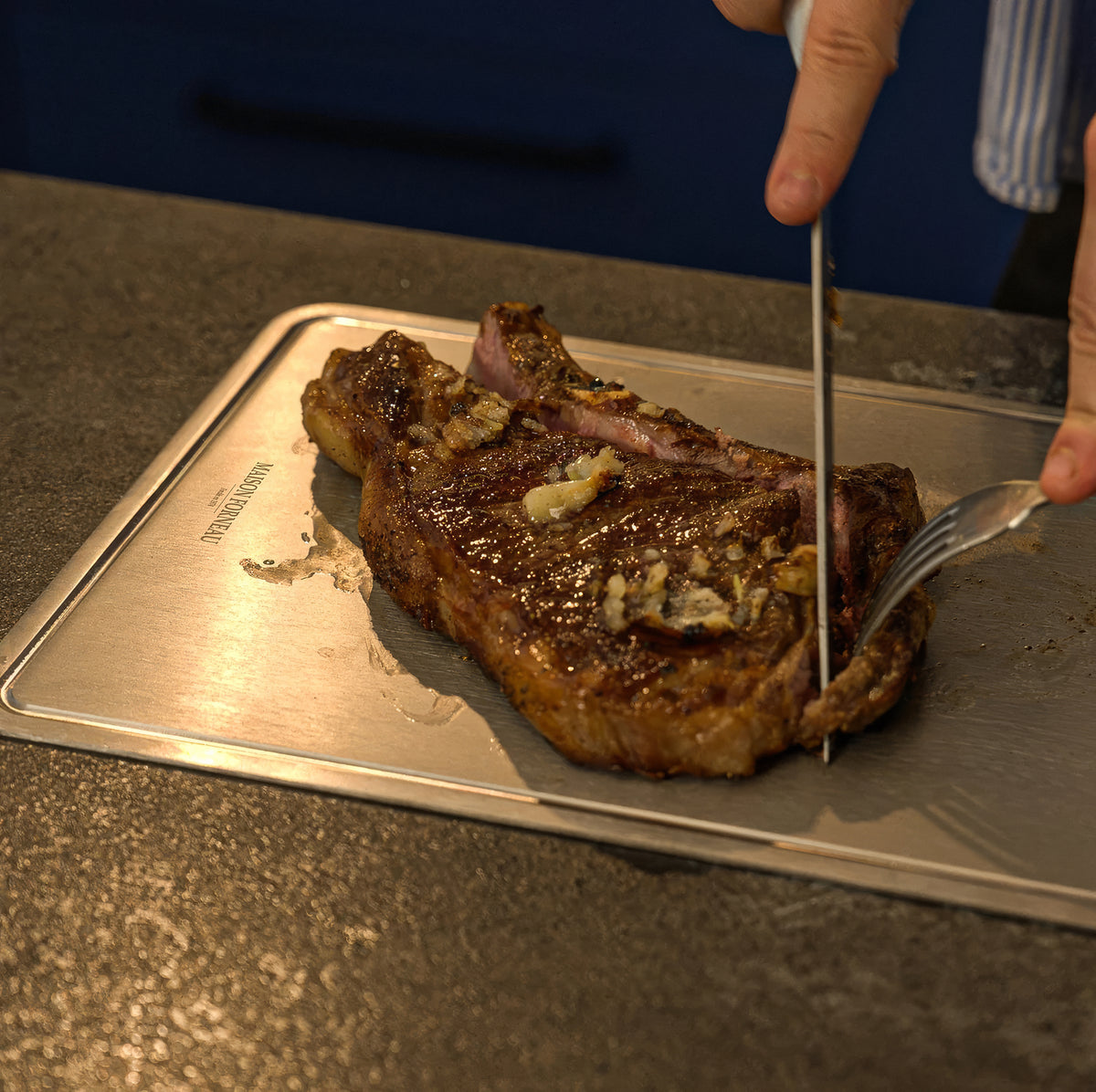
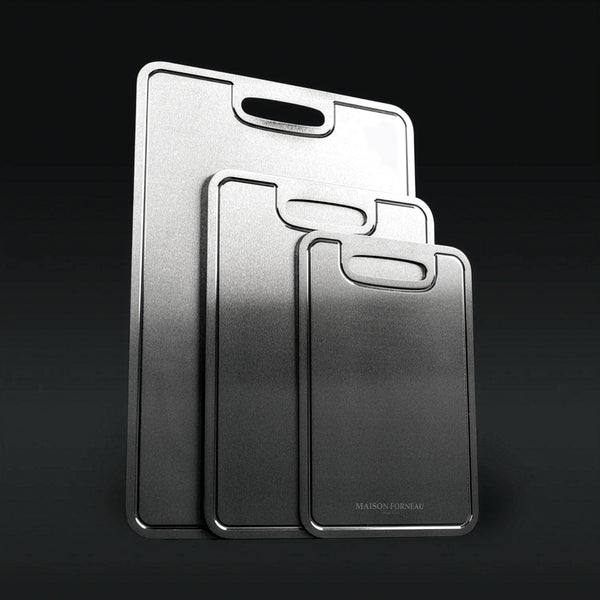
For cutting boards, the same logic applies. Wood and plastic boards can harbor bacteria in knife grooves over years of use. A solid titanium board has no coating to peel and resists grooving, but titanium is harder on knife edges than wood or polyethylene — independent BESS testing on blade wear consistently shows metal surfaces dull a blade faster than softer materials. A quick pass on the honing steel before cutting takes care of that trade-off.
See our breakdown of titanium cookware and health, our guide to PFAS-free pans, and our full comparison of non-toxic cookware options for 2026.
How to Verify a Product Is Actually PFAS-Free
"Non-toxic" on a label means nothing on its own — it's not a regulated or certified term in most markets. Here's what actually tells you something:
- Ask what the cooking surface material is, specifically — not just the marketing name. "Titanium-infused" or "titanium-reinforced" often means a ceramic or nonstick coating with titanium particles added, not a pure grade 1 titanium cooking surface, uncoated.
- Look for third-party lab testing, not just a brand's own claim. The HexClad case is the clearest example of why self-reported claims aren't enough.
- Check if it's a coating or a solid material. Any coating, including ceramic ones marketed as PFAS-free, can wear down and lose its nonstick properties over time — that's a durability issue even when it's not a toxicity one.
- Watch for vague language like "eco-friendly," "green," or "safe" without any explanation of what material is actually in contact with food.
For everyday kitchen hygiene, a solid titanium cutting board avoids both the PFAS question and the microplastic shedding question that comes with plastic boards.
Frequently asked questions
What exactly are PFAS?
PFAS are a large family of man-made chemicals built around a very stable carbon-fluorine bond, used since the 1940s to repel water, oil, and stains. They're called forever chemicals because they resist breaking down in the environment and in the body.
Le Teflon contient-il des PFAS ?
Yes. Teflon is a brand name for PTFE, which is itself a PFAS compound. A new, intact Teflon coating is considered low-risk for normal cooking, but scratches and overheating can release fragments or fumes over time.
How can you tell if a kitchen utensil is PFAS-free?
Check what the actual cooking surface material is — not just the product name. Look for solid materials like stainless steel, cast iron, or a pure grade 1 titanium cooking surface, and be skeptical of unverified "non-toxic" labels without independent lab testing behind them.
Are PFAS dangerous to health?
Research links long-term, cumulative PFAS exposure to effects on cholesterol, immune function, and some cancers, though most of this concerns ongoing exposure from multiple sources — water, packaging, textiles — rather than a single cooking session. Health authorities continue to study exact thresholds, but the persistence of these chemicals in the body is the main reason for caution.
Quels ustensiles de cuisine sont naturellement sans PFAS ?
Stainless steel, cast iron, titanium, and carbon steel are naturally PFAS-free because they don't rely on any fluoropolymer coating. Ceramic-coated pans are often marketed as PFAS-free too, but they're still a coating that wears down with use, unlike an uncoated metal surface.
