

















Fact-checked: composition and sources on our Facts & evidence page.
- 4.9/5 from over 5,000 reviews
- Lifetime warranty
- Ships within 48 h
- Free shipping
Cast iron or pure titanium: we compare weight, seasoning, gas performance and real durability so you can choose without the marketing spin.
The essentials in 30 seconds
- Cast iron needs real seasoning and upkeep; pure titanium needs none of that ritual
- Forneau's cooking surface is solid grade 1 titanium, not a coating that flakes off
- Titanium pans are dramatically lighter than cast iron thanks to recycled aluminum cores
- Both work on gas and induction, but titanium won't rust if left slightly damp
- Titanium scratches with daily use, but those marks are cosmetic and release nothing
Cast iron or pure titanium: we compare weight, seasoning, gas performance and real durability so you can choose without the marketing spin.
The short answer
- Cast iron needs constant seasoning; pure titanium needs no seasoning or special maintenance
- Forneau's cooking surface is grade 1 pure titanium, a solid layer, not a coating that wears down
- Cast iron is considerably heavier than a pan built on recycled aluminum cores with a titanium surface
- Both work on gas, but titanium won't rust and doesn't need an oil film between uses
- Titanium can scratch with daily use, but those scratches are cosmetic and release nothing toxic
Why this fight won't die on cooking forums
Scroll any cookware thread and you'll find the same pattern: someone asks if they should ditch their Teflon, and two camps show up fast. One says cast iron is the only real "buy it for life" option. The other is starting to ask, "what's the deal with these titanium pans?" Both sides agree on one thing: nobody wants another nonstick that's flaking into their eggs.
The short version: it depends on what you actually want from a pan. If you want a surface that needs zero seasoning, won't rust, and feels lighter in your hand, pure titanium wins. If you want a heavy workhorse that can take abuse and you don't mind the maintenance ritual, cast iron is the old answer. Let's get into the details.
Good to know
Pure titanium doesn't need seasoning the way cast iron does, but it does reward a proper preheat and a little fat before you cook. It can scratch like any metal surface, but those marks are cosmetic only.
Good to know
Pure titanium doesn't need seasoning like cast iron, but it does appreciate a proper preheat and a bit of fat before cooking. It will scratch with daily use like any metal, but those marks are purely cosmetic.

Cast iron: seasoning, re-seasoning, and the maintenance reality
Cast iron is porous. Before you can cook on it properly, you have to season it — build up layers of polymerized oil through heat to create a natural nonstick surface. That's not a one-time job. You have to maintain it, especially if the pan sits unused for a while or someone scrubs it with dish soap and a metal pad.
- You can't scrub it with harsh soap or steel wool without stripping the seasoning you worked to build.
- It rusts if you don't dry it completely and re-oil it after every wash.
- It's heavy, which gets old fast if you cook daily or have any wrist or grip issues.
- It's genuinely tough: it shrugs off metal utensils, high heat, and rough handling without complaint.
The payoff is a pan that can last decades if you season it with discipline. But plenty of people report the opposite experience: "cast iron has never seasoned well for me" — and end up with a pan where everything sticks, which was the whole point of avoiding Teflon in the first place.
Pure titanium: no seasoning, no curing required
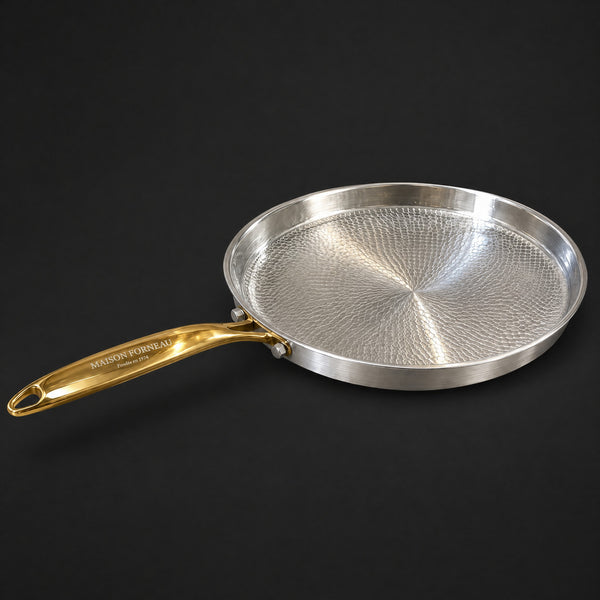
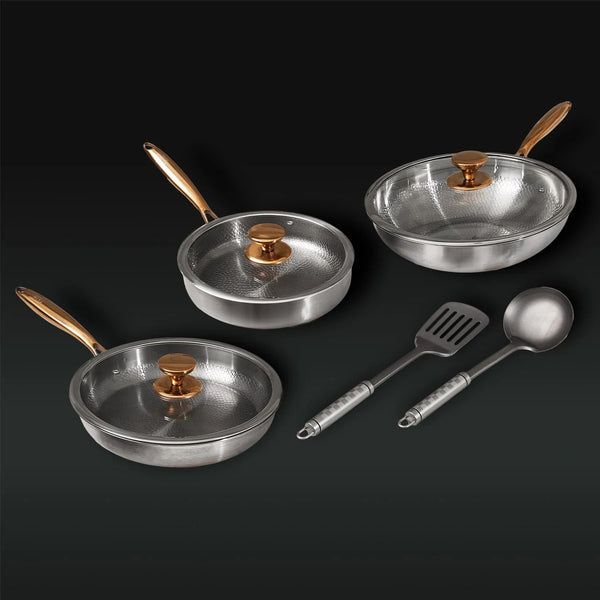
Here's the structural difference. Forneau pans have a cooking surface that is 100% grade 1 pure titanium: a solid layer, not a coating. It's not titanium "applied" over stainless steel — it's the full thickness of the cooking surface itself. Underneath, three recycled aluminum cores spread the heat evenly, and a stainless steel base makes the pan induction-compatible.
This means there's nothing to peel or flake over time, because there's no coating layer to wear through — it's titanium from top to bottom in the cooking zone. And because titanium isn't porous like cast iron, it doesn't need seasoning or curing to function.
- No need to "cure" it or build up oil layers before first use.
- It doesn't rust the way cast iron does if left slightly damp.
- It's free of PFAS, PFOA, and PTFE — because it's not a chemical nonstick, it's solid metal.
- It does scratch with daily use, like any metal, but those marks are cosmetic: they don't affect cooking and don't release anything.
Honesty matters here: raw pure titanium with no coating does ask for a bit of technique. You need to preheat it properly and use some fat, same as you would with stainless steel. It's not instant magic nonstick — it's a surface that rewards you when you use it right.
« Cast Iron sucks and I'm sick of pretending it doesn't »
« Cast Iron sucks and I'm sick of pretending it doesn't »
Weight and daily handling: the biggest practical gap
If there's one point where the decision tips fast, it's weight. Cast iron is dense by design: that gives it thermal mass, but it also wears out your wrist if you're cooking every day or tossing ingredients one-handed.
Forneau pans, thanks to the recycled aluminum cores under the titanium surface, are ultra-lightweight by comparison. They're easier to lift, easier to toss food in, and easier to clean because you're not fighting the pan's own weight every time.
Using it on gas, still the most common setup
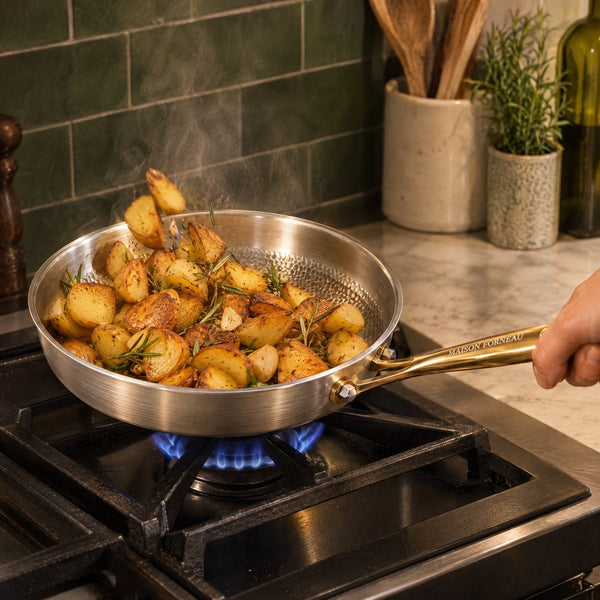
Gas remains the standard in a huge number of home kitchens, and both materials handle direct flame well. Cast iron holds heat exceptionally well, which makes it great for hard searing and long, slow cooks.
Pure titanium with recycled aluminum cores also performs well on gas: the aluminum spreads heat quickly and evenly, avoiding hot spots. The practical difference is that titanium responds faster to temperature changes, while cast iron takes longer to heat up and cool down — which can work for or against a given recipe.
Both are induction-compatible thanks to their base construction, so your stovetop isn't the deciding factor here.
Durability: what actually happens over years of use
Cast iron's durability story is real — it can survive drops, scraping, and decades of heavy use, as long as the seasoning is maintained. But that's the catch: durability depends on an ongoing maintenance habit, not just the metal itself.
A coated nonstick pan, by contrast, has a built-in expiration date. The coating wears down, scratches accumulate, and eventually it flakes — the exact complaint driving so many people to search for alternatives in the first place. A pure titanium surface doesn't have that failure mode, because there's no coating to separate from the metal underneath. It can scratch cosmetically, but it doesn't flake into your food.
| Criteria | Cast iron | Forneau pure titanium |
|---|---|---|
| Maintenance | Seasoning and re-seasoning required | None — just preheat and use fat |
| Weight | Heavy | Ultra-lightweight |
| Scratch resistance | Resists metal utensils well | Scratches, but releases nothing |
| Rust risk | Yes, if not dried and oiled | No |
| PFAS / PFOA / PTFE | Not applicable (raw metal) | Free of PFAS, PFOA, PTFE |
| Induction compatible | Yes | Yes |
| Warranty | Varies by brand | Lifetime warranty |
What cooking forums are actually saying
The verbatims from English-speaking forums show a clear pattern: deep fatigue with nonstick that flakes within a couple of years, real fear around "forever chemicals" and endocrine disruptors, and at the same time genuine skepticism toward expensive alternatives that don't deliver.
- "Everything sticks to it, no matter what I do" — the number one complaint about worn-out nonstick pans.
- "Cast Iron sucks and I'm sick of pretending it doesn't" — the maintenance burden, stated plainly by someone who's lived it.
- "the coating is flaking off in chunks" — the exact failure mode that drives people toward solid metal surfaces instead of coated ones.
- "They just settled a lawsuit for lying to consumers about their pans being pfas and pfoa free" — the trust problem with brands marketing "titanium coatings" that aren't what they claim.
There's real confusion in these threads too: many people talk about a "titanium coating" over stainless steel, assuming it's the same as pure titanium. It isn't. A coating — whether titanium, ceramic, or Teflon-based — sits on top of another metal and wears down over time. Forneau's cooking surface isn't a coating: it's grade 1 pure titanium from top to bottom, with nothing to flake off.
For a deeper technical breakdown of heat conductivity and long-term durability, see the full titanium vs cast iron comparison. And if you're ready to try pure titanium, it's worth reviewing titanium pan cooking techniques before your first use, plus how it performs across induction, gas, and oven.
Frequently asked questions
Is titanium better than cast iron for cooking?
Pure titanium needs no seasoning, weighs less, and won't rust, which makes it more practical day to day. Cast iron holds heat better and handles very high heat well, but it demands ongoing maintenance to avoid rust and sticking.
Do you need to season a titanium pan like cast iron?
No. Pure titanium isn't porous like cast iron, so it doesn't require seasoning or curing. A good preheat and a bit of fat before cooking is all it needs.
Which weighs less, titanium or cast iron?
Titanium weighs considerably less. Forneau pans are ultra-lightweight thanks to recycled aluminum cores under the titanium surface, while cast iron is dense by design.
Which lasts longer, titanium or cast iron?
Both can last a long time with proper care. The difference is that cast iron needs active maintenance to avoid rusting, while a pure titanium surface doesn't wear down like a coating does, even though it can scratch cosmetically.
Does titanium scratch the way cast iron rusts?
They're different problems. Titanium can scratch with use, but those marks are cosmetic and release nothing. Cast iron rusts if it isn't dried and oiled properly after washing.
Does titanium work on gas, the most common setup?
Yes. Titanium with recycled aluminum cores conducts heat evenly on gas, just as it does on induction, without hot spots.
