

















Fact-checked: composition and sources on our Facts & evidence page.
- 4.9/5 from over 5,000 reviews
- Lifetime warranty
- Ships within 48 h
- Free shipping
Yes, titanium pans work on induction — but the reason why, and how they behave on gas, ceramic, or in the oven, is worth understanding before you cook on one.
The essentials in 30 seconds
- A titanium cooking surface works on induction thanks to a stainless steel base layer
- Gas, vitroceramic, and halogen stoves are all compatible without any special adjustment
- Titanium heats evenly once preheated, but demands a real adjustment period
- Oven use is fine; always check the handle material before going past moderate heat
- Lower power than nonstick is the most common beginner mistake on induction
Does a titanium pan work on induction?
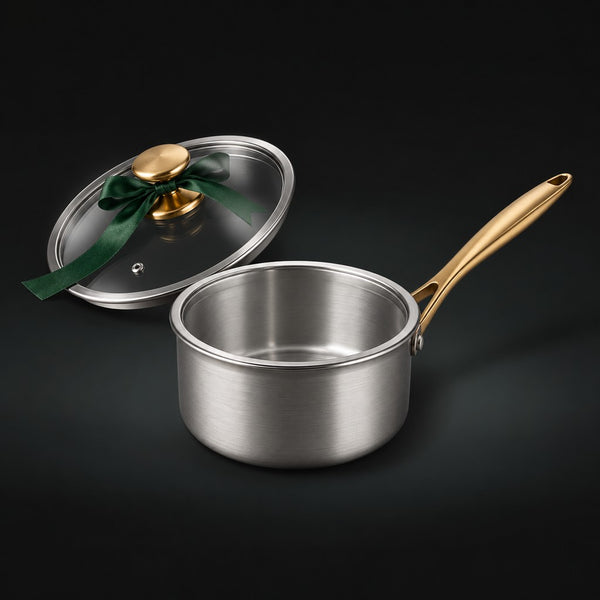
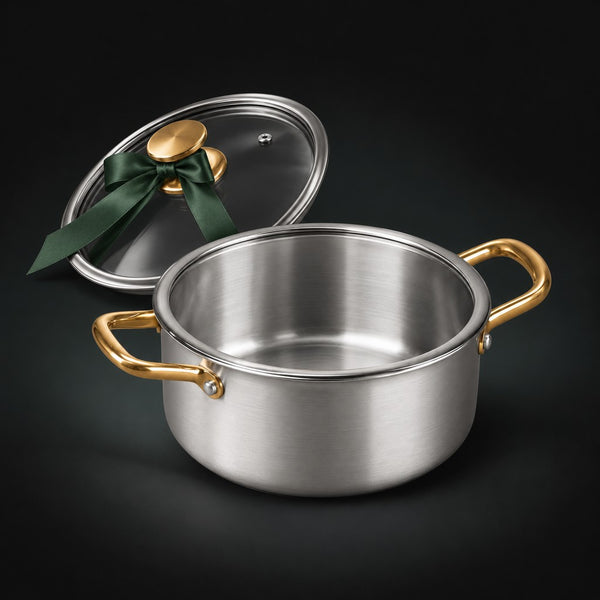
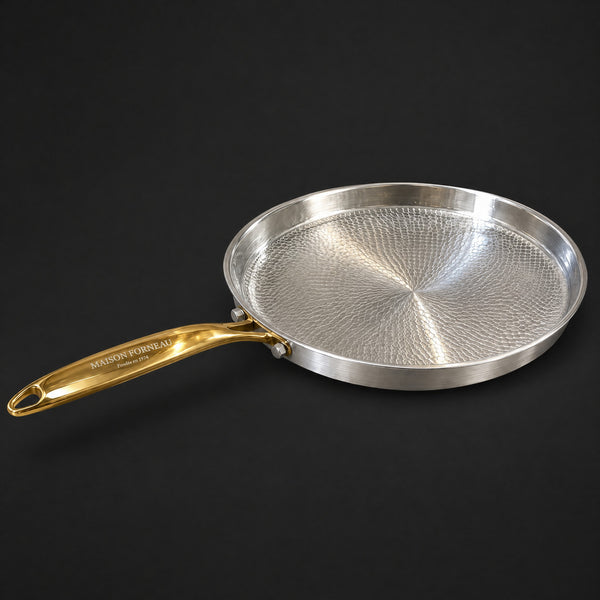
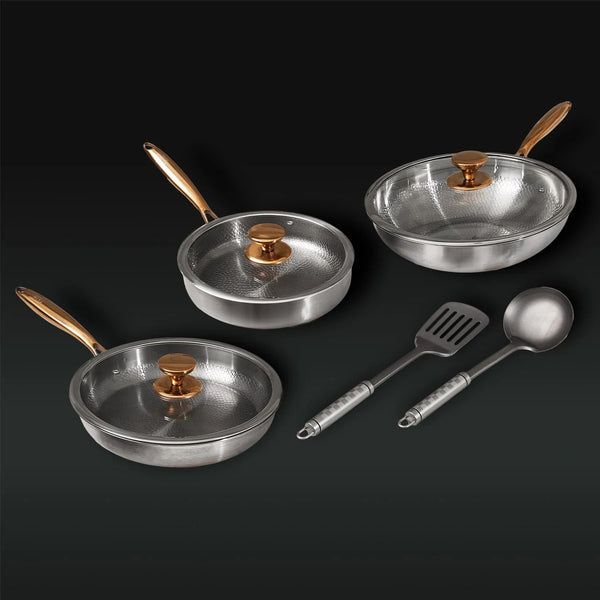
Yes. A Forneau pan has a stainless steel base under the titanium cooking surface, and that's what makes induction compatible. Induction cooktops heat through magnetic steel, not through the titanium itself — titanium alone is not magnetic enough to trigger an induction coil.
- The cooking surface is 100% pure grade 1 titanium — a solid layer, not a coating.
- Underneath, three recycled aluminum cores spread heat across the pan.
- The base is stainless steel, which is what the induction coil actually reacts to.
So when people ask "do titanium pans work on induction," the honest answer is: titanium doesn't make induction work, the steel base does. That's also why a pan marketed as "solid titanium" from handle to base would actually be a problem on induction — pure titanium alone wouldn't heat up at all on these stoves.
Good to know
Titanium itself doesn't conduct heat especially well — it's the aluminum cores underneath that spread it evenly across the cooking surface. Preheating for a minute or two before adding fat is what actually makes the pan perform, on any stove type.

Using it on a gas burner: what changes
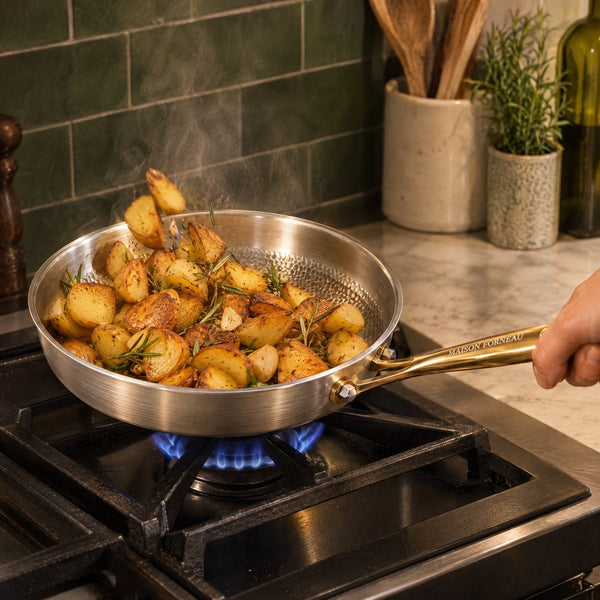
Gas is the most forgiving heat source, but it's also the easiest one to get wrong with titanium. Open flame heats unevenly if you blast it on high from the start, and a cold titanium surface can develop hot spots before the aluminum cores have time to even things out.
- Start on medium flame, not high — give the aluminum cores time to distribute heat.
- Keep the flame within the base diameter; flames licking up the sides heat the handle, not the food.
- Preheat for a minute or two before adding oil or butter — this is the step people skip and then blame the pan.
Once preheated properly, gas and titanium pair well: you get direct visual feedback (flame size) and the pan responds quickly. Our preheating guide covers the exact timing for gas specifically.
Vitroceramic and halogen stovetops
Titanium pans work fine on vitroceramic and halogen surfaces, with one practical note: a flat, flush base matters more here than on gas or induction. Vitroceramic relies on direct contact between the pan base and the glass surface to transfer heat efficiently.
- Make sure the base sits flat — no rocking, no warping.
- Avoid dragging the pan across the glass; lift it instead, to protect the surface.
- Heat distribution still depends on the aluminum cores underneath, same as on any other stove.
There's no PTFE or PFAS in the cooking surface to worry about breaking down at high heat here — one less thing to think about compared to a nonstick coating nearing its limit.
« What's the deal with these titanium pans? »
Can you put a titanium pan in the oven?
Generally yes, the pan body — titanium surface, aluminum cores, steel base — handles oven heat without issue. The detail to check every time is the handle. Wood, certain plastics, or hollow handles have their own heat limits, and that's what actually caps what you can do in the oven, not the cooking surface itself.
- Check your specific handle material before going past moderate oven temperatures.
- A metal handle generally tolerates oven use better than one with wood or synthetic grips.
- Never assume "titanium" on the label means the whole pan — including the handle — is oven-safe.
Heating up and heat distribution
Titanium itself is not a great heat conductor. On its own, it would create uneven hot spots and burned centers. That's exactly why Forneau pans aren't titanium through and through — three recycled aluminum cores sit beneath the cooking surface specifically to spread heat evenly across the base before it reaches the food.
- Titanium's job: a pure, non-reactive cooking surface with nothing to flake or release into food.
- Aluminum's job: heats evenly / heat distribution — moving heat sideways, not just upward.
- Steel's job: compatibility with induction coils.
In practice, this means the pan takes a little longer to come up to temperature than a thin nonstick pan, but once it's there, it holds and spreads heat more consistently. This is the tradeoff worth knowing upfront — see our guide to cooking on an uncoated surface for the three gestures that make the difference.
Common mistakes by stovetop type
| Stovetop | Common mistake | Fix |
|---|---|---|
| Induction | Setting power too high immediately, like with nonstick | Start at medium power, preheat before adding fat |
| Gas | Flame too wide, licking up the sides | Keep flame within the base diameter |
| Vitroceramic | Dragging the pan, warped base contact | Lift instead of sliding, check the base sits flat |
| Oven | Assuming the handle is oven-safe because the pan is "titanium" | Check handle material and its specific limit |
Across every stove type, the single most common mistake is skipping the preheat. Titanium cookware without a coating needs that step; nonstick habits don't transfer directly.
Frequently asked questions
Does a titanium pan work on induction?
Yes. The compatibility comes from the stainless steel base under the titanium cooking surface, not from the titanium itself, which isn't magnetic enough on its own to work with induction coils.
Can you use a titanium pan on a gas stove?
Yes, gas works well with titanium pans. Start on medium flame, keep it within the base diameter, and preheat for a minute or two before adding oil.
Can you put a titanium pan in the oven?
Generally yes for the pan body, but always check the handle material first — wood or certain plastics have their own temperature limits that cap what's actually oven-safe.
Does titanium heat evenly?
Titanium alone doesn't conduct heat especially well. It's the recycled aluminum cores beneath the cooking surface that handle heat distribution and prevent hot spots.
What power level should I use on induction with a titanium pan?
Start lower than you would with nonstick cookware, typically medium power, and let the pan preheat before adding fat. High power from the start is the most common mistake.
