

















Fact-checked: composition and sources on our Facts & evidence page.
- 4.9/5 from over 5,000 reviews
- Lifetime warranty
- Ships within 48 h
- Free shipping
Titanium, stainless steel, or cast iron: here's what actually matters about the cooking surface, and where titanium really stands apart.
The essentials in 30 seconds
- Titanium cooking surface is one solid layer, not a coating that can flake
- Stainless steel and cast iron both demand real technique and ongoing upkeep
- No PFAS, PFOA, or PTFE anywhere in a 100% titanium cooking surface
- Titanium still needs preheating and fat, it is not a magic nonstick shortcut
- Scratches on titanium are cosmetic only and release nothing into food
Titanium, stainless steel, or cast iron: here's what actually matters about the cooking surface, and where titanium really stands apart.
The 30-second version
- A titanium cooking surface is one solid layer, not a coating that can flake off into your food
- Stainless steel is honest and durable, but it demands more fat and more technique to avoid sticking
- Cast iron lasts, but it's heavy and needs ongoing seasoning to stay rust-free
- Pure titanium contains no PFAS, PFOA, or PTFE, and nothing to flake
- Scratches on titanium are purely cosmetic and release nothing
Why everyone is asking this right now
Search "are titanium pans really good" and you'll land in the middle of a much bigger conversation: people trying to ditch nonstick for good. Scroll through any cookware thread and the same complaints keep coming up — coating flaking off in chunks, scratched Teflon pans tossed because nobody's sure if they're still safe to use, and a general sense that "non-toxic" claims from big brands can't always be trusted. One cookware company settled a lawsuit for lying to consumers about their pans being PFAS and PFOA free. That kind of story is exactly why people start looking elsewhere.
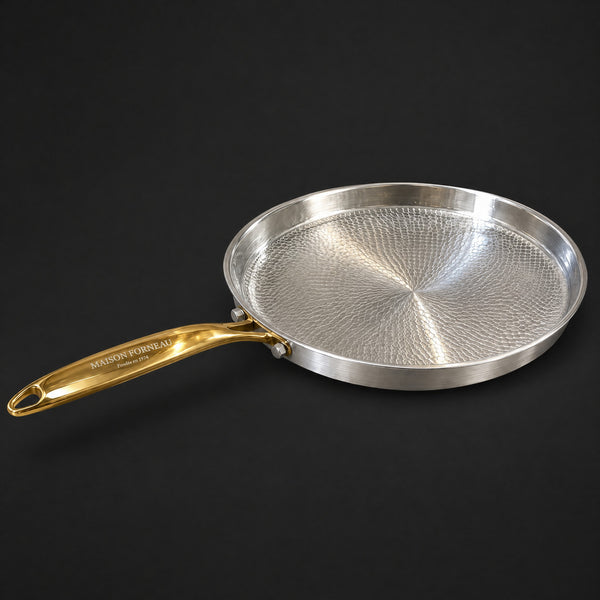
Titanium keeps surfacing in these discussions, but so does confusion. Plenty of pans marketed as "titanium" are really just a nonstick coating reinforced with titanium particles — still a coating, still something that wears down and eventually flakes. Forneau's pans are designed in France, and their cooking surface is a pure grade 1 titanium cooking surface, uncoated — a solid layer, not a coating. That's the distinction that actually matters when you're trying to figure out if titanium is really good, or just another marketing word slapped on the box.
Good to know
Titanium takes a bit of a learning curve at first: preheat properly and use enough fat, and food releases cleanly. Skip that step and, like stainless steel, things will stick.
Good to know
Titanium needs preheating and a little fat before food goes in, just like stainless steel. In exchange, there's no coating to flake, no PFAS, and scratches stay purely cosmetic.

Titanium vs. stainless steel: what actually changes in the kitchen
Stainless steel is the pan people trust because "at least I know what's in it." It's durable, it survives aggressive scrubbing, and plenty of cooks swear by it as a daily driver. The catch is real: without the right preheat and enough oil, that golden sear sticks hard to the pan. Threads are full of people asking some version of "why would I ever use my stainless steel over my cast iron pan?" because the learning curve is steep.
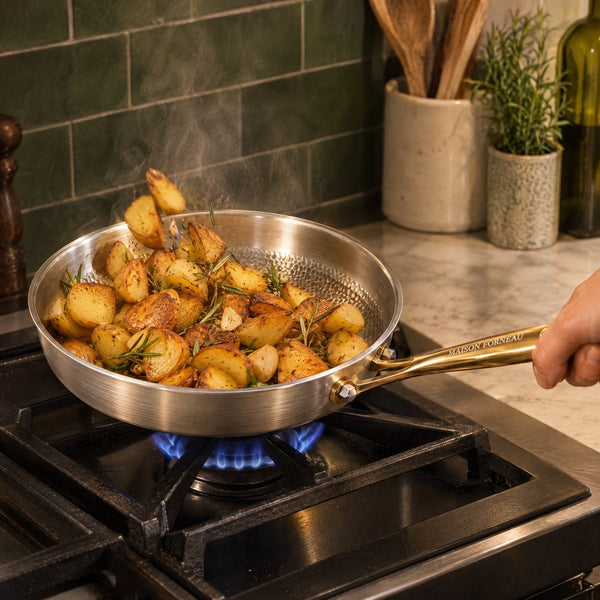
Titanium behaves a lot like stainless steel at the stove — it still needs preheating and fat, it's not a shortcut around technique. The difference is what's missing: no coating to wear down, no seasoning to maintain, and a cooking surface that can't flake because there's nothing layered on top of it to flake. Titanium is also noticeably lighter than stainless steel at a comparable size, which matters for anyone cooking daily.
- Stainless steel: heavier, real learning curve, very durable long-term
- Titanium (pure grade 1 cooking surface): ultra-light, nothing to flake, same preheat-and-fat routine as stainless
Titanium vs. cast iron: the "buy it for life" myth
Cast iron has near-mythical status in BIFL circles: cheap, tough, and with the right seasoning it genuinely can last for decades. But the complaints are just as common as the praise. "Cast Iron sucks and I'm sick of pretending it doesn't" sums up a whole category of posts — seasoning that flakes off, pans that never season well no matter what's tried, kitchens that smell like burned oil for a month after a re-season attempt. Cast iron is also heavy, and it rusts the moment it's left wet.
A titanium cooking surface skips that entire maintenance cycle. There's no seasoning to build up and no patina to protect — it's inert, it doesn't rust, and it goes straight in the dishwasher. If what people actually want from "buy it for life" is a pan that survives a decade or more without babysitting, titanium delivers that without the weight or the rust anxiety that comes with cast iron.
« They just settled a lawsuit for lying to consumers about their pans being pfas and pfoa free »
Reddit, cookware discussion
« They just settled a lawsuit for lying to consumers about their pans being pfas and pfoa free »
Reddit, cookware discussion
Coatings, PFAS, Teflon: what pure titanium avoids
The real reason most people start researching titanium in the first place isn't performance — it's fear of PFAS, PFOA, and PTFE in conventional nonstick coatings. That fear is backed by real stories: scratched Teflon pans people aren't sure are still safe to use, coating that flakes off in chunks, and forever chemicals that don't break down in the body or the environment. People aren't being paranoid when they say they're "trying to lower our exposure."
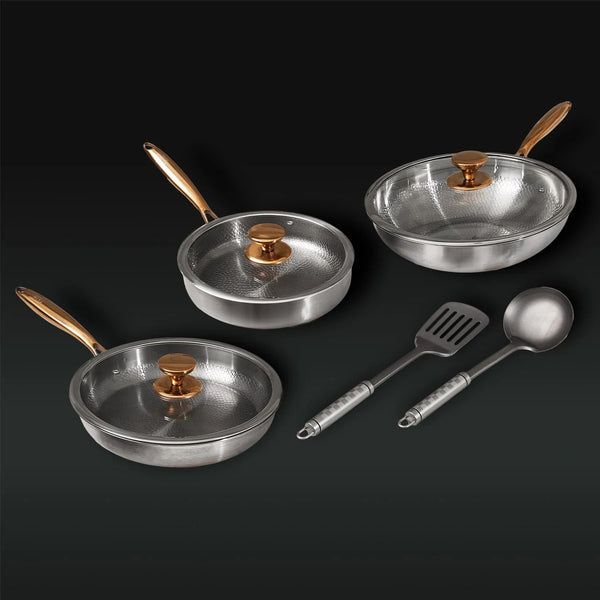
Forneau's cooking surface is a pure grade 1 titanium cooking surface, uncoated — no coating, no PFAS, no PTFE, no Teflon, period. Underneath, three layers of recycled aluminum handle heat distribution, and a stainless steel base makes the pan induction-compatible. One honest caveat: titanium scratches, like any metal does, but those scratches stay purely cosmetic and release nothing into food, since there's no coating underneath to expose.
| Material | Coating? | PFAS risk | Weight | Upkeep |
|---|---|---|---|---|
| Titanium (pure grade 1 cooking surface) | No, solid surface | None | Ultra-light | Preheat + fat |
| Stainless steel | No | None | Heavier | Preheat + fat, real learning curve |
| Cast iron | No (seasoning) | None | Very heavy | Seasoning, rust risk |
| Nonstick coating | Yes | Often PFAS/PTFE | Light | Gentle care, limited lifespan |
Induction compatibility and the first few cooks
Induction is increasingly the default in modern kitchens, and this is where the layered build under the titanium surface earns its keep: a stainless steel base underneath the aluminum cores makes the pan fully induction-compatible, and it works just as well on gas or in the oven.
Unlike cast iron, there's no seasoning ritual and no patina to build up on titanium. What it does need is a proper preheat before the fat goes in, and enough oil or butter once it's hot. Get that part right and the food release holds up cook after cook, with no coating involved at all.
What it actually costs, and what you're paying for
Shop around for a "titanium pan" and the price range is all over the place, for a reason: many brands marketing "titanium" cookware are really selling a reinforced nonstick coating with titanium particles mixed in — still a coating that wears down and eventually flakes, no matter how "scratch-resistant" the ad copy claims. Composition isn't always made transparent, so it's worth checking exactly what the cooking surface is actually made of before assuming "titanium" means a solid titanium cooking surface.
- Titanium-branded coated pans: titanium particles reinforcing a nonstick layer, still subject to flaking over time
- Generic "titanium" cookware: composition of the actual cooking surface often unclear from the listing
- Forneau: pure grade 1 titanium cooking surface, one solid layer, no coating involved
The real difference isn't the price tag — it's what you're actually getting: a coating that will eventually wear down and flake, or a solid titanium cooking surface that was never going to flake in the first place.
What real experience actually shows
A pattern repeats across cookware forums: people burned by a failing nonstick pan switch to looking for something "without PTFE that's actually easy to cook with," and end up comparing stainless steel, cast iron, and titanium. The trigger is almost always the same — fear of forever chemicals, plus the direct experience of watching a coating flake off in chunks.
The conclusion people land on, again and again: a pan that's genuinely built to last isn't a coated one, no matter how "scratch-resistant" it's marketed as. Stainless steel and cast iron are honest, proven options — but both demand either real elbow grease when cleaning or constant upkeep against rust. A pure grade 1 titanium cooking surface combines the durability of those classics with far less weight, and without any coating to worry about.
Frequently asked questions
Is titanium better than stainless steel for frying?
Both need a proper preheat and enough fat to avoid sticking. Titanium is noticeably lighter than stainless steel for similar durability, and its solid cooking surface has no coating that could ever flake.
Does a titanium pan work on induction?
Yes. Underneath the titanium cooking surface, a stainless steel base makes the pan fully induction-compatible, and it performs the same way on gas or in the oven.
Do you need to season a titanium pan?
No, there's no seasoning ritual like with cast iron. What matters instead is preheating the pan properly before cooking and using a bit of fat.
Does titanium develop a patina like cast iron?
No, titanium doesn't build up a patina. The surface stays as it is, though it can pick up scratches over time — these are purely cosmetic and release nothing into food.
Is a titanium cooking surface actually PFAS-free?
Yes, when it's a genuine pure titanium cooking surface rather than a coating reinforced with titanium particles. A pure grade 1 titanium cooking surface has no PFAS, PFOA, or PTFE anywhere in it.
Why do some "titanium" pans still flake like nonstick pans?
Because many of them aren't a solid titanium cooking surface at all — they're a standard nonstick coating with titanium particles added for marketing and marginal durability. That's still a coating, and coatings wear down and eventually flake.
