




















Fact-checked: composition and sources on our Facts & evidence page.
- 4.9/5 from over 5,000 reviews
- Lifetime warranty
- Ships within 48 h
- Free shipping
Titanium promises cooking without a coating that chips off and without PFAS. We look at what's really under the surface, and how it holds up against stainless steel and cast iron day to day.
The 30-second takeaway
- The cooking surface is 100% pure grade 1 titanium, with no coating that can chip off
- No PFAS, PFOA, or PTFE: bare titanium removes the risk of forever chemicals
- Scratches stay cosmetic and release nothing, unlike a nonstick coating
- Three aluminum cores spread the heat, and a stainless steel base makes the pan induction-compatible
- Preheating and a bit of fat are still needed — it's the only trick worth knowing
Titanium promises cooking without a coating that chips off and without PFAS. We look at what's really under the surface, and how it holds up against stainless steel and cast iron day to day.
Titanium pan: what's really in the material
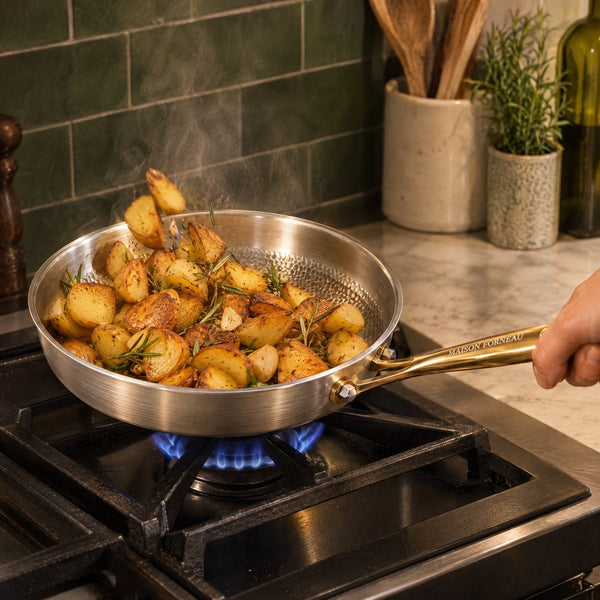
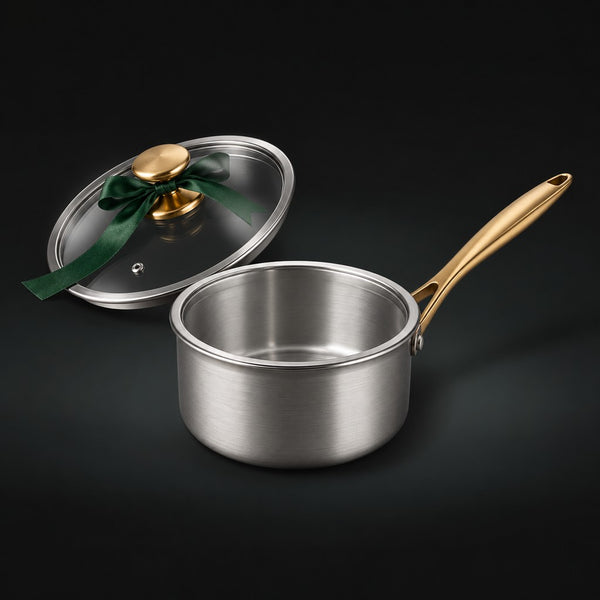
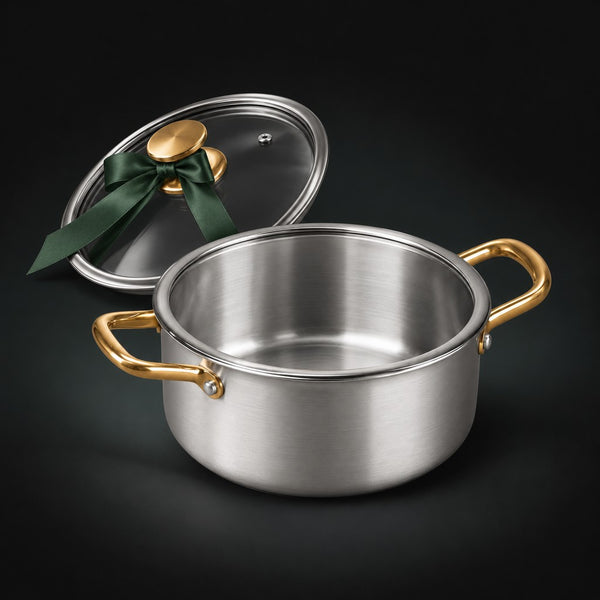
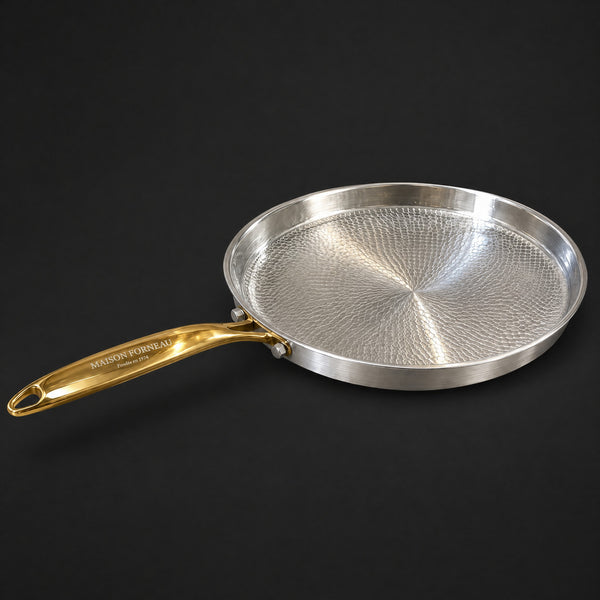
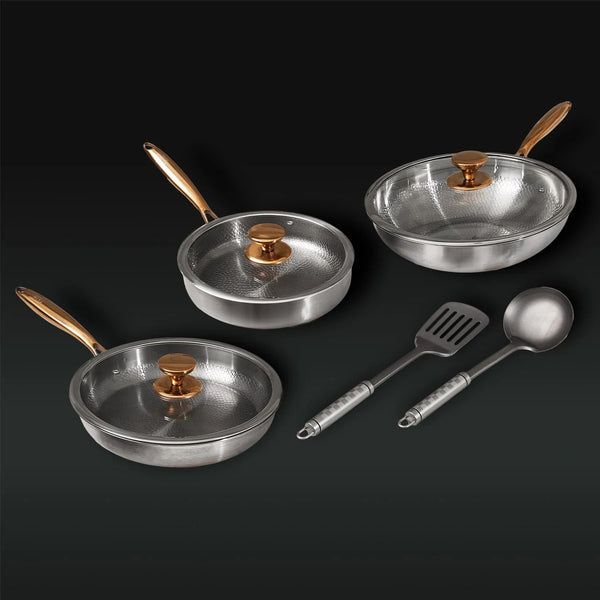
A genuine titanium pan has a cooking surface that's 100% pure grade 1 titanium. It's not a coating that eventually gives out after years of cooking and dishwashing — it's a solid layer of metal, from day one to the last meal. Underneath that surface, three recycled aluminum cores spread the heat, and a stainless steel base makes the pan induction-compatible.
The handle and base aren't titanium, and that's normal: it's the cooking surface — the part that touches the food — that matters. That's what answers the question people keep asking on forums: "does a titanium pan really last longer?" Yes, simply because there's nothing to chip off in the first place.
The trap of the word "titanium" on the box
Many pans sold as "titanium" actually have a nonstick coating reinforced with titanium particles. That's still a coating: it wears down, eventually loses its slickness, and can chip just like any ordinary nonstick surface. At Forneau, the surface itself is pure grade 1 titanium, not a layer applied on top of something else.
Good to know
Titanium does scratch, and that's normal and purely cosmetic: nothing leaches into your food. There's no seasoning to do like with cast iron, though — just preheat and add a bit of fat before cooking.

Titanium, stainless steel, cast iron: what changes day to day
All three are surfaces without a classic nonstick coating, so none of them carry PFAS or PTFE. The real differences come down to weight, upkeep, and what happens to the surface over time.
| Material | Weight | Care | Strength / limitation |
|---|---|---|---|
| Stainless steel | medium to heavy | easy, but sticks if underheated | familiar and sturdy, but "things stick like crazy" according to plenty of reviews |
| Cast iron | heavy | seasoning to maintain, prone to rust | great for long, slow cooks, but the weight puts a lot of people off |
| Pure grade 1 titanium (Forneau) | ultra-light | preheat + a bit of fat, no seasoning needed | 100% titanium surface, no PFAS, lifetime warranty |
On forums, you'll often read something like "we ditched every nonstick pan for stainless steel, no regrets." Stainless steel is indeed clean and coating-free, but it demands real attention to avoid sticking, and it's heavy. Pure grade 1 titanium delivers the same bare-metal promise, but lighter, without the weight problem that leaves plenty of cast iron pans sitting unused in a cupboard.
Do you need to season a titanium pan?
No. Seasoning is a step specific to cast iron and carbon steel: a thin layer of fat is baked into the metal's pores to create natural nonstick properties. Titanium doesn't have that porosity, so there's no seasoning to do, and no patina to maintain over time.
What titanium does require is proper preheating and a bit of fat before you start cooking. That's the "small trick to learn" that people who use uncoated pans often mention: put food in too early, while the pan is still cold, and it will stick, guaranteed. Once the pan is hot, cooking goes smoothly.
And what about scratches — is that a problem?
Titanium does scratch, there's no point denying it. The difference with a nonstick coating is that these scratches stay purely cosmetic: nothing comes off into your plate. It's the exact opposite of a classic coating, where, as many cooking forums point out, "a single scratch on a nonstick pan can release toxins."
"Does a titanium pan really last longer?"
cooking forum, France
Induction, gas, oven: compatibility in practice
A pure grade 1 titanium pan with a stainless steel base works on every heat source:
- Induction: yes, thanks to the stainless steel base
- Gas and electric stovetops: yes
- Oven: yes, as long as the handle isn't made of fragile plastic
That's a real advantage for dishes that start on the stovetop and finish in the oven, like a seared piece of meat finished off with gentle heat.
How much does a good titanium pan cost
A pure grade 1 titanium pan costs more upfront than an entry-level nonstick pan. But a $30 or $40 pan whose coating gives out after two or three years has to be replaced, again and again. That's exactly the problem plenty of shoppers describe: "I spent money on a pan I could barely use for long."
The right way to compare isn't the upfront price alone — it's the cost over the pan's actual lifespan. A pan with a lifetime warranty, one you never have to replace, completely changes that math.
Care and dishwasher use
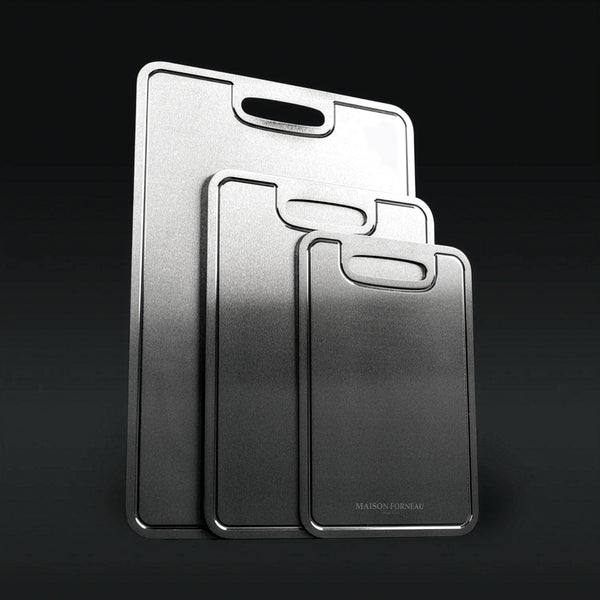
A titanium pan is hand-washed, like any high-end uncoated pan. What does go in the dishwasher without limit at Forneau is the pure titanium cutting board.
One honest note on knives: titanium is softer than a blade's steel, so a titanium board won't chip the edge. But like any metal surface, it dulls a blade a bit faster than wood does — independent tests confirm this. A quick pass on a honing rod before cutting is enough to make up for it, and in exchange, there are no grooves where bacteria can hide, and no microplastics released the way a plastic board does.
Our verdict: is a titanium pan actually good?
Yes, as long as you check what's really behind the word "titanium." Many pans carrying that name actually have a nonstick coating reinforced with titanium, which wears down and eventually chips just like any other nonstick surface. Forneau is different: the cooking surface is 100% pure grade 1 titanium, a solid layer, with no PFAS, no PFOA, no PTFE.
Compared to stainless steel and cast iron, both solid coating-free options, pure grade 1 titanium adds lightness on top, without giving up sturdiness. The only trade-off worth accepting is preheating and adding a bit of fat, exactly like with a well-used stainless steel pan.
To go further: our comparison of titanium vs stainless steel, the 2026 titanium pan buying guide, and our dedicated page on the titanium sauté pan.
Frequently asked questions
Is a titanium pan actually good?
Yes, as long as the cooking surface is pure grade 1 titanium and not a coating reinforced with titanium particles. Without a coating, nothing can chip off, and there's no PFAS or PFOA. Scratches stay cosmetic and release nothing.
Which is better, stainless steel or a titanium pan?
Both are coating-free and durable. Pure grade 1 titanium is noticeably lighter, just as sturdy, and comes with a lifetime warranty. Stainless steel remains a safe bet but is heavier and requires careful preheating to avoid sticking.
How much does a good titanium pan cost?
The upfront price is higher than an entry-level nonstick pan, but there's no replacement to budget for after two or three years the way there is with a coating that chips off. With a lifetime warranty, the real cost over time is lower.
Do you need to season a titanium pan?
No, seasoning is for cast iron and carbon steel. Titanium doesn't need that step, but you should preheat it and add a bit of fat before cooking.
Can a titanium pan go in the dishwasher?
The pan should be hand-washed. What does go in the dishwasher without limit at Forneau is the pure titanium cutting board.
Are scratches on a titanium pan dangerous?
No, they're purely cosmetic. Unlike a nonstick coating, where a scratch can release particles, pure titanium releases nothing into your food.
