




















Fact-checked: composition and sources on our Facts & evidence page.
- 4.9/5 from over 5,000 reviews
- Lifetime warranty
- Ships within 48 h
- Free shipping
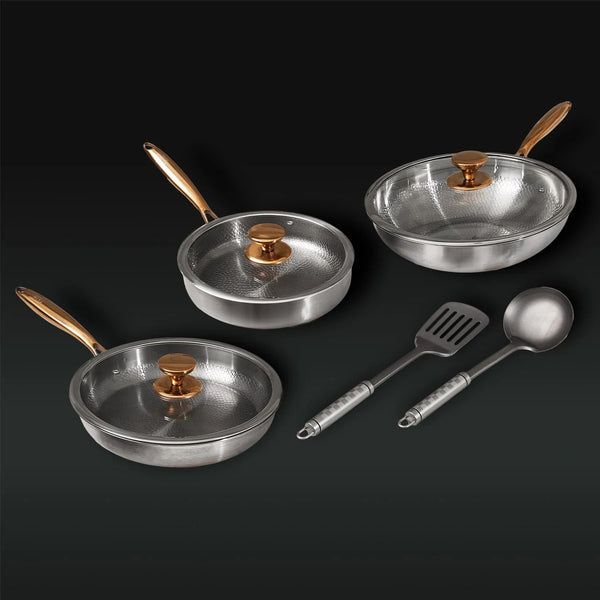
A side-by-side look at what's actually inside a "titanium" cookware set from Forneau, Our Place, and Woll, so you buy pieces you'll use for a decade instead of a marketing bundle.
The essentials in 30 seconds
- Forneau's cooking surface is a full layer of pure grade 1 titanium, not a coating
- Our Place and Woll rely on ceramic or reinforced non-stick coatings that wear down over time
- A useful cookware set is usually 4 to 6 pieces, not 10 pieces you rarely touch
- Titanium scratches cosmetically but releases nothing, unlike flaking non-stick coatings
- Price per piece matters more than headcount when you compare what actually lasts
What actually separates one cookware set from another
Most cookware comparisons focus on the wrong thing: how many pieces come in the box. The real question is what's on the cooking surface, because that's what touches your food and what wears out first. Some brands use the word "titanium" loosely, others put a full layer of it where it matters.
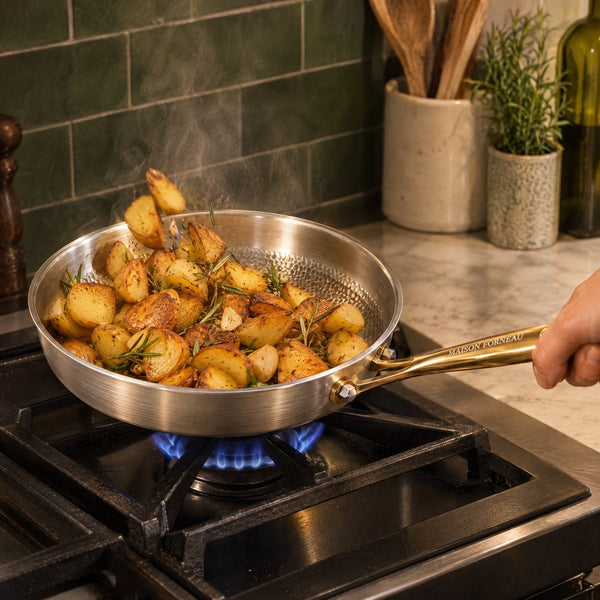
Forneau's cooking surface is 100% pure grade 1 titanium — a full layer, not a coating. Our Place sells ceramic-coated aluminum. Woll uses a reinforced non-stick coating with titanium particles mixed in, which is still a coating that can flake. These are three different categories pretending to be the same thing.
Good to know
Titanium scratches — it's not indestructible, and scratches are cosmetic, not a safety issue. Preheat the pan and use a little fat, and the rest takes care of itself.

Material composition: pure titanium, ceramic, aluminum, coating
This is where the "titanium cookware" label gets confusing, and where most buyers get misled. Here's what's actually under the surface in each case.
- Forneau: cooking surface is 100% pure grade 1 titanium, a full layer with nothing to chip or flake. Underneath, three layers of recycled aluminum spread heat evenly, and a stainless steel base makes it induction-compatible. No PFAS, no PFOA, no PTFE, because there's no coating to begin with.
- Our Place: the Always Pan and similar pieces use a ceramic non-stick coating over cast aluminum. Ceramic looks more convenient on day one — eggs glide, cleanup is fast — but ceramic coatings lose their non-stick properties within one to two years of regular use. It's not pure titanium; it's a coating with a titanium-adjacent marketing story at best, ceramic at its core.
- Woll: markets "titanium" pans, but the surface is a reinforced non-stick coating with titanium particles embedded for added durability. It's a better non-stick coating than most, but it's still a coating. Coatings wear down, staining sets in, and the non-stick properties fade, no matter how reinforced they are.
Only one of these three has a cooking surface in titanium pur grade 1, sans revêtement, top to bottom. The other two are coatings over a base metal, which means they are built to eventually need replacing.
The real number of pieces you'll actually use
Cookware sets love to advertise 10, 12, even 14 pieces. In practice, most people cook with the same 4 to 6 pieces for years and let the rest sit in a cabinet. Before comparing sets, it helps to ask what you'll actually put on the stove every week.
- One frying pan for eggs, searing, and quick sautés
- One sauté pan or saucier for sauces and anything that needs a lid
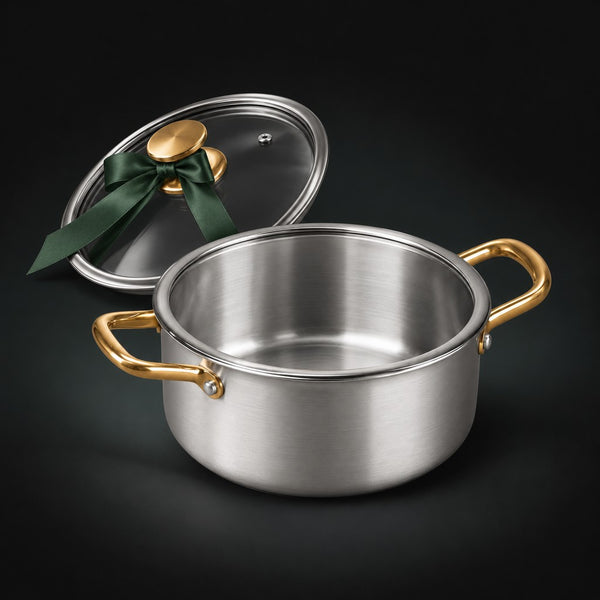
- One stockpot or casserole for soups, pasta, and batch cooking
- One wok if you cook stir-fry regularly
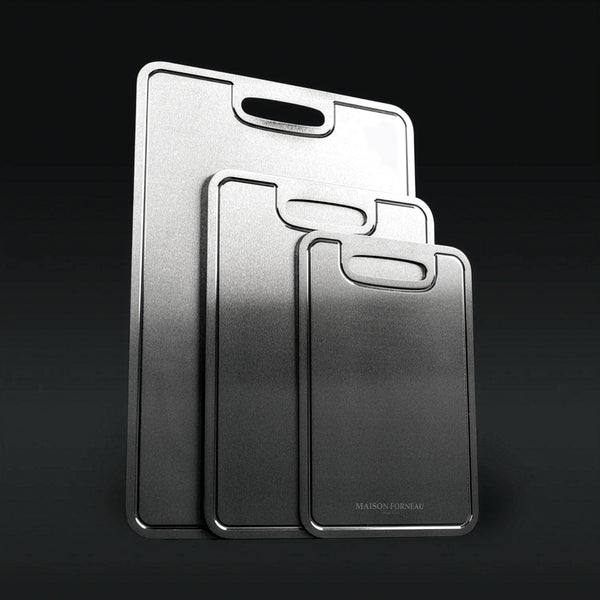
- A cutting board you don't have to babysit
A tight 4 to 6-piece set that you reach for daily beats a 12-piece bundle where half the pieces are decorative. This is also where price per piece becomes a more honest comparison than total set price, because sets with more "filler" pieces often look cheaper per unit while delivering less daily value.
« My non stick set is finally giving up. I feel like it lasted way less than it should have. »
r/BuyItForLife
Oven, induction, and dishwasher compatibility
All three brands claim induction compatibility, and that part is largely true across the board. The differences show up in oven use and in what you're allowed to do over time without damaging the surface.
| Feature | Forneau | Our Place | Woll |
|---|---|---|---|
| Induction compatible | Yes | Yes | Yes |
| Oven-safe | Yes | Limited by handle material | Limited by coating temperature |
| Dishwasher safe (cutting board) | Yes | N/A | N/A |
| Metal utensils safe | Yes, cooking surface in pure grade 1 titanium | Not recommended, scratches coating | Not recommended, scratches coating |
Metal utensils are the real test here. On a coated pan, a metal spatula is a risk to the non-stick layer. On a titanium cooking surface, a scratch is cosmetic. It doesn't flake, it doesn't release anything, and it doesn't affect how the pan cooks.
Durability and support over the years
This is where the "durable / increvable" promise gets tested. A coating, by definition, has a lifespan: it's a thin layer bonded to a base metal, and friction, heat, and time wear it down. A pure titanium cooking surface doesn't have that failure point, because there's no layer to wear through.
- Our Place: ceramic coatings are known to lose non-stick performance within a couple of years of regular use. Replacement is the only fix once that happens.
- Woll: reinforced coatings last longer than basic non-stick, but they still wear down, stain, and eventually need replacing. "Titanium-reinforced" is still a coating story.
- Forneau: no coating means no wear-through failure mode. The surface will show scratches over years of use — that's cosmetic, not structural. Backed by a lifetime warranty.
If "buy it for life" is the actual goal, the material itself needs to support that promise, not just the warranty paperwork behind it.
Price comparison per piece
Total set price is misleading when sets include different numbers of pieces and different materials. Comparing price per piece you'll realistically use gives a clearer picture of value.
| Brand | Surface material | Typical set size | Value logic |
|---|---|---|---|
| Forneau | Cooking surface in 100% pure grade 1 titanium | Smaller, curated sets of core pieces | Higher cost per piece, no replacement cycle expected |
| Our Place | Ceramic coating on aluminum | Larger bundles, lower entry price | Lower upfront cost, coating replacement likely within years |
| Woll | Reinforced non-stick coating | Mid-size sets | Mid-range price, longer-lasting coating but still a coating |
A lower upfront price looks appealing, but if the coating needs replacing in a few years, the real cost over a decade tells a different story. A titanium cooking surface costs more on day one and nothing in replacements after that.
Our recommendation based on your budget
There's only one of these three options built around a cooking surface that doesn't wear out by design. If the goal is sans revêtement cookware that you genuinely keep for a decade or more, the choice comes down to material, not marketing.
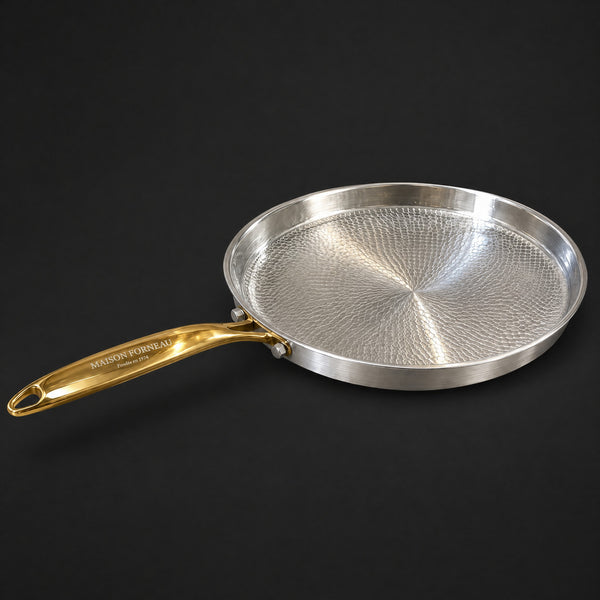
- Starting out, tight budget: begin with a single Forneau frying pan. It covers eggs, searing, and daily cooking, and it's the piece you'll use the most. Check the titanium frying pan for specs.
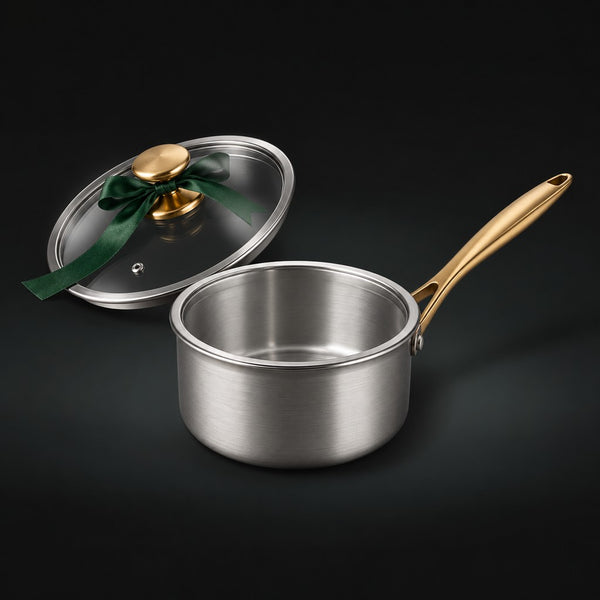
- Building a core set: a frying pan, a sauté pan, and a stockpot cover nearly everything most households cook. See our cookware set buying guide for how to pick the right combination.
- Stir-fry and high-heat cooking: a titanium wok handles heat distribution well thanks to the recycled aluminum cores underneath. Our sauté pan buying guide covers similar logic for pan selection.
- Already own non-stick or ceramic, considering a switch: read the full Forneau vs Woll vs TitaneCook comparison for a deeper look at coated "titanium" pans versus a cooking surface en titane pur grade 1.
Our Place and Woll both make the case for convenience or a reinforced coating. But a coating is still a coating: it wears, stains, and eventually fails, no matter the brand name on the box. Forneau's surface is the only one in this comparison with nothing to wear through, designé en France et backed by a lifetime warranty.
Frequently asked questions
What's the best titanium cookware set?
Look for a set where the cooking surface itself is pure titanium, not a coating with titanium particles added. Forneau's surface is 100% pure grade 1 titanium with no coating underneath, which is the deciding factor over reinforced non-stick alternatives.
Is Our Place cookware made of pure titanium?
No. Our Place's Always Pan and similar pieces use a ceramic non-stick coating over cast aluminum. It's not titanium at all — the ceramic coating is what gives it the smooth, convenient feel, but that coating wears down within a couple of years of regular use.
How many pieces do you actually need in a cookware set?
Most people cook daily with 4 to 6 pieces: a frying pan, a sauté pan or saucier, a stockpot, and maybe a wok. Larger 10 or 12-piece sets often include pieces that sit unused, which makes price per piece a better value metric than total piece count.
Can titanium cookware go in the dishwasher?
A cooking surface in pure grade 1 titanium handles dishwasher cycles without the coating-wear concerns that affect ceramic or non-stick pans. The titanium cutting board is fully dishwasher safe with no limits. Handwashing is still gentler on handles and joints over time.
Does titanium cookware scratch?
Yes. Titanium is a real metal and it scratches like any metal surface would. The difference is that the scratches are cosmetic only — nothing flakes off and nothing is released into food, unlike a scratched non-stick coating.
Why is Forneau cookware more expensive upfront than Our Place?
Because the cooking surface is a full layer of pure titanium instead of a thin ceramic coating over aluminum. The coating in cheaper sets wears down and needs replacing within a few years, while a titanium cooking surface has no comparable wear-through failure point.
