











Fact-checked: composition and sources on our Facts & evidence page.
- 4.9/5 from over 5,000 reviews
- Lifetime warranty
- Free returns
- Free shipping
Most non-stick saucepans are PTFE on aluminum — a PFAS by definition. Here's what the real PFAS-free options are, how they compare, and why a solid titanium cooking surface is different from a coating that eventually flakes.
The essentials in 30 seconds
- Non-stick saucepans rely on PTFE, a PFAS, coated onto aluminum or steel
- PFAS-free means stainless steel, enameled cast iron, or pure titanium surfaces
- Titanium cookware has a solid titanium cooking surface, not a coating that flakes
- Titanium scratches but those scratches are cosmetic and release nothing
- A saucepan with a bare metal surface needs preheating and a little fat to work well
PFAS-free saucepan: the short answer
A truly PFAS-free saucepan has no PTFE, no PFOA, no fluoropolymer coating of any kind on its cooking surface. That leaves three honest options: stainless steel, enameled cast iron, and pure titanium. Anything labeled "non-stick" that isn't ceramic sol-gel is almost certainly PTFE — a PFAS — no matter what the marketing says.
If you want zero ambiguity, look for a cooking surface that's a solid piece of inert metal, not a coating sprayed onto something else. That's the whole difference between "PFAS-free" and "PFAS-free for now, until it wears down."
Good to know
A scratched titanium surface is still 100% titanium underneath — there's no coating to flake into your food. The trade-off is real: bare titanium needs a short preheat and a bit of fat, it won't release food cold like fresh Teflon does.

What's actually inside a standard non-stick saucepan
A classic non-stick saucepan is aluminum (for heat conduction) with a PTFE coating sprayed and baked onto the surface. PTFE — Teflon — is a PFAS. Brands that advertise "PFOA-free" are telling the truth about one specific chemical, but PTFE itself is still a forever chemical, and the coating still wears.
- Sticking gets worse over time. As the coating is scraped by metal utensils or dishwasher cycles, food release fades and sticking returns — the exact complaint you see everywhere: "the coating wears down, staining sets in, and the nonstick properties fade."
- Flaking is the real risk. Once a coating is scratched or chipped, microscopic pieces can end up in food. That's not a hypothetical — it's the most repeated worry among people trying to quit non-stick.
- "Non-toxic" claims aren't always reliable. Several cookware brands have faced lawsuits for marketing pans as PFAS and PFOA-free when independent testing said otherwise. Healthy skepticism toward labels is reasonable.
PFAS-free materials: stainless steel, enameled cast iron, pure titanium
These three materials have no coating to wear off, because there's nothing coated — the cooking surface is the material itself.
| Material | PFAS-free | Sticking | Maintenance | Durability |
|---|---|---|---|---|
| Stainless steel | Yes | Sticks unless preheated and oiled correctly | None, but technique matters | Very durable, can discolor |
| Enameled cast iron | Yes | Decent once warmed through | Heavy, can chip if dropped | Very durable if handled carefully |
| Pure titanium (grade 1 surface) | Yes | Needs preheat and a little fat, like stainless | Dishwasher safe, no seasoning needed | Scratches cosmetically, surface never flakes or wears away |
None of these are magic non-stick surfaces out of the box. They all reward a bit of technique. The difference is what happens over years of use: stainless and titanium don't degrade into your food, because there's no coating layer to begin with.
« If a Teflon pan is scratched or flaking, microscopic pieces may be ingested »
Titanium saucepan: what it does and doesn't do
On a Forneau saucepan, the cooking surface is 100% pure titanium grade 1 — a solid layer, not a coating. There's nothing to chip, flake, or scratch away into your sauce. If the surface picks up a mark from a metal whisk, that mark is cosmetic. It's still titanium underneath, all the way through that layer.
What titanium doesn't do: conduct heat well on its own. That's why the saucepan isn't titanium front to back. Under the titanium cooking surface sit three layers of recycled aluminum that spread heat evenly, and a stainless steel base that makes the pan work on induction. So it's accurate to say the cooking surface is 100% titanium — and also accurate to say the base and handle aren't, because that's what makes the pan light and responsive on the stove instead of just a slow, heavy slab of metal.
Compatible with induction, gas, and electric. No PFAS, no PFOA, no PTFE anywhere in the construction.
Sauces, pasta, milk: cooking on bare metal
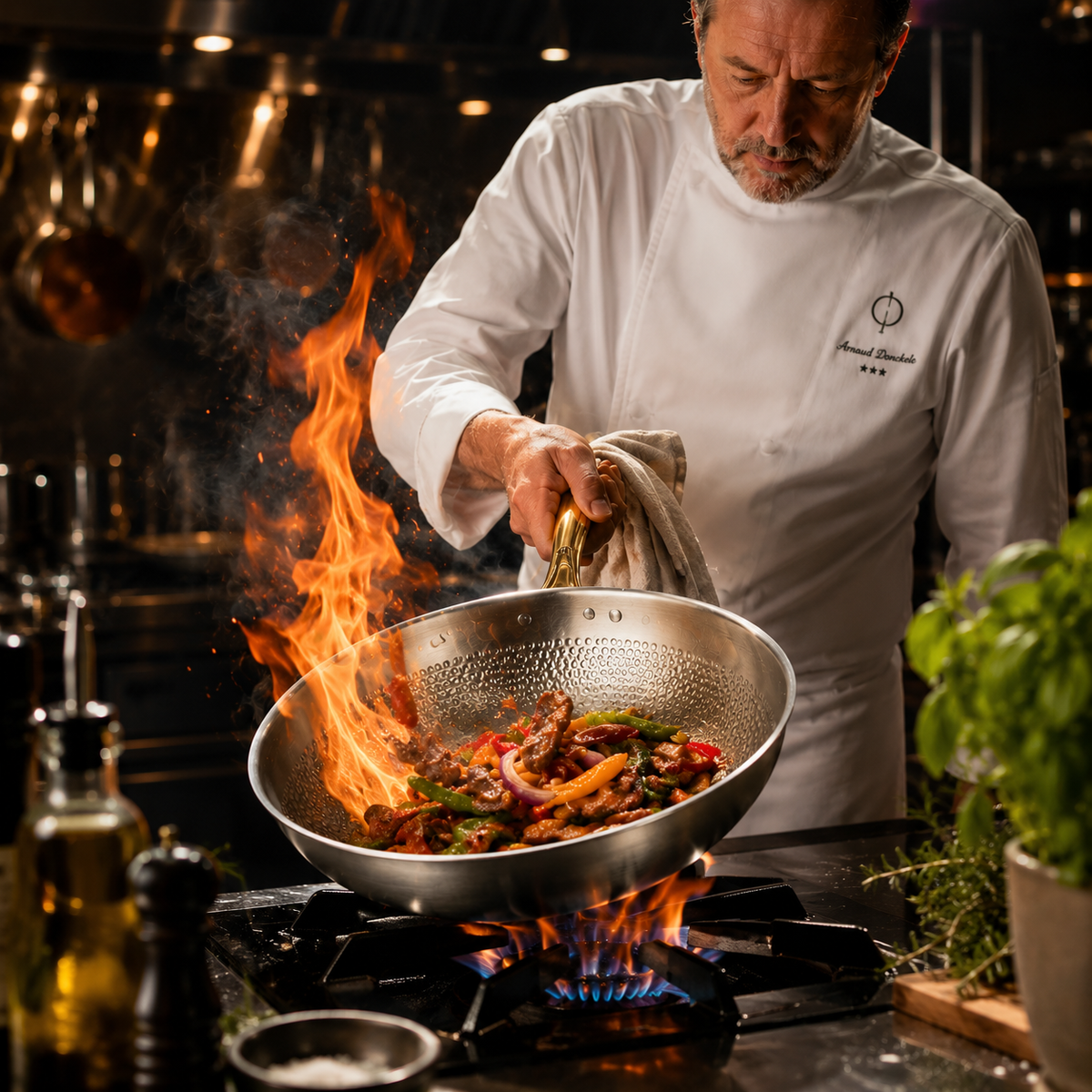
This is where people coming from non-stick get surprised. A bare titanium or stainless surface behaves like carbon steel or stainless: it needs a short preheat before anything goes in, and a bit of oil or butter to get a proper release. Skip that step and yes, things stick — that's the single most common complaint about stainless cookware, and it applies here too.
- Sauces: preheat on medium, add fat, then the aromatics. Reducing a sauce afterward is where titanium's steady heat retention actually helps.
- Pasta and boiling: no technique needed — boiling water doesn't stick to anything.
- Milk and delicate dairy: lower heat, don't walk away, stir more than you would in non-stick. Milk scorches fast on any bare metal if the heat is too high.
This is the honest trade-off of ditching non-stick: there's a small learning curve. In exchange, there's no coating degrading in your food, and nothing to replace every couple of years.
Care and dishwasher
Pure titanium cookware can go in the dishwasher. There's no seasoning to protect and no non-stick layer to baby. For stuck-on bits, a soak and a non-abrasive scrub do the job — metal utensils are fine, since there's no coating to damage.
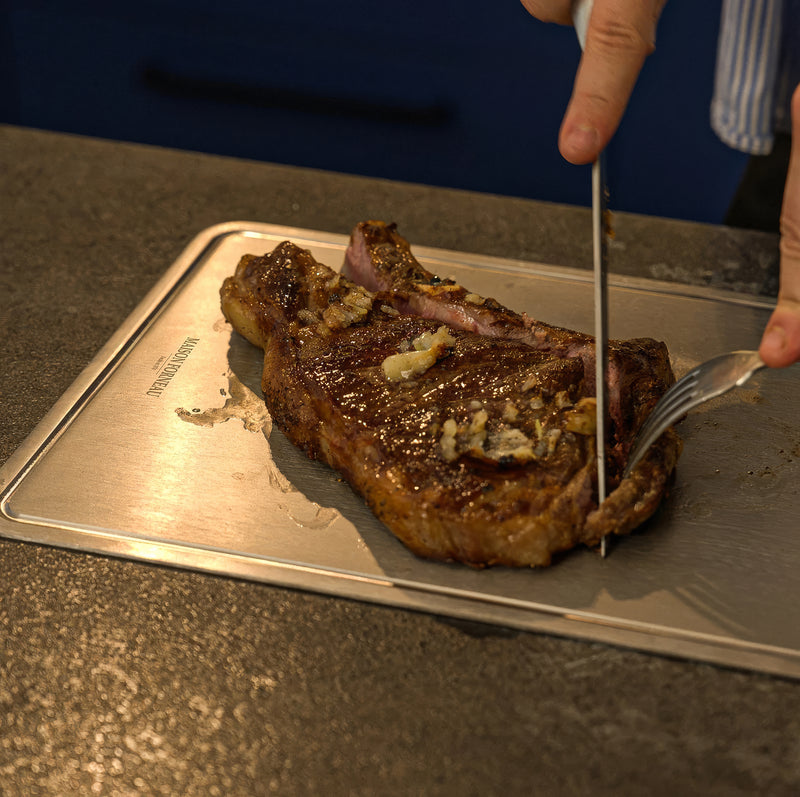
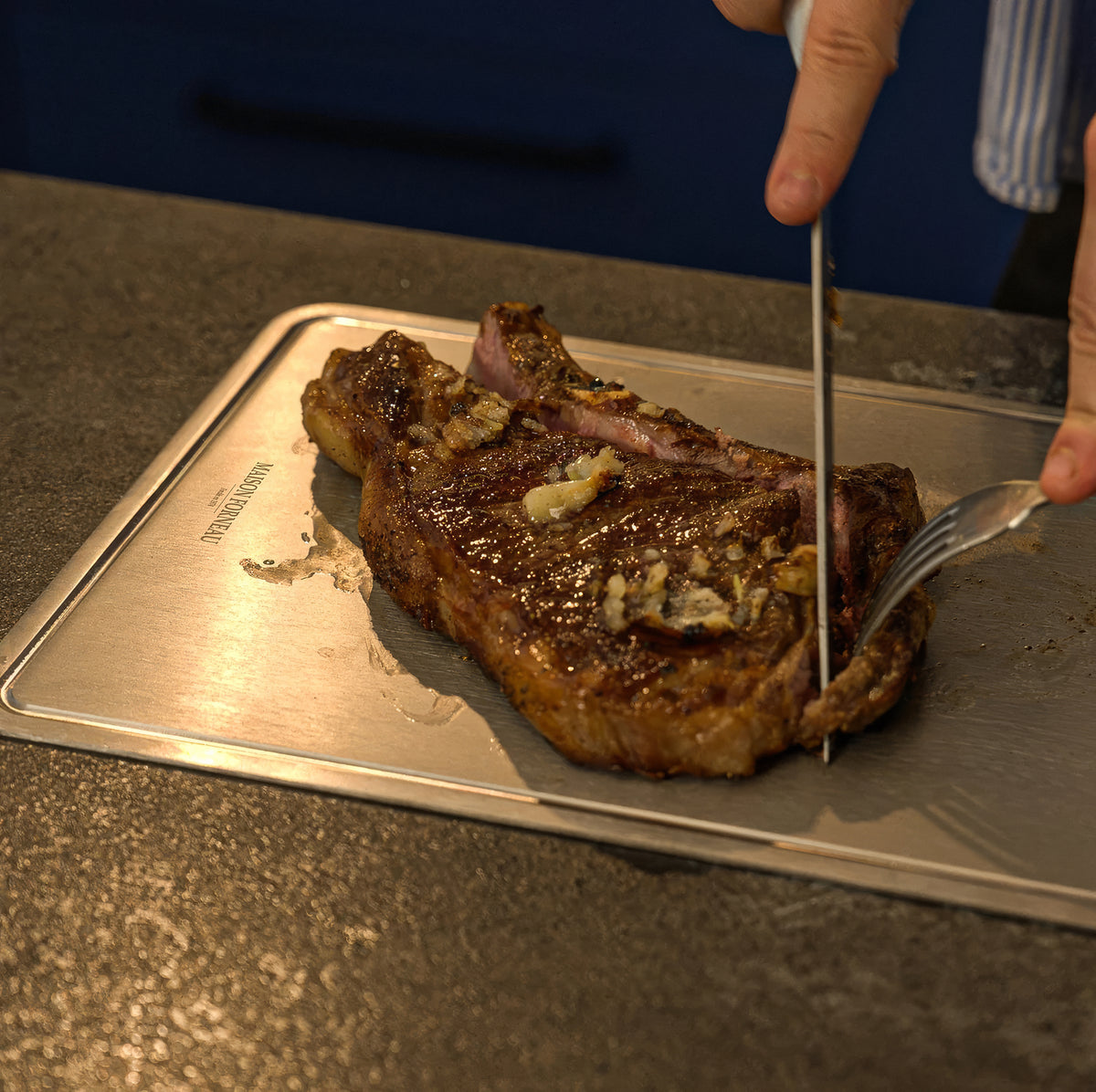
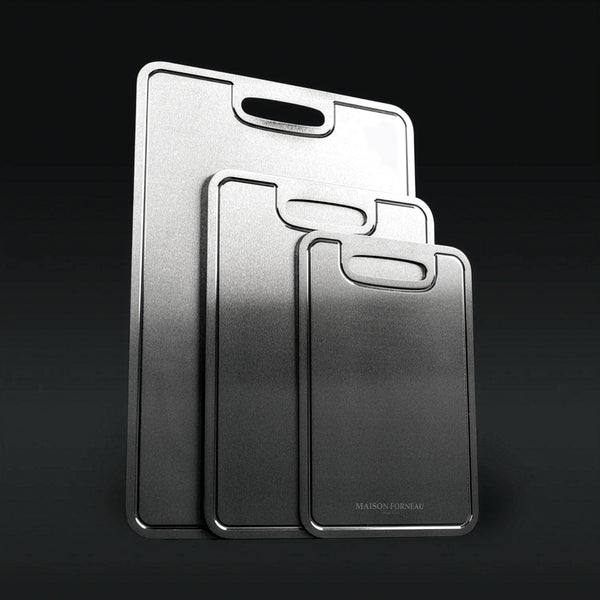
Our titanium cutting board follows the same logic: dishwasher safe, no grooves to trap bacteria, nothing to flake into food. One honest note on knives: titanium is softer than steel, so it won't chip a blade edge, but like any metal surface it dulls a knife faster than wood or plastic. A quick pass on a honing steel before cutting solves that.
How to choose your PFAS-free saucepan
- Want zero coating, ever, with no maintenance ritual: pure titanium or stainless steel.
- Don't mind seasoning and weight: enameled or bare cast iron.
- Want it light, induction-ready, dishwasher safe, with a cooking surface that can't flake: pure titanium grade 1.
- Buying for life: check what's actually backed by a lifetime warranty on the material itself, not just the handle or the box.
Across comparisons, the real split isn't stainless vs. titanium vs. cast iron as a matter of taste. It's coated vs. uncoated. Any saucepan sold as "non-stick" that isn't one of these three base materials is, by definition, relying on a coating that will eventually wear — PTFE-based or not.
The Forneau saucepan and stockpot
The 18 cm titanium saucepan and the 24 cm titanium stockpot both have a cooking surface that's 100% pure titanium grade 1 — a solid layer, not a coating, with no PFAS, PFOA, or PTFE anywhere. Underneath, recycled aluminum cores spread heat and a stainless steel base makes them induction-compatible. Ultra-light to handle, backed by a lifetime warranty on the cookware itself.
For the full picture on how titanium cookware behaves day to day, see our titanium pan guide, or read more on PFAS-free cooking and the facts behind our claims.
Frequently asked questions
What does PFAS-free saucepan actually mean?
It means the cooking surface has no fluoropolymer coating — no PTFE, no PFOA. Stainless steel, enameled cast iron, and pure titanium all qualify because the cooking surface is the metal itself, not a sprayed-on layer.
Does Teflon contain PFAS?
Yes. Teflon is a brand name for PTFE, which is a PFAS. Some products are labeled "PFOA-free," which is a separate claim about one specific chemical — it doesn't mean the coating is free of PFAS altogether.
Does a titanium saucepan work on induction?
Yes. The titanium cooking surface sits on a stainless steel base built for induction, with recycled aluminum layers in between to spread heat evenly across gas, electric, and induction stoves.
Does milk stick in a titanium saucepan?
It can if the heat is too high or the pan isn't warmed first. Like stainless steel, bare titanium needs a short preheat and moderate heat for dairy — once you adjust, milk and sauces behave normally.
Stainless steel or titanium saucepan?
Both are PFAS-free and need the same basic technique: preheat, then fat. Titanium's advantage is a cooking surface that won't pit or discolor the way stainless can, plus it's noticeably lighter to lift and pour.
