



★★★★★
I use it every day to prepare my son’s fruit. It cleans in seconds and, above all, it doesn’t retain any odour or colour, even with strawberries. Very happy with my purchase.
Martine L.

BESTSELLERS - LOW STOCK


CATEGORIES



5 produits


« I was sceptical about titanium for everyday cooking. Today it’s my go-to pan at home and in the lab. The heat control is incredible. »

Thomas R.
Pastry Chef, 12 years' experience
2 produits


« I fitted out my entire kitchen with Forneau. My commis won’t go back. Lifetime guarantee honoured, impeccable French customer service. »

Antoine L.
Restaurateur, Lyon
2 produits


« What I wanted: something safe for my children, without PFAS. What I found: a pan that lasts and cooks better than anything I’d had before. An unexpected bonus. »

Sophie B.
Mum of 3 children

3 produits


« I was sceptical about titanium for everyday cooking. Today, it’s my go-to pan at home as well as in the lab. The heat control is astounding. »
Thomas R.
Pastry Chef, 12 years' experience

2 produits


« I cook 50 hours a week. After 6 months using my Forneau pan, a few surface marks and zero sticking. No other brand had lasted more than 3 months in my home. »

Élodie M.
Private chef
Welcome offer · 24 hours
Your code will arrive by email and remains valid for 24 hours.
−5%
on your first order
Run your finger over the ticket

Welcome offer · 24 hours
Your code will arrive by email and remains valid for 24 hours.
“I cook 50 hours a week. After 6 months with my Forneau pan, a few surface marks and zero sticking.”
Élodie M. · Private chef
A unique code, sent by email. No cold calling, unsubscribe in one click.
Don’t leave just yet
Your code is yours. You’ll also find it in your inbox, and it stays valid for 24 hours.
View the frying pansCheck your inbox: it’s valid for 24 hours from now.
The Only Board That Truly Protects Your Health


| Size | Width | Length | Thickness |
|---|---|---|---|
| S | 7.5" | 11.4" | 0.24" |
| M | 9.1" | 13.4" | 0.24" |
| L | 11.8" | 18.1" | 0.24" |
Une pièce du set n’a pas pu être ajoutée. Votre article principal est bien dans le panier.

Receive our complete guide with your purchase + 50 exclusive Forneau recipes


PFAS are "forever chemicals" used to make products more durable. They are widespread in our environment and linked to cancer, hormone disruption and other health risks.
Results reflect laboratory analysis of the samples submitted at the time of testing. They do not guarantee future performance. Labelling and regulatory compliance remain the brand's responsibility.
We are the only ones in the world to offer certified pure titanium utensils — PFAS-free, toxin-free, and coating-free.
Lifetime warranty, no conditions.


Customer reviews
based on 5 000+ verified reviews
I use it every day to prepare my son’s fruit. It cleans in seconds and, above all, it doesn’t retain any odour or colour, even with strawberries. Very happy with my purchase.
Martine L.

Super practical for everyday use. I hang it straight up in my kitchen and it takes up hardly any space. It’s much thinner than my old boards and yet it really feels solid.
Gérard P.

We even use it directly for aperitifs now. Cheese, charcuterie, fruit… it looks great on the table and after a run through the dishwasher it comes out spotless.
Sylive I.

A gift from my children and, honestly, an excellent surprise. I cook a lot with vegetables from the garden and I much prefer this board to the plastic ones I used before. Simple, sturdy and easy to clean.
Catherine H.

A very pleasant surprise as soon as I opened the parcel. The presentation is really well done, with the pouch and the little guide. It immediately feels like a quality product, perfect for gifting too.
Sophie B.

What surprised me most was the finish. The titanium is thin, lightly brushed and much nicer in real life than I’d imagined. After several weeks of use, nothing to report.
Philippe R.
 Designed in France
 PFAS-free certified

Custom cookware set
Three questions, and we’ll recommend the right pieces for your kitchen. The more you add, the bigger the discount.

Contains BPA and other harmful chemical compounds that can leach into your food with every knife cut. A direct risk to your hormones, gut microbiome, and brain.

Not hygienic. Wood is porous: it absorbs raw juices and moisture. Knife cuts trap bacteria, making sterilization nearly impossible. Mold and contamination become almost unavoidable over time. Wood also absorbs odors and stains easily.

Same risks as solid wood, but worse: these boards are assembled from small blocks glued together with industrial adhesive containing formaldehyde, a carcinogenic compound. Not just unhygienic — truly dangerous.

These materials are extremely hard and dull your knives quickly. They are very heavy to handle and impractical for daily use.
Unlike competitors who use cheap and toxic alloys, at Forneau® we use only the purest materials for your safety. Each product is made from Grade 1 Titanium (laboratory certified at 99.98%) — the purest form available, also known as medical-grade titanium. It also complies with food contact standards.
Your safety is guaranteed with Forneau

Why a titanium chopping board
A wooden board absorbs juices into its fibres, and a plastic board releases microplastics with every knife stroke. Pure titanium is a smooth, non-porous surface: nothing penetrates, nothing comes off.
1. Chop
Meat, fish, vegetables, cheese: the same surface for everything, with no lingering odours.
2. Rinse
Ten seconds under hot water between foods. Non-porous, the board is genuinely clean.
3. Dishwasher
No limit on cycles. It won’t blacken, warp or split.
Titanium board and knives
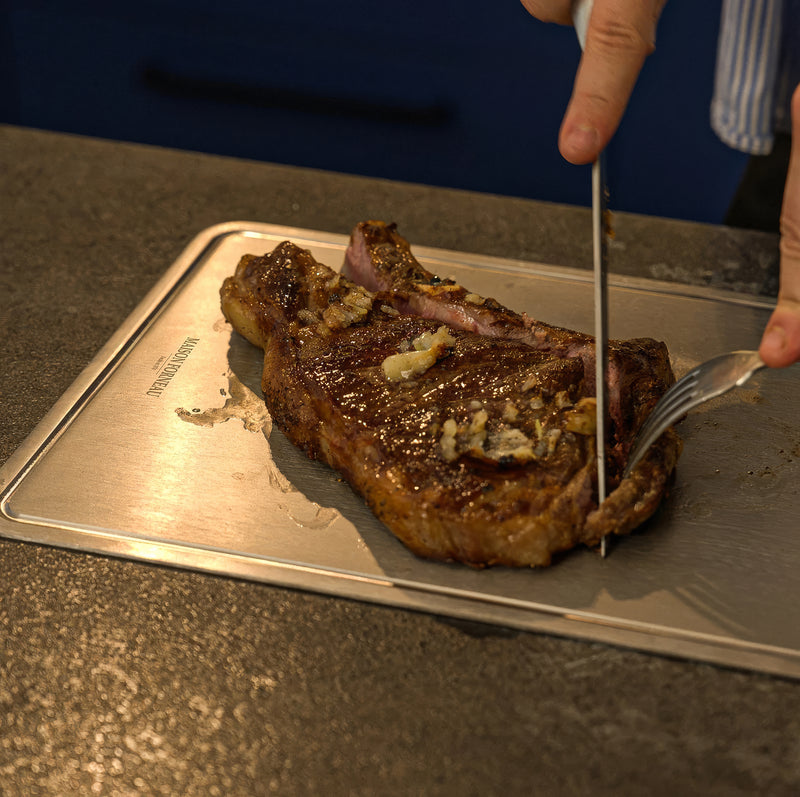
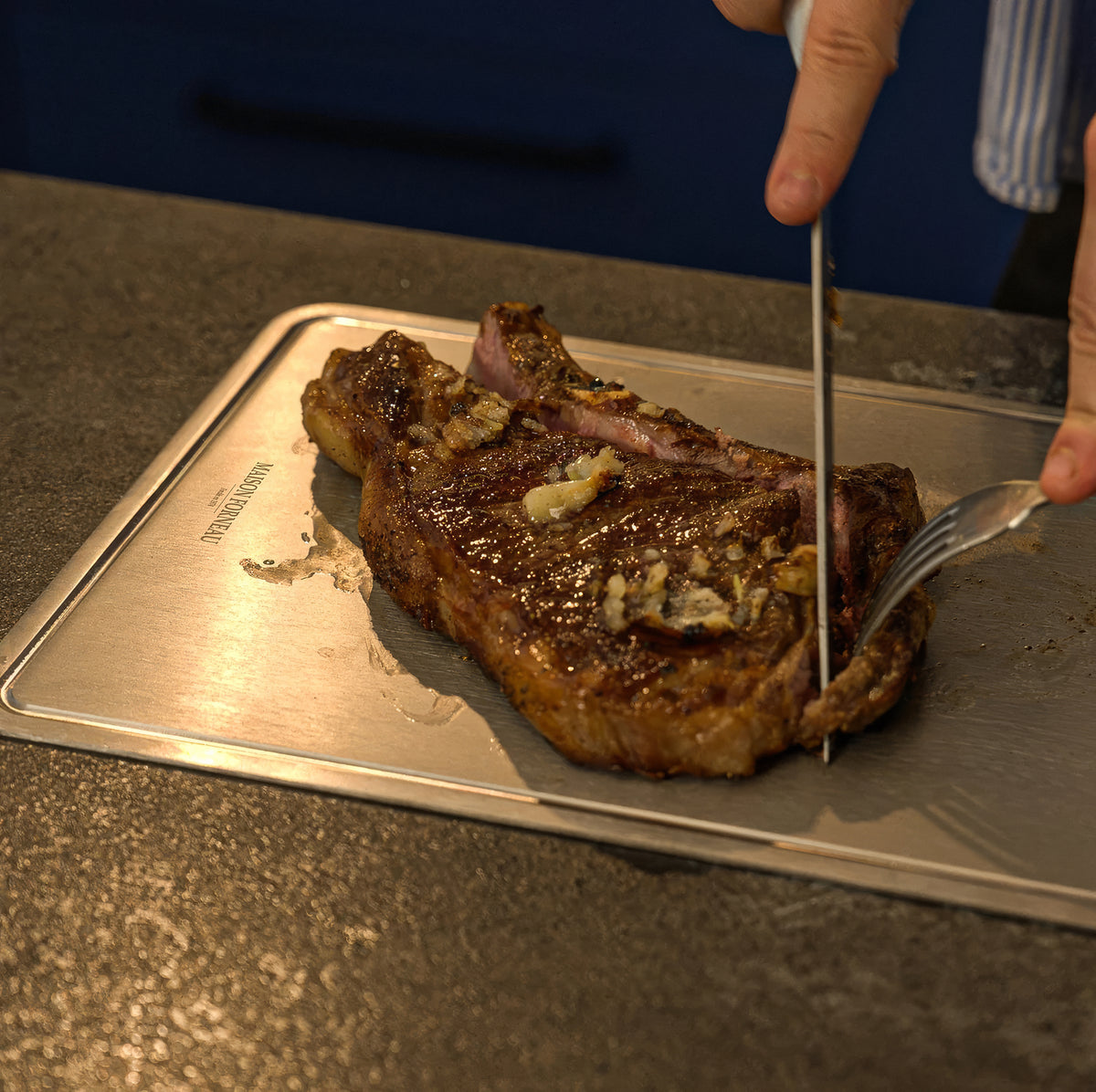
Titanium is softer than the steel of a blade: the board will show slight marks, not the knife. These tiny surface traces are normal and don’t affect hygiene or lifespan. Your knives keep their edge longer than on glass or stone.
Kitchen hygiene
Cutting chicken then salad on the same board after a simple rinse: impossible with wood or plastic according to all health authorities, effortless with titanium. Zero bacteria retained, zero microplastics on your plate. Titanium chopping board and hygiene
Which size to choose
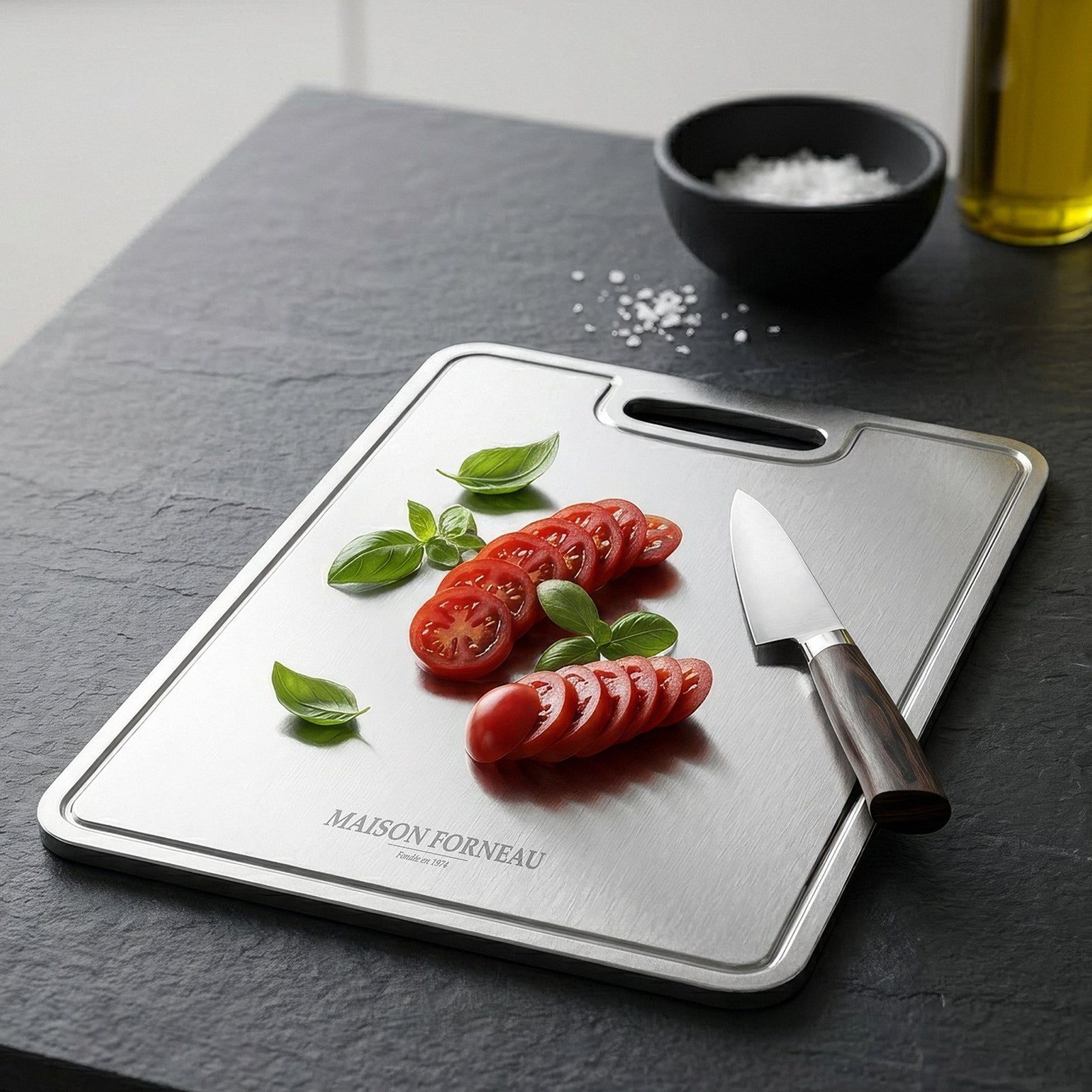
S (29×20 cm) for fruit, cheese and small prep. M (34×23 cm) for everyday cooking. L (46×30 cm) for large cuts and family meals. The trio brings together all three; the Héritage pack pairs it with the 28 cm Signature titanium pan. See the titanium pan
Read more
Frequently asked questions about the titanium chopping board
Does the titanium chopping board slip?
A damp tea towel underneath is enough to keep it in place, as with any smooth board.
Is it heavy?
No. Titanium is 45% lighter than steel: the M board weighs less than a wooden board of the same size.
Does it damage knives?
Titanium is softer than the blade, so it won't chip it, but like any metal surface it dulls the edge faster than wood. A few strokes on a honing rod before cutting bring it back. In return: no grooves that trap bacteria, no microplastics, dishwasher-safe without limit.
Is it dishwasher-safe?
Yes, with no limit on cycles. It won’t blacken or warp.
Where is it designed?
Designed in France, lifetime guaranteed, free delivery. Details and sources on our Facts & evidence page.


“Cooking is an underestimated source of toxins.
Forneau titanium is the only material I recommend without reservation to my patients.”
“15 years telling my patients to get rid of Teflon. No material held up — until Forneau. I now recommend it in consultations.”

@camille_naturoNaturopathe
— 15 years of experience
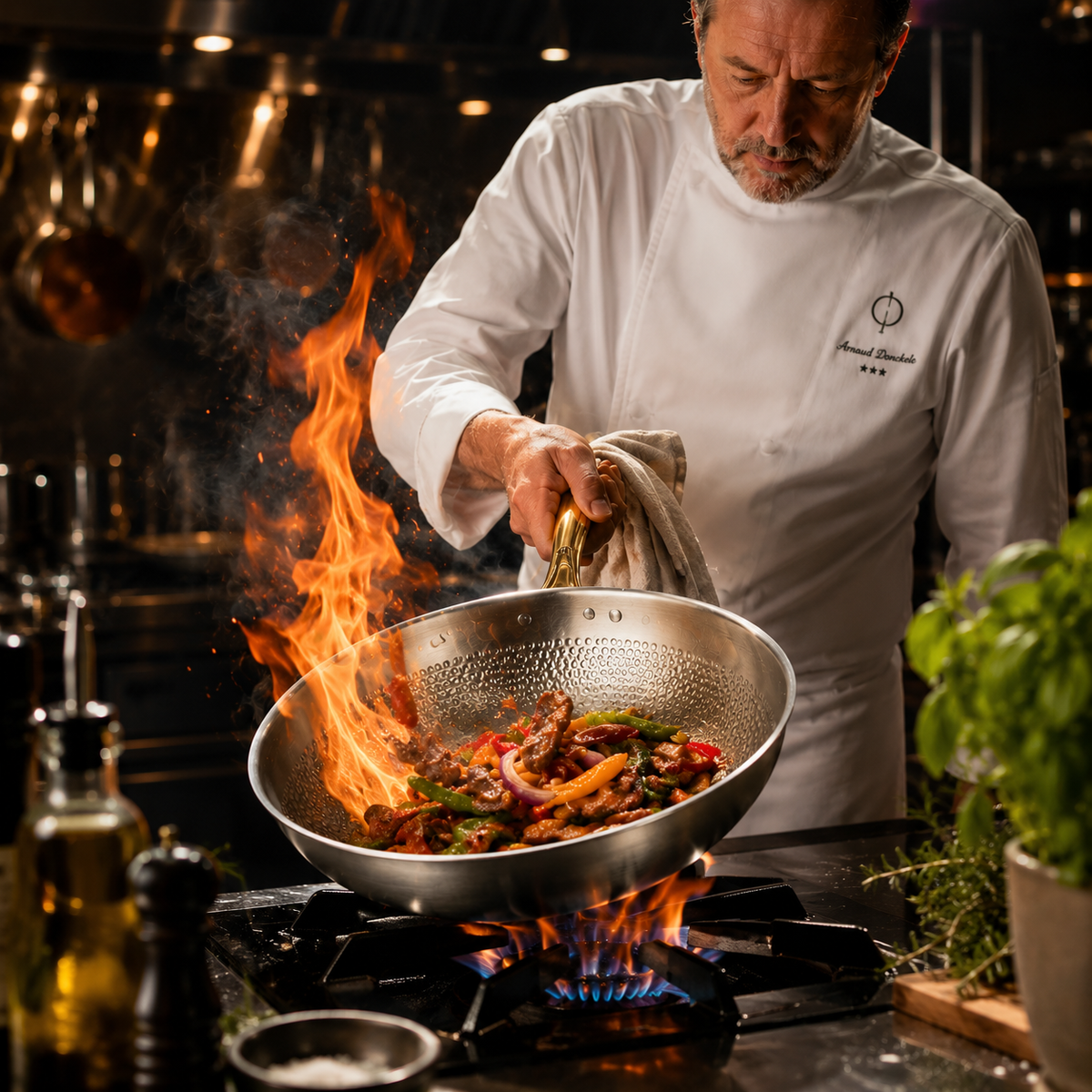
Every generation passes down a craft. Ours is an uncompromising standard at the table. At Forneau, our chef embodies this tradition — hands that have learned to respect fire, metal, and what goes on the plate. Titanium is not a marketing choice. It is the only material worthy of this cuisine.


Straight answers to the questions we’re asked before buying.
Wood, plastic, glass, steel or titanium: porosity, microplastics, care and lifespan. The materials compared, and how to choose the right size.
Read the articleFrom toxin and bacteria risks to demanding maintenance, these “outdated” kitchen materials are simply no longer up to standard.

The worst pan coating that exists. Teflon and most non-stick coatings release PFAS, known as “forever chemicals” linked to cancer and liver damage. The coating chips over time, does not withstand high temperatures, and exposes your food to toxins.

Requires a lot of oil to prevent food from sticking, and reacts with acidic foods — which alters the taste and may release metals in low-quality pans. Difficult to clean and requires high maintenance.

Ceramic coatings are very fragile. Once chipped, they expose the toxic aluminum base. Most only last 1 to 2 years before losing their non-stick properties. Expensive to replace and unreliable in the long term.

Incredibly heavy and demanding to maintain. Cast iron rusts easily without regular seasoning and does not handle acidic foods well, which can damage the surface and alter flavors.

Contains BPA and other harmful chemical compounds that leach into your food with every knife cut. A direct risk to your hormones, gut health, and brain.

Not hygienic. Wood is porous: it absorbs raw juices and moisture. Knife cuts trap bacteria, making proper sterilization nearly impossible. Mold and contamination become almost inevitable over time. Wood also absorbs odors and stains easily.

Same risks as solid wood, but worse: these boards are assembled from small glued blocks using industrial adhesives containing formaldehyde, a carcinogenic compound. Not just unhygienic — genuinely dangerous.

These materials are extremely hard and dull your knives very quickly. Very heavy to handle and impractical for everyday use.

Plastic spatulas have a very low melting point and release toxic compounds with every use. Serious health risks: digestive issues, hormonal disruption, cancer.

Even high-end silicone eventually degrades with heat and releases toxic compounds. Most silicone spatulas sold online or in supermarkets contain dangerous fillers such as BPA and phthalates, which become toxic when heated during cooking.

Not hygienic. Wood allows bacteria to settle into grooves and cracks, even invisible ones, which can contaminate your food over time. It also absorbs odors and stains easily.

Most are made from low-grade alloys that release heavy metals such as chromium and nickel into your food when heated. They are also heavy and can damage the surface of your cookware.

Rusts easily, requires constant seasoning, and reacts with acidic foods such as tomato, bell pepper, or lemon — damaging the surface and altering the taste. Not non-stick, not low-maintenance, and clearly not built to last.

The worst possible bottle. Even “BPA-free” models release endocrine-disrupting compounds, especially when exposed to heat. Moisture around the mouthpiece creates an ideal environment for the growth of bacteria and mold.

Durable, but stainless steel is not antibacterial like titanium. Bacteria from your mouth can grow inside. Frequent cleaning is essential: studies show that 87% of these bottles contain harmful bacteria such as E. coli.

Aluminum bottles are always coated with synthetic linings to prevent the metal from reacting with liquids. These coatings degrade over time and release chemical compounds into your water. Like others, they also promote the growth of bacteria and mold.

Glass does not release chemicals, but it offers no antibacterial protection. Bacteria from your mouth can still multiply on it. It is also fragile: easy to break and impractical for everyday use.
