













Fact-checked: composition and sources on our Facts & evidence page.
- 4.9/5 from over 5,000 reviews
- Lifetime warranty
- Free returns
- Free shipping
Choosing titanium cooking utensils means avoiding what silicone, nylon or wood can release under heat, without worrying about marking a coated or a bare pan. This guide explains what each material actually does in the kitchen, and why solid pure titanium ticks boxes that no other material ticks all at once.
The essentials in 30 seconds
- Silicone degrades at high temperatures and can contain fillers; nylon and plastic melt on direct contact with a heat source and shed microplastics.
- Wood is porous, holds onto moisture, and eventually splits; stainless steel contains nickel and stays heavier in the hand.
- Solid pure titanium is inert, nickel-free, doesn't rust, and goes in the dishwasher.
- A metal utensil will mark a coated non-stick surface. On bare titanium or bare stainless steel, the marks stay cosmetic.
- The Forneau utensil set (spatula, ladle, tongs, skimmer) is solid pure titanium, uncoated, guaranteed for life, at €149.
Why change utensils when you change your pan
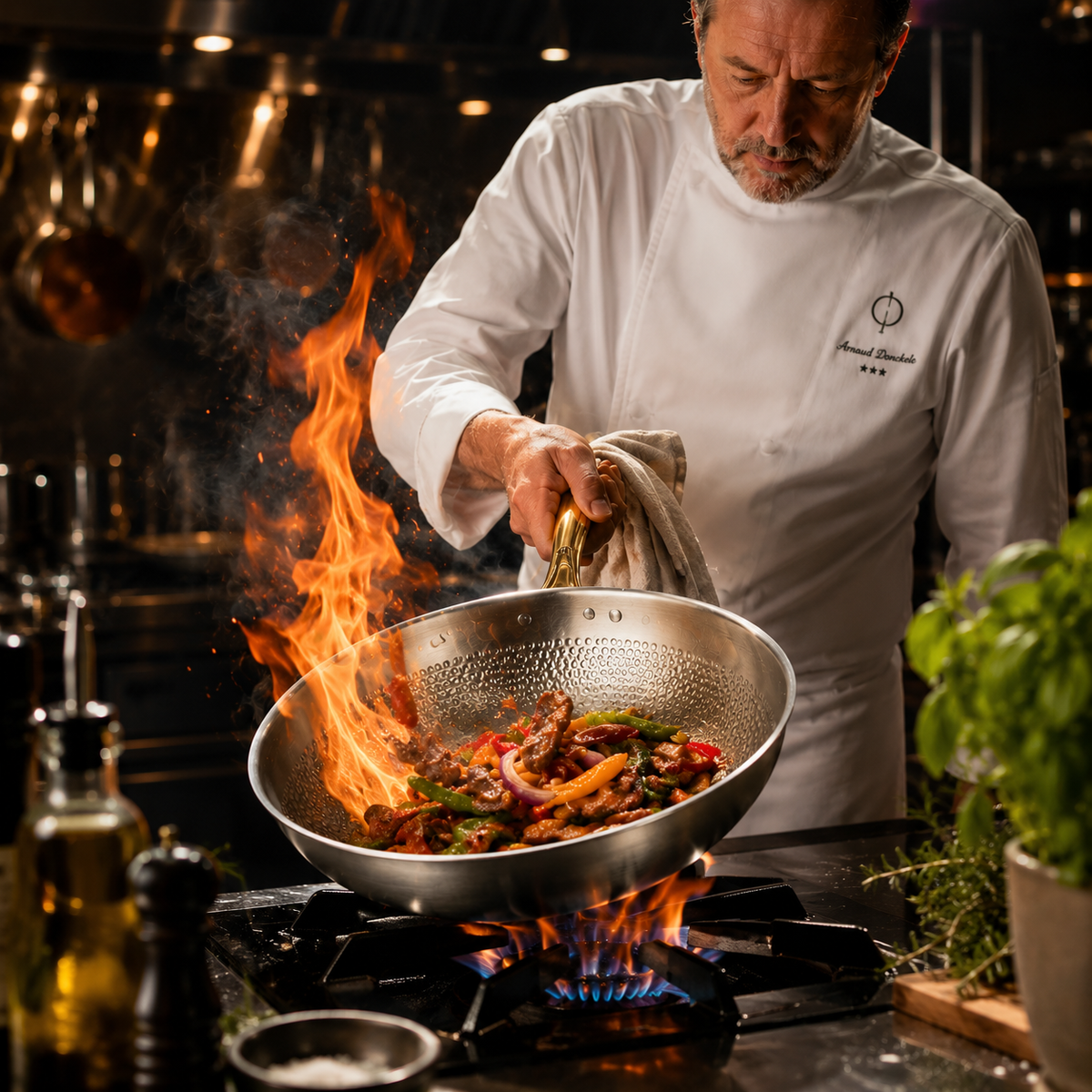
Once you switch to a solid pure titanium pan like Forneau's, sticking with nylon or silicone utensils stops making much sense: the surface no longer fears metal, while plastic materials still fear heat. The choice of utensils becomes a matter of consistency more than obligation.
Plenty of people keep their plastic utensils out of habit, even after investing in a pan that no longer needs them. The result: the spatula softens slightly against the edge of a hot pan, or warps over time, when a metal utensil could be rested on the rim or left in the pot without a second thought.
- A solid pure titanium pan (see our pans) handles metal utensils without issue.
- Plastic utensils stay fragile around heat, whatever pan they're used with.
- Switching utensils alongside your pan avoids running two different logics in the same drawer.
Silicone, nylon, wood, stainless steel, titanium: what each material releases or not
Each material behaves differently under heat and repeated use. Silicone degrades past a certain threshold and can contain mineral fillers, nylon melts, wood splits, stainless steel holds up well but contains nickel and weighs more, and pure titanium doesn't react at all and stays inert.
Here's a simple comparison to help you decide before buying.
| Material | Behaviour under heat | Points to watch | Dishwasher |
|---|---|---|---|
| Silicone | Degrades at high temperature | Can contain fillers, possible odour when heated | Usually yes |
| Nylon / plastic | Melts on direct contact with a heat source | Sheds microplastics as it degrades | Varies by product |
| Wood | Doesn't melt but dries poorly | Porous, holds moisture, splits over time | No (not recommended) |
| Stainless steel | Handles heat well | Contains nickel, heavier in hand | Yes |
| Pure titanium | Inert, doesn't react | No coating to worry about | Yes |
The common thread between silicone, nylon and wood: these are materials that wear down with heat and time, even under normal use. Pure titanium and bare stainless steel don't degrade that way — the difference between the two comes down to weight and the presence of nickel.
Solid pure titanium: inert, light, nickel-free, and what it isn't
Solid pure titanium is an inert metal: it doesn't react with food, contains no nickel, and doesn't rust. It's also lighter in the hand than stainless steel, which matters on a ladle or a pair of tongs you hold for a while.
Worth knowing too, to stay honest: titanium scratches with prolonged use, like any metal. These marks stay cosmetic and release nothing — this isn't a coating that chips away, it's a solid metal surface that simply shows signs of normal use.
- Inert: no reaction with food, no metallic taste transferred.
- Nickel-free: a point that matters for sensitive or allergic users.
- Doesn't rust, unlike some poorly maintained steels.
- Scratches with use, like any metal — marks have no bearing on food safety.
Good to know
Pure titanium isn't a miracle material that never shows a mark: it scratches, just like stainless steel. The difference with a non-stick coating is that a scratch on solid titanium changes nothing about the metal's structure, whereas a scratch on a coating can be the start of chipping.
Metal utensils and pans: coated versus bare makes the difference
A metal utensil can mark a non-stick coated pan, because that coating is a thin layer that eventually scratches and then chips under pressure from a hard object. On a pure titanium or bare stainless steel surface, by contrast, marks left by a spatula or tongs stay superficial and cosmetic.
This is a common mix-up: people assume they always need wood or silicone to "protect" their pan, when that precaution really only applies to classic non-stick coatings. On a pan whose cooking surface is 100% pure grade 1 titanium, there's nothing to chip away because there's no coating as such: it's a solid layer of titanium, not a coating.
- Coated pan (classic non-stick): avoid metal utensils, risk of chipping over time.
- Pure titanium or bare stainless steel pan: metal utensils are no problem, marks stay cosmetic.
To dig deeper into pan care itself, see our page on caring for a titanium pan.
The Forneau 4-piece set: what it is, what it's for
The Forneau utensil set brings together a spatula, a ladle, tongs and a skimmer, all in solid pure titanium, uncoated and nickel-free, for €149. It's built to work alongside pans and pots alike, coated or bare, without worrying about marking the surface.
- Spatula: for flipping and stirring without strain on a bare surface.
- Ladle: for sauces, soups and stocks, light in the hand.
- Tongs: for gripping meat and vegetables without piercing them.
- Skimmer: for gently draining or lifting food out of hot liquid.
As with Forneau pans, the guarantee is for life, and the whole set goes in the dishwasher without any special care.
Care, dishwasher, lifespan
Pure titanium utensils go in the dishwasher without restriction, don't rust, and don't demand the kind of specific care wood needs — regular oiling to stop it from splitting. It's a material built to last without any particular daily fuss.
- Dishwasher: yes, no restrictions.
- No rust, even after sitting in the sink for a while.
- No oiling or immediate drying required, unlike wood.
- Lifetime guarantee on the Forneau set.
Good to know
A wooden utensil needs regular care (oil, drying flat) to avoid splitting over time. Pure titanium doesn't carry that burden: it's one of the strongest arguments for everyday use without having to think about it.
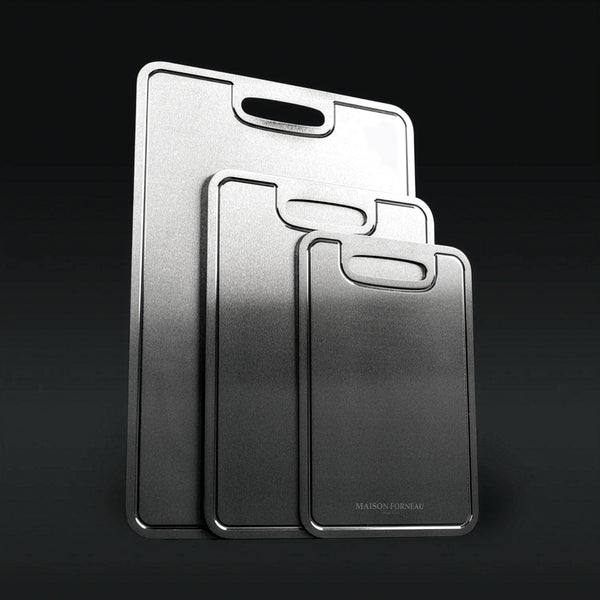
To round out your kitchen, see also our titanium cutting board, built with the same philosophy: uncoated, no microplastics, dishwasher-safe without limit.
Frequently asked questions
Do titanium utensils scratch non-stick pans?
Yes, a metal utensil can mark a classic non-stick coating, because that thin layer eventually chips under repeated pressure. On a pure titanium or bare stainless steel pan, these marks stay cosmetic and don't affect the surface.
Does titanium contain nickel?
No, solid pure titanium contains no nickel, unlike stainless steel, which naturally includes it in its alloy. This matters for anyone sensitive or allergic to nickel.
Can titanium utensils go in the dishwasher?
Yes, pure titanium utensils go in the dishwasher without restriction and without damage. That's one advantage over wood, which needs drying flat and regular care to avoid splitting.
Why avoid silicone or nylon utensils?
Silicone can contain fillers and degrades past a certain temperature threshold, while nylon melts on direct contact with a heat source and sheds microplastics. These are materials that wear down over time, even under normal use.
Do titanium utensils scratch?
Yes, titanium scratches with use like any metal, including stainless steel. These marks stay cosmetic and release nothing, unlike a non-stick coating that can chip away.
What's the difference between titanium and stainless steel utensils?
Pure titanium is lighter in the hand than stainless steel and contains no nickel, while stainless steel includes it in its alloy. Both hold up well against heat and don't rust, but titanium stays more comfortable for prolonged use.
Is the Forneau utensil set guaranteed?
Yes, the Forneau 4-piece set (spatula, ladle, tongs, skimmer) in solid pure titanium is guaranteed for life. It's uncoated, nickel-free, and dishwasher-safe.
Do I need new utensils when I buy a titanium pan?
It's not required, but a solid pure titanium pan handles metal utensils without issue, unlike a coated pan. Sticking with plastic utensils is mostly a matter of habit, not necessity.
