











Fact-checked: composition and sources on our Facts & evidence page.
Choosing a titanium cutting board is mostly about controlling what touches your food every day: microplastics from plastic, moisture and odors in wood, and knife wear on glass. This guide covers what to buy, how to use it, and what to expect in real kitchens.
The short version
- Plastic boards can shed microplastics with normal knife use (a 2023 study in Environmental Science & Technology quantified meaningful release from polyethylene).
- Titanium is non-porous: it does not absorb juices, odors, or stains, and it can go in the dishwasher.
- Pure titanium can show surface marks from knives, but nothing flakes off and there is no coating to chip or peel.
- If you care about blade life, avoid glass; for a single “wash-and-reset” board, titanium is a strong option.
- For most households, two boards work best: one for raw proteins and one for everything else.
Why a titanium cutting board is gaining traction in US kitchens
The market shift is simple: people want a non toxic cutting board that is easy to sanitize, does not retain odors, and does not quietly shed material into food over years of use. A pure titanium board answers that demand with a non-porous metal surface and no coating.
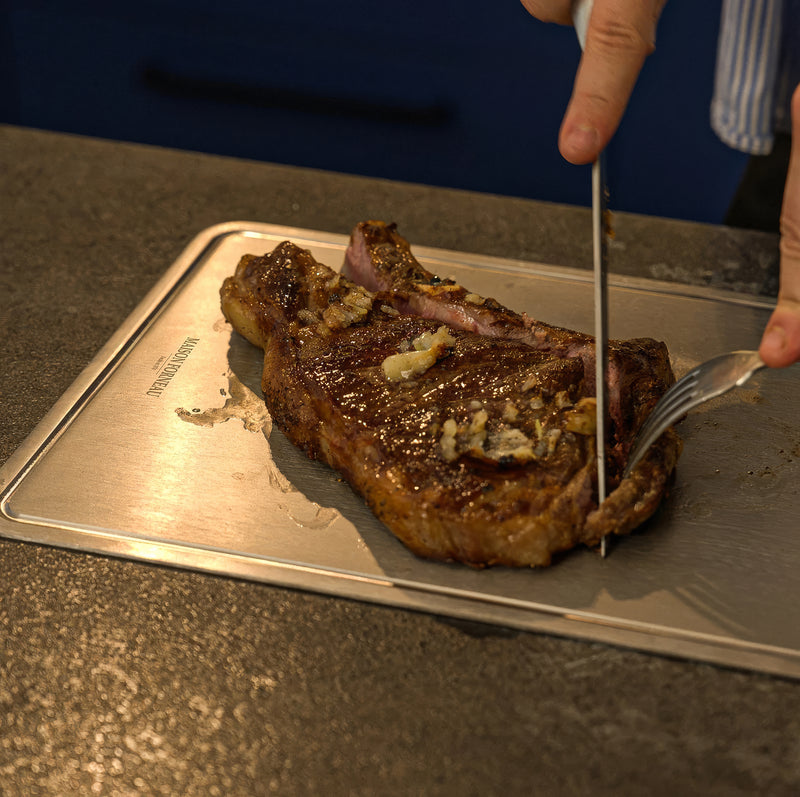
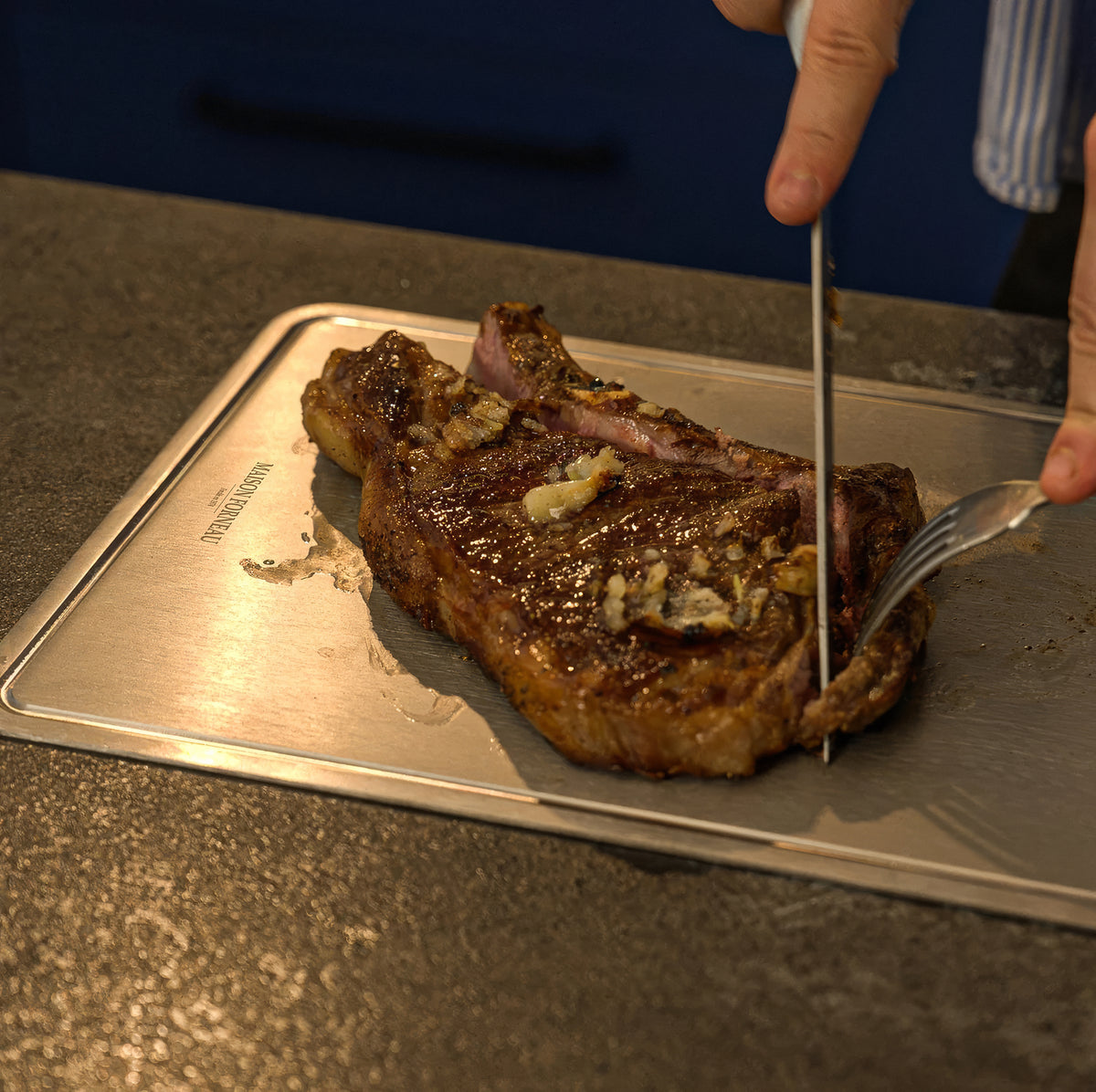
Maison Forneau’s board is made of pure titanium and designed in France. There is no PFAS-based nonstick layer, no paint, and no resin binder. In practice, that means you can wash it aggressively, including in a dishwasher, without worrying about a finish degrading over time.
It is also important to set expectations: titanium will show knife marks. Those marks are typically superficial (surface scuffs rather than deep grooves). With no coating, nothing peels or flakes, and there is no layer designed to “wear off.”

Plastic boards and the microplastics question
Concerns about a microplastics cutting board are not just theoretical. Plastic boards (commonly polyethylene) are designed to be cut-resistant, but they still get abraded by repeated knife contact. That abrasion can generate small particles.
A 2023 paper published in Environmental Science & Technology reported measurable microplastic release from polyethylene cutting boards under typical cutting action. Methods and estimates vary by study design, knife pressure, board texture, and cleaning habits, but the core takeaway is consistent: knife-on-plastic creates plastic wear.
How to read the research: studies estimate particle release under specific lab protocols. Your kitchen results depend on board hardness, knife edge, cutting force, and how quickly you replace heavily scarred boards. The direction of the effect (plastic wear exists) is the key point.
If you want to minimize that pathway, the simplest approach is switching the cutting surface to a non-polymer material such as titanium, wood, or certain composites. Each has tradeoffs, discussed below.
Titanium cutting board vs wood: hygiene, odor, and daily maintenance
The debate around titanium cutting board vs wood usually comes down to maintenance tolerance. Wood is comfortable under the knife and widely used, but it is porous. Moisture, fats, and pigments can migrate into the grain, especially along cut lines. Over time, that can mean lingering odors, discoloration, and more effort to keep the board in good condition.
Wood also has constraints: it should not go in the dishwasher, and it benefits from regular oiling to reduce drying and cracking. If you cook frequently (raw chicken, fish, garlic, onions, beets), the upkeep can become a real routine.
Titanium is non-porous. It does not absorb juices or odors, and it can be washed hot, thoroughly, and without limit in the dishwasher. Knife marks may appear, but they remain superficial and do not create the same “open grain” pathways as wood fibers, and they do not release anything into food. One honest trade-off: titanium is a metal surface, so like any metal it dulls an edge faster than wood or polyethylene — a quick pass on the honing steel before cutting is enough to compensate.
This is why a titanium cutting board makes sense as the daily board for raw proteins and high-odor ingredients: no grooves to retain bacteria, no microplastics shed into food, and a full reset in the dishwasher after messy prep. Wood can stay for bread or serving, but for hygiene and maintenance on a daily basis, titanium is the more predictable choice.
Titanium cutting board dishwasher use: what to expect
Search intent around titanium cutting board dishwasher is clear: people want a board that can be cleaned like a plate. Pure titanium is well-suited to that. It does not warp like wood and does not rely on glued seams or surface finishes that can degrade.
Practical dishwasher guidance:
- Placement: lay it flat or secure it so it cannot rattle into other items.
- Detergent: standard dishwasher detergent is fine.
- Cycle: normal or hot cycles are appropriate; heat is not an issue for titanium itself.
- Drying: air-dry or towel-dry; water spots can happen like on stainless steel and wipe off easily.
If you prefer hand-washing, hot water plus dish soap is enough for everyday use. For stronger odors (fish, garlic), a quick dishwasher cycle is often the simplest “reset.”
One honest note: like any metal surface, titanium dulls a knife edge faster than wood or polyethylene (independent BESS tests rank titanium as the most demanding surface for edge retention). It won't chip or gouge your blade — titanium is softer than knife steel — but a quick pass on the honing steel before cutting keeps things sharp. In exchange, you get no grooves for bacteria to hide in, no microplastics shed into your food, and a board that goes through the dishwasher without limits.
Note on appearance: as the surface accumulates normal scuffs, it can develop a soft patina. This is cosmetic. There is no coating to peel, and routine washing does not remove “a layer” because it is solid titanium.
Will titanium dull knives? What knife marks really mean
Titanium is softer than knife steel, so it will not chip or ebrèche your blade the way glass or ceramic can. Like any metal surface, though, independent BESS tests show it dulls an edge faster than wood or polyethylene — this is a known trade-off, not a Forneau-specific issue.
In practice, a quick pass on the honing steel before cutting is enough to keep your edge working well on a titanium board. What you get in return:
- Yes, it can scratch: titanium will show surface marks from knife contact.
- Marks are superficial: they are cosmetic scuffs, not grooves, and they do not release anything into your food.
- No coating to fail: nothing flakes, chips, or peels, because the board is solid titanium, not a surface treatment.
- No grooves to trap bacteria: unlike wood or scored plastic, there is no channel for food residue to hide in.
- No microplastics, dishwasher-safe without limit.
If you are choosing a board on hygiene and cleaning grounds, titanium is the practical choice: hone your knife before you start, and you keep a clean edge without any of the compromises of wood (odor, moisture, replacement) or coated plastic (grooves, microplastics). The Forneau titanium cutting board is solid titanium throughout, with a lifetime warranty.
Sizes in inches: how to choose the right titanium board
Board size is mostly about your counter space and what you cut most often. In the US, people typically shop in inches, but it helps to think in both systems when comparing products.
- Compact: around 25–30 cm (10–12 in) for small kitchens, fruit, quick prep.
- Everyday: around 30–40 cm (12–16 in) for most home cooking tasks.
- Large prep: 40–50 cm (16–20 in) for batch cooking and big cuts.
Thickness and weight matter too. A heavier board tends to feel more stable and less prone to sliding. Whichever size you choose, consider adding a thin damp towel underneath for grip, the same way many chefs stabilize any board.
For food safety, two-board setups are often the most practical: one dedicated to raw proteins, one for produce and ready-to-eat foods. Titanium makes that strategy easy because it can be fully reset in the dishwasher.
Comparison: titanium vs wood vs plastic vs glass (4 materials)
| Criteria | Titanium | Wood | Plastic (PE/PP) | Glass |
|---|---|---|---|---|
| Porosity / absorption | Non-porous | Porous (absorbs) | Low absorption but cut grooves persist | Non-porous |
| Dishwasher | Yes | No (risk of cracking/warping) | Usually yes, but can warp and age | Yes |
| Knife edge friendliness | Dulls edges faster than wood or plastic (a quick honing steel pass before cutting keeps it workable) | Best (especially end-grain) | Good initially; worsens as deeply scarred | Poor (dulls quickly) |
| Surface damage over time | Superficial marks; no coating to chip | Cuts + absorbed stains/odors possible | Deep grooves possible; material wear possible | Resists scratches; but punishing on knives |
| Microplastics concern | None from the board material | None from the board material | Potential wear particles (e.g., 2023 ES&T) | None from the board material |
| Best use case | Raw proteins, high-odor foods, “wash-and-reset” kitchens | Knife-first cooking, bread, serving | Budget, color-coded sets (replace often) | Occasional use when knife wear is not a concern |
If your priority is a non toxic cutting board you can sanitize thoroughly and use for years without a finish to fail, titanium is the clearest choice here. No coating means no grooves that trap bacteria, no microplastics shedding from the board, and it goes in the dishwasher without limits. The honest trade-off: it dulls an edge faster than wood or plastic, so a quick pass on the honing steel before cutting is part of the routine.
Care, cleaning, and what “PFAS-free” does (and doesn’t) mean
When shoppers search for pfas free cookware, they’re often really asking a broader question: “Is my cooking surface relying on a chemical coating, and what happens when it wears?” Cutting boards are part of that same kitchen-surface ecosystem.
With a pure titanium board, there is no nonstick layer and no applied coating. That does not make it “maintenance-free,” but it does make care simple:
- Daily: hot water + dish soap, or dishwasher.
- After raw proteins: dishwasher cycle or a thorough hot wash; keep separate boards if possible.
- Stains: most pigments do not penetrate; if you see residue, a baking-soda paste can help.
- Scratches: expect superficial scuffs; they are cosmetic and do not peel.
What it does not mean: a titanium board is not a medical device, and it does not “sterilize” food. It simply offers a non-porous, easy-to-clean surface with no coating to degrade.
Frequently asked questions
Is a titanium cutting board safe for food contact?
Pure titanium is widely used in food-contact and industrial applications because it is corrosion-resistant and stable. A cutting board made from solid titanium has no coating to chip or peel; expect only superficial surface marks from knives.
Can I put a titanium cutting board in the dishwasher every day?
Yes. Pure titanium tolerates dishwasher heat and detergents well. To avoid rattling, place it securely and don’t let it bang against other metal items during the wash.
Does titanium scratch or dent?
It can scratch in surface appearance from knife contact. Those marks are typically superficial scuffs rather than deep grooves, and there is no finish that can flake off into food.
Titanium cutting board vs wood: which is more hygienic?
Titanium is non-porous and does not absorb juices, odors, or stains, making it easier to fully clean and reset. Wood can be effective when well maintained, but it is porous, cannot go in the dishwasher, and requires regular care — including oiling and replacement once grooves set in.
Will a titanium cutting board dull my knives?
Like any metal surface, titanium is harder on an edge than wood or polyethylene: independent BESS testing ranks titanium as the most demanding surface for knife edges. A quick pass with a honing steel before cutting keeps the edge aligned. In exchange, you get no grooves where bacteria can hide, no microplastic shedding, and unlimited dishwasher use.
Do plastic boards really shed microplastics?
Research indicates they can. A 2023 study published in Environmental Science & Technology measured microplastic release from polyethylene cutting boards under cutting action. Real-world amounts vary, but knife-on-plastic abrasion is a plausible source.