

















Fact-checked: composition and sources on our Facts & evidence page.
- 4.9/5 from over 5,000 reviews
- Lifetime warranty
- Ships within 48 h
- Free shipping
Plenty of pans say 'titanium' on the box, but most are just reinforced nonstick coatings. Here's how to actually tell the difference before you spend money on the wrong pan.
The essentials in 30 seconds
- A real titanium pan has a pure grade 1 titanium cooking surface, not a coating sprayed on top
- Titanium alone conducts heat poorly, so aluminum cores do the real work underneath
- Scratches on pure titanium stay cosmetic and don't flake into your food
- Cheap 'titanium' pans are usually reinforced nonstick coatings that eventually flake off
- A lifetime warranty is a strong sign the maker isn't expecting the surface to wear out
Plenty of pans say "titanium" on the box, but most are just reinforced nonstick coatings with titanium particles mixed in. Here's how to tell a real pure titanium cooking surface from a marketing label, before you spend money on the wrong pan.
A genuine pure titanium pan has a cooking surface in pure grade 1 titanium, uncoated — a solid layer, not a coating sprayed over a nonstick base. The easiest way to check is to read the spec sheet closely: if it mentions a "titanium coating" or "titanium-infused nonstick," that's not pure titanium. That's a reinforced nonstick pan with some titanium particles added for marketing.
Why it's so hard to tell titanium coating from a pure titanium surface
Brands know the word "titanium" sells, whether it describes a solid layer or a few microns sprayed onto a standard nonstick coating. The result: a lot of buyers think they've bought something non-toxic and basically indestructible, then find the coating flaking off within a year or two anyway.
The question to ask is simple: is the cooking surface titanium all the way through, or is it a nonstick coating with titanium added? On most of the market, it's the second one, dressed up to look like the first.
The vocabulary that actually matters
- Coating: a thin layer applied over another material, meant to be nonstick, but built to wear down eventually.
- Pure titanium grade 1: the metal itself, in a solid layer, nothing sitting on top of it to flake off.
- PFAS-free / non-toxic: true for pure titanium surfaces and for some ceramic coatings too, but it says nothing about how long the surface will actually last.
Good to know before you buy
Pure titanium does scratch with use, but those scratches stay cosmetic and release nothing into your food. It still needs a quick preheat and a little oil or butter to release food well, on gas or induction.

Coating vs. a pure titanium cooking surface: the difference that matters
A coating, even one that contains titanium, is still a coating: it gets applied, it wears, it eventually flakes. A cooking surface that's 100% pure grade 1 titanium, with no coating, doesn't flake because there's nothing layered on top of it to come off. It's the material itself in contact with your food.
Pure titanium does scratch with use, like any metal surface. But a scratch stays cosmetic: it doesn't release microplastics, it doesn't expose a primer or adhesive layer underneath, because there's nothing underneath but more titanium. That's the real difference — not some claim that the surface stays looking brand new forever.
What's actually underneath the surface
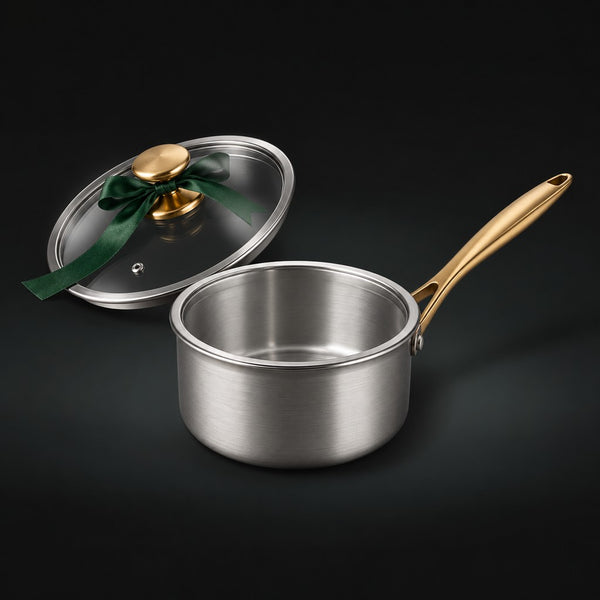
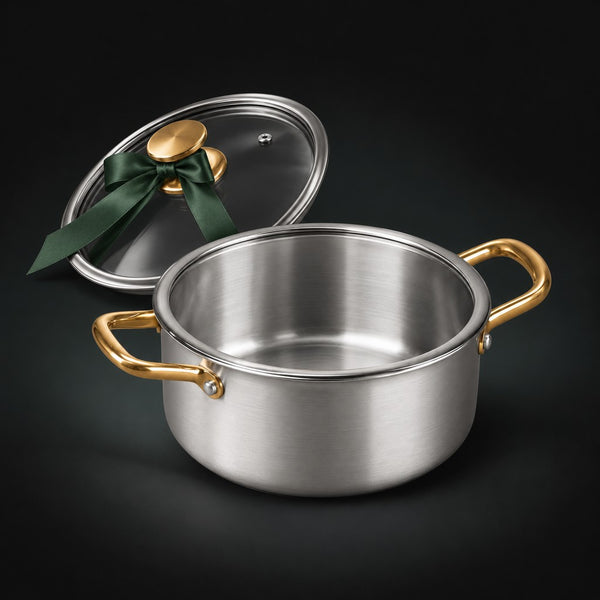
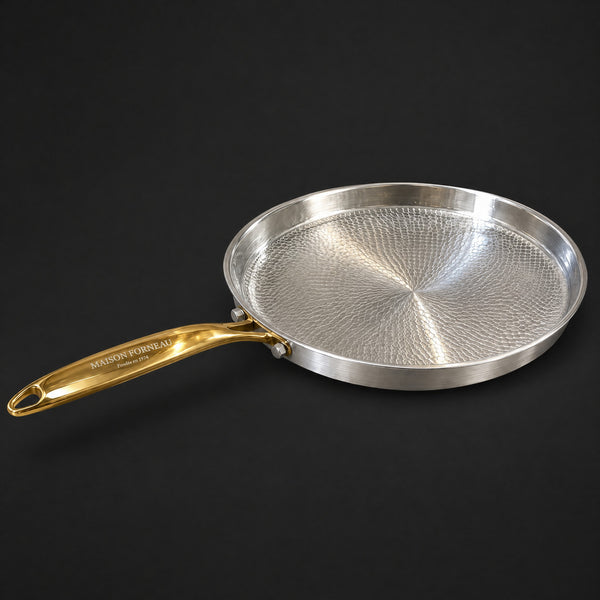
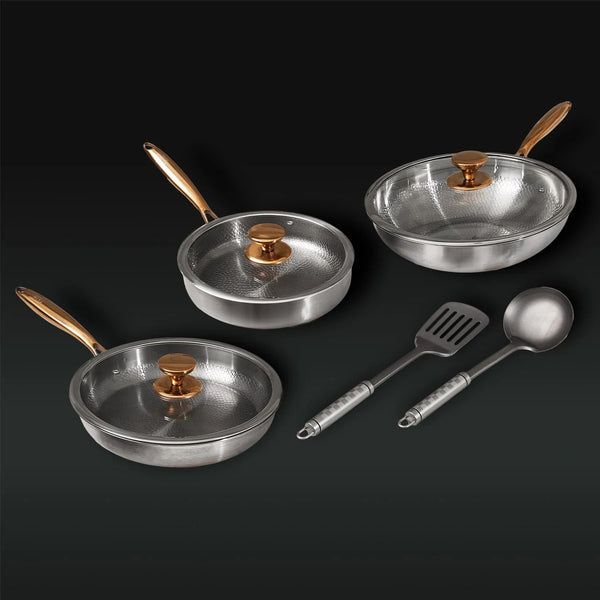
On a Forneau pan, for example, the cooking surface is 100% pure grade 1 titanium, with no coating at all. Underneath, to make the pan actually work, there are three recycled aluminum cores that spread the heat, and a stainless steel base for induction compatibility. It's normal that the base and handle aren't titanium — only the cooking surface is, and that's the part that touches your food.
| Feature | "Titanium" coating | Pure grade 1 titanium surface |
|---|---|---|
| Real composition | Nonstick coating + titanium particles | Pure titanium, nothing layered over it |
| Wear over time | Flakes, loses nonstick performance | Scratches, but stays intact |
| Release risk | Can shed particles as it wears | Scratches stay cosmetic, nothing released |
| PFAS / PTFE | Often present | None |
| Realistic lifespan | Replace after a few years | Lifetime warranty |
Titanium's heat conductivity: myth vs. reality
Titanium by itself is not a great heat conductor, and no serious pan uses it as the only material through the entire thickness. Anyone claiming titanium "conducts heat beautifully" on its own is either exaggerating or confusing it with a completely different metal.
What actually works is a layered build: a pure titanium cooking surface for the food-safety and durability side, and underneath it, cores designed to spread heat evenly — typically recycled aluminum. That combination is what makes an ultra-light, high-performing pan possible, not titanium on its own.
"What's the deal with these titanium pans?"
« What's the deal with these titanium pans? »
Reddit cookware forum
Using titanium pans on gas (still the most common setup)
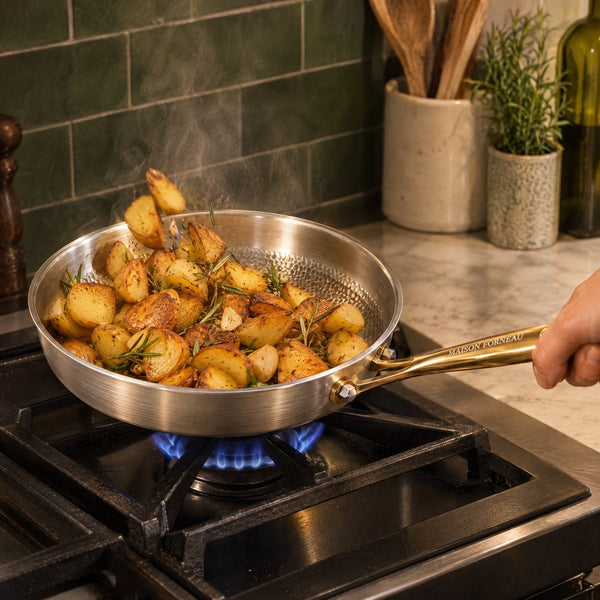
A lot of home kitchens still run on gas, and a pure titanium cooking surface performs well on it — but it does ask for one extra step compared to a standard nonstick pan: preheat it for a minute or two, then add a bit of oil or butter before cooking.
That's not a hidden flaw, it's just the reality of bare titanium: without a chemical nonstick coating, the pan needs that quick step to release food properly. In exchange, there's nothing to scratch off and no coating to replace a few years down the line.
What about induction?
Same logic applies on induction: it's the stainless steel base that makes the pan compatible, not the titanium itself. A well-built pan with a pure titanium surface works on both gas and induction, thanks to this layered construction underneath.
Real prices on the market
Plenty of buyers correctly point out that titanium pans seem to cost a fortune. That's true for genuine grade 1 pure titanium in a solid layer — the material and the manufacturing process cost more than a standard nonstick pan.
But here's the catch: some brands selling "titanium" pans at a much lower price point are actually selling reinforced nonstick coatings with titanium particles mixed in, not a solid cooking surface. A surprisingly low price next to the word "titanium" is usually the first clue that it isn't pure titanium at all.
Before comparing prices, compare what's actually inside. A higher price for a genuinely pure titanium cooking surface is justified by a lifetime warranty and not having to replace a worn-out nonstick coating every couple of years.
Signs of a genuinely non-toxic, PFAS-free pan
A few concrete signs help separate a real pure titanium pan from one riding on aggressive marketing:
- The spec sheet specifically says "100% pure grade 1 titanium cooking surface," not just "titanium."
- No mention of PTFE, PFOA, or PFAS anywhere in the materials list.
- The maker admits the surface will scratch with use, and clarifies those scratches stay cosmetic and release nothing — instead of claiming it "stays like new forever."
- A lifetime warranty is offered, a sign the maker isn't expecting the material to degrade.
- The weight is described as light without promising miracle heat conductivity from titanium alone.
If one of these is missing, or if the word "coating" shows up anywhere in the description, there's a good chance it's a reinforced nonstick pan, not pure titanium.
Frequently asked questions
How do you know if a pan is 100% pure titanium?
Read the spec sheet carefully: it should state the cooking surface is pure grade 1 titanium, with no mention of a "coating" or PTFE. If the maker describes titanium particles mixed into a nonstick coating, it's not pure titanium.
Is titanium better than stainless steel for cooking on gas?
A pure titanium surface has the advantage of having no coating to flake off and being PFAS-free — something bare stainless steel also offers, but without titanium's scratch resistance. Both need a bit of oil or butter to keep food from sticking, especially on a cold pan.
How much does a pure titanium pan cost?
It costs more than a standard nonstick pan because pure titanium is more expensive to machine. A very low price next to the word "titanium" is often a sign of a reinforced coating, not an actual pure titanium cooking surface.
Does titanium heat up as well as aluminum?
No, titanium alone conducts heat worse than aluminum. That's why pans with a pure titanium cooking surface build in recycled aluminum cores underneath the surface, to spread heat effectively while keeping titanium's benefits where it touches your food.
Will scratches on a titanium pan release anything into my food?
No. Pure titanium scratches with use like any metal, but those scratches stay cosmetic. There's no coating or adhesive layer underneath to expose, since the surface is pure titanium with nothing layered on top.
Can a pure titanium pan go in the dishwasher?
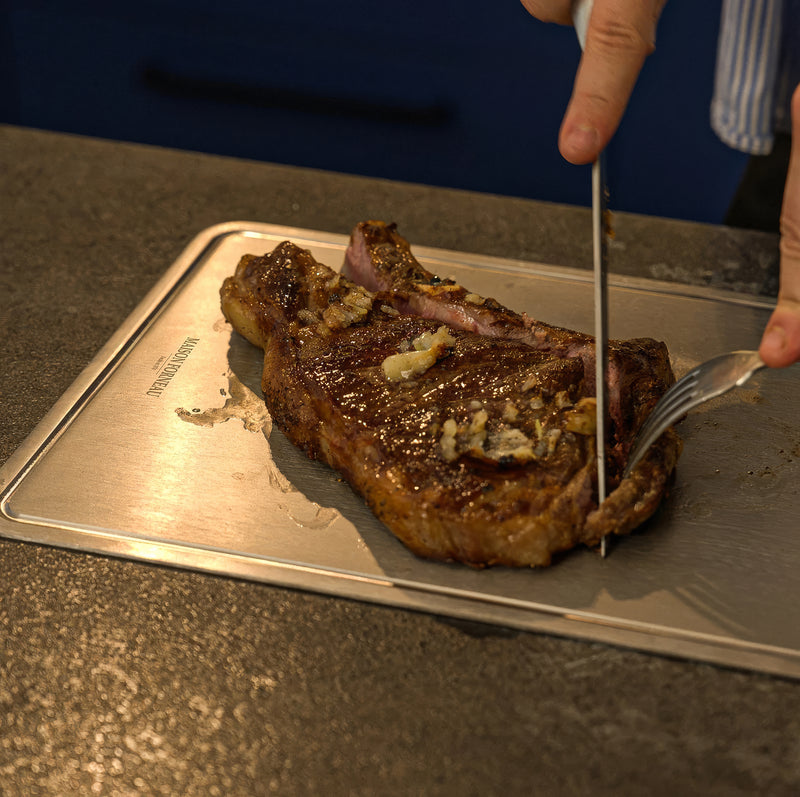
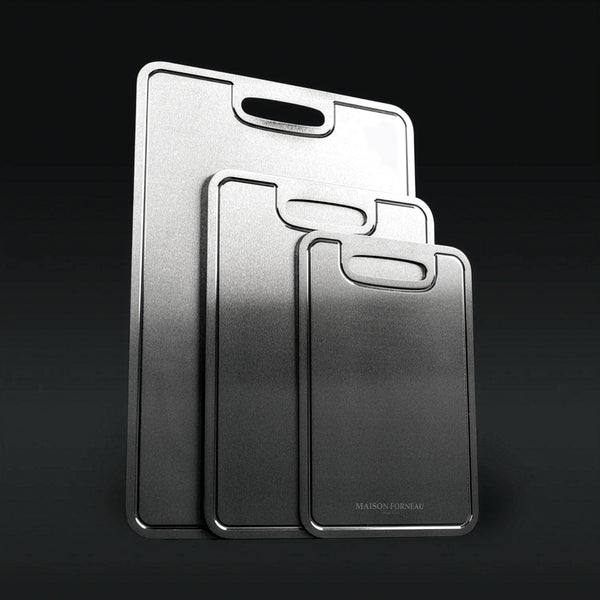
The cooking surface itself can handle it, but most makers still recommend hand washing the pan to protect the handle and base over time. A titanium cutting board, by contrast, is typically fully dishwasher safe.
