

















Fact-checked: composition and sources on our Facts & evidence page.
- 4.9/5 from over 5,000 reviews
- Lifetime warranty
- Ships within 48 h
- Free shipping
HexClad's hybrid laser-etched coating and a pure titanium cooking surface solve the same problem in opposite ways. Here's what's actually inside each one, and what happens after a year of daily use.
The essentials in 30 seconds
- HexClad is a laser-etched hybrid: stainless steel base with a nonstick coating, not solid metal
- HexClad settled a lawsuit over PFAS-free marketing claims, paying into a settlement fund
- Any nonstick coating wears down over time no matter how the marketing sounds
- Forneau's cooking surface is 100% pure titanium grade 1, a solid layer with nothing to flake off
- Pure titanium scratches cosmetically but releases nothing, unlike a worn-down coating
Two opposite philosophies: hybrid vs. no coating at all
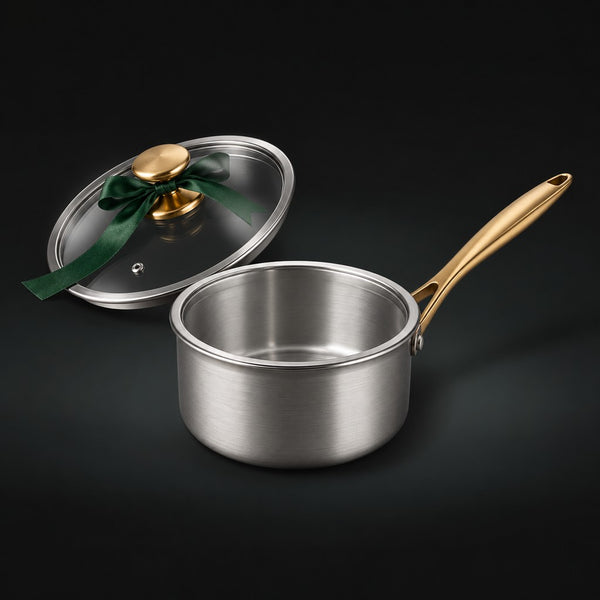
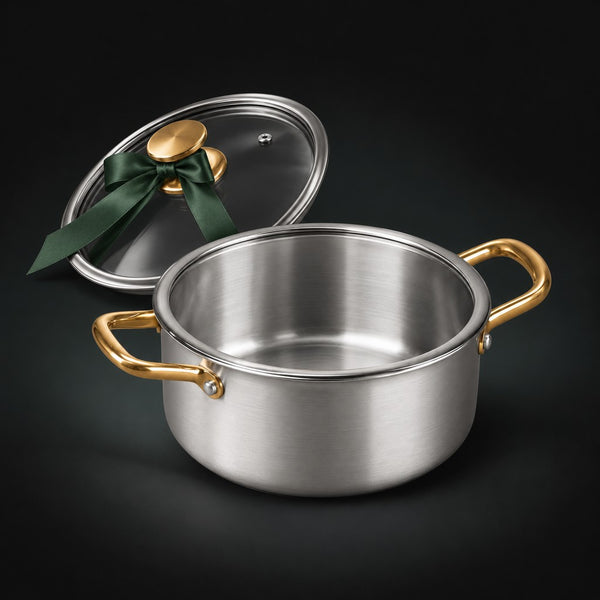
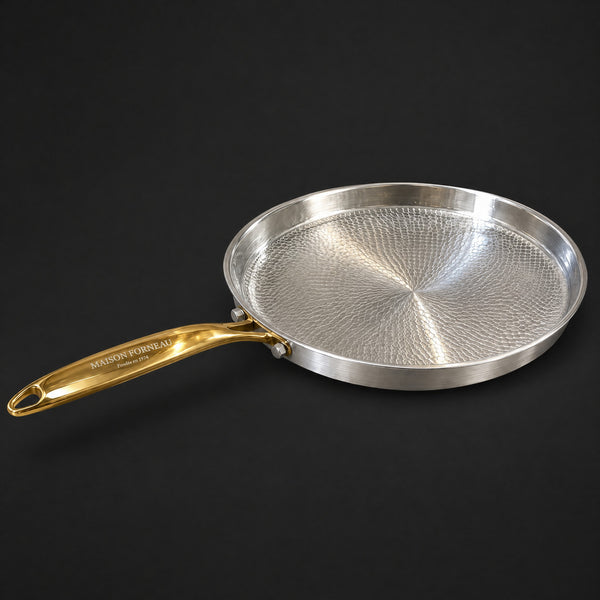
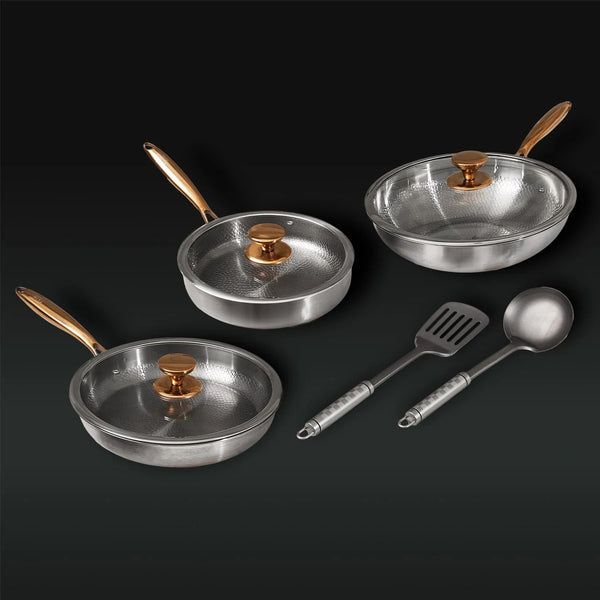
HexClad is built on a simple idea: take a stainless steel pan, laser-etch a hexagon pattern into it, and fill the grooves with a nonstick coating so the raised steel peaks protect it from scratches. It's a hybrid — part stainless, part nonstick, bonded together. A pure titanium pan takes the opposite approach: no coating at all. The cooking surface is 100% pure titanium grade 1, uncoated, with aluminum cores underneath for heat and a stainless steel base for induction. One pan manages a coating. The other one doesn't have one to manage.
Good to know
Pure titanium needs a bit of preheating and some fat to cook well, it's not a free lunch. But nothing in that surface wears off into your food, which is the whole point.

What's actually in the HexClad coating
HexClad markets itself as non-toxic and PFOA-free, and the laser-etched steel peaks are real — they do add scratch resistance compared to a flat nonstick pan. But between those peaks, in the grooves, there's still a nonstick coating, and nonstick coatings are coatings. They're not solid metal. Over time, with metal utensils, high heat, or just years of use, that coating wears down, staining sets in, and the nonstick properties fade. That's not a HexClad-specific flaw, it's how every nonstick surface behaves, hybrid or not.
Laser-etching slows down the problem, it doesn't remove it
The hexagon pattern genuinely helps compared to a smooth coated pan. Metal utensils rest on the steel peaks more than they dig into the coating. But the coating is still there, still in direct contact with food in the low spots, and still subject to the same wear every nonstick surface faces eventually.
The HexClad lawsuit: what you need to know
HexClad faced a class action lawsuit over claims that its cookware was marketed as non-toxic, PFAS-free, and PFOA-free. HexClad agreed to pay into a settlement fund as part of the resolution, without admitting wrongdoing, which is standard in these cases. For a lot of people on forums, this wasn't really about one brand. It confirmed a wider suspicion: that "non-toxic" claims on nonstick cookware deserve scrutiny, not blind trust, even from brands that market themselves on durability.
If you want the full picture on PFAS and cookware safety beyond HexClad specifically, we've covered it in detail in our guide on titanium pans and PFAS.
« They just settled a lawsuit for lying to consumers about their pans being pfas and pfoa free »
Grip and everyday cooking feel
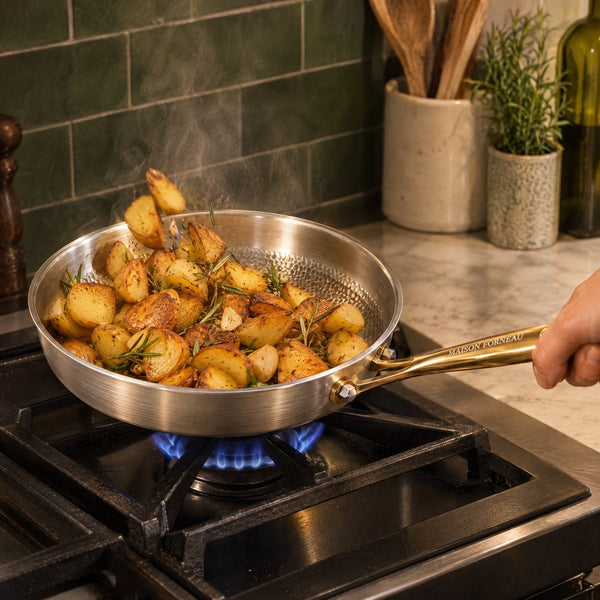
Fresh out of the box, HexClad's food release is genuinely good — that's the whole selling point of a hybrid pan, and it's a fair one while the coating is new. A titanium pan is a different experience from day one: it needs preheating and a bit of oil or butter before food goes in, because there's no slick coating doing the work for you. That's the honest tradeoff. Once you get into the habit, a hot pan with a thin film of fat releases eggs, fish, and pancakes just fine, but it is a technique, not a shortcut.
The learning curve is real and worth naming
People switching from any nonstick pan to titanium or stainless describe a short learning curve — a few sessions of food sticking before the technique clicks. It's a fair trade if what you want is a surface that doesn't need babying for the next ten years.
Durability: what happens to the coating over time
This is where the two pans really part ways. A HexClad coating, like any coating, degrades. It might take a year, it might take five, depending on use, heat, and how it's cleaned, but the trajectory is the same: the nonstick properties fade and eventually the surface needs replacing. A pure titanium surface doesn't have that trajectory because there's nothing to wear off. The surface can get cosmetic scratches with use — titanium scratches, we won't pretend otherwise — but those scratches are purely cosmetic and release nothing into food: there's no coating underneath to expose, no flaking. It's the same metal, top to bottom, scratch or no scratch.
We go deeper into how a pure titanium cooking surface compares to other "titanium-coated" pans on the market in our full titanium cookware comparison, and real long-term feedback in our titanium pan review roundup.
Care and dishwasher use
HexClad is often marketed as dishwasher safe, but like most coated cookware, hand washing extends its life — harsh detergents and high heat cycles speed up coating wear. A pure titanium pan has no coating to protect, so there's no special handling required beyond basic care: no fragile nonstick layer means no risk of degrading a surface that was never coated to begin with.
Our price / lifespan comparison
Here's the honest math: a HexClad pan costs less upfront than one with a pure titanium cooking surface, and for the first year or two, it performs well. But nonstick coatings have a lifespan, not a lifetime, no matter how the warranty is worded. A pure titanium cooking surface has no coating to outlive.
| HexClad (hybrid) | Pure titanium (Forneau) | |
|---|---|---|
| Cooking surface | Stainless steel + nonstick coating in laser-etched grooves | 100% pure titanium grade 1, uncoated |
| PFAS/PTFE involved | Coating composition disputed in lawsuit, settlement paid | None, nothing to coat with |
| Scratch behavior | Steel peaks resist scratching, but coating in grooves still wears | Scratches cosmetically, surface stays the same metal |
| Day-one food release | Very good, nonstick-level | Needs preheating and fat, short learning curve |
| Long-term trajectory | Coating fades, eventually needs replacing | No coating to degrade |
| Warranty | Limited lifetime warranty on hardware, not coating performance | Lifetime warranty |
If what you want is a pan that performs great for a season and gets replaced, HexClad is a reasonable gimmick-free entry point among coated cookware. If what you want is a surface you buy once, that's the whole case for a pure titanium cooking surface: no coating, nothing to flake, nothing to settle a lawsuit over.
Frequently asked questions
Does HexClad contain PFAS?
HexClad has marketed its cookware as PFOA-free and non-toxic, but it faced a class action lawsuit over those exact claims and settled by paying into a settlement fund. The coating itself, in the grooves between the laser-etched steel peaks, is still a nonstick coating, not solid metal.
Why was HexClad sued?
The lawsuit centered on marketing claims that the cookware was non-toxic and free of PFAS and PFOA. HexClad settled the case, agreeing to pay into a settlement fund without admitting wrongdoing, which is common in consumer class actions.
Does the HexClad coating wear down over time?
Yes. The laser-etched steel peaks add scratch resistance compared to a flat nonstick pan, but the nonstick coating between them is still a coating. With use, heat, and metal utensils, the nonstick properties fade and staining can set in, just like any nonstick surface.
Can a pure titanium pan replace a HexClad?
Yes, for anyone willing to preheat and use a bit of fat. A pure titanium cooking surface has no coating to wear down or flake, so the tradeoff shifts from "replace it eventually" to "learn the technique once."
Does titanium scratch like HexClad claims to resist?
Titanium does scratch, and we won't claim otherwise. The difference is what a scratch means: on titanium it's cosmetic, the same metal underneath, and nothing is released into food. On a coated pan, a scratch can expose what's beneath the coating.
Which pan lasts longer, HexClad or pure titanium?
A pure titanium surface has no coating to degrade, so there's no finite lifespan tied to nonstick performance fading. HexClad's hybrid coating, like all nonstick coatings, has a realistic lifespan even with laser-etched scratch protection.
