

















Fact-checked: composition and sources on our Facts & evidence page.
- 4.9/5 from over 5,000 reviews
- Lifetime warranty
- Ships within 48 h
- Free shipping
"Which titanium pan to choose" starts with a single question: is your cooking surface pure grade 1 titanium with no coating, or aluminum covered in a reinforced nonstick coating with titanium dioxide added (Tefal Titanium and most "titanium" pans sold in big-box stores)? In the first case, nothing wears out. In the second, you're cooking on PTFE as long as it holds, then on bare aluminum once it's scratched through.
Three questions are enough to decide: does the product page cite a titanium grade (1 or 2)? Does it talk about a "solid layer" or a "reinforced coating"? Is there a published PFAS test on the finished product? The sections below cover reviews after six months of use, the question of safety, day-to-day care, and the real price of a pure titanium pan.
The essentials in 30 seconds
- Most pans sold as "titanium" are aluminum with a PTFE coating containing titanium particles. The surface you cook on is PTFE, a PFAS
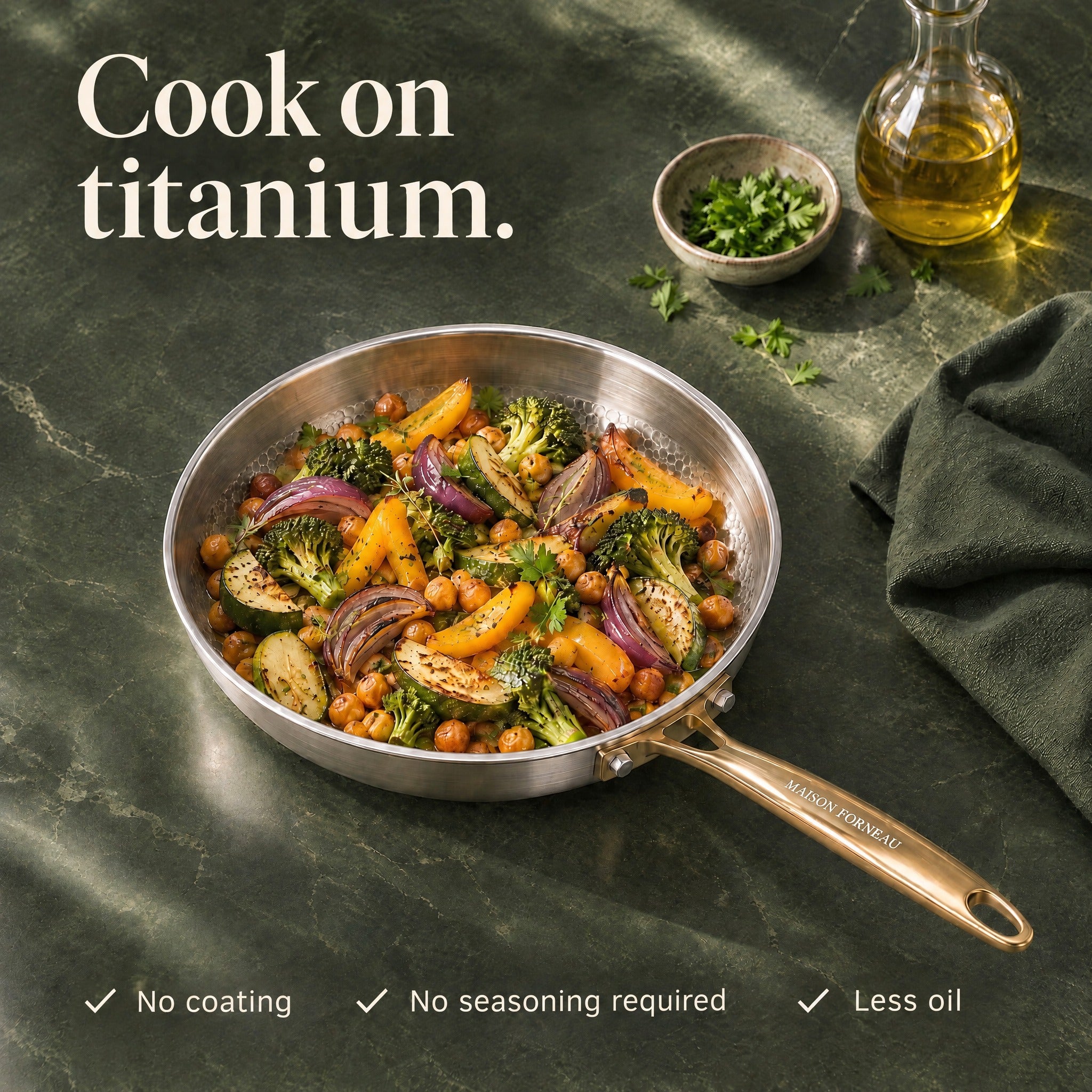
- Solid pure titanium (grade 1, ASTM B265) has no coating: nothing wears away, nothing migrates. It's inert, lightweight, and nickel-free
- Bare titanium isn't nonstick on its own. Preheat, then add fat: it's the heat doing the work, not a coating
- Titanium alone conducts heat poorly, so a good titanium pan is multilayer: titanium surface, aluminum cores, stainless steel base for induction
- Forneau's cooking surfaces are 100% pure titanium, certified at 99.89%, PFAS-tested by SGS (ISO 17025), designed in France, lifetime guaranteed
Pure titanium surface or titanium-coated: the only question that matters
Search "titanium pan" and most results are aluminum pans with a nonstick coating described as titanium-reinforced. Titanium there is a hardening additive inside a PTFE layer: it makes the coating last a bit longer, but the surface touching your food is still PTFE. Once the coating wears or scratches through, you're cooking on bare aluminum.
A solid pure titanium cooking surface is a different object entirely. There's no coating. The metal touching the food is titanium all the way through, inert and non-reactive. To tell the two apart, look for the titanium grade (grade 1 or 2 = commercially pure titanium), a material certificate, and the words "no coating." If a product page talks about "titanium nonstick" without saying what the surface is actually made of, it's almost certainly coated.
PFAS, PTFE, and why a bare surface is the goal
PTFE, best known under the Teflon brand, is a PFAS, one of those fluorinated compounds called forever chemicals. A coating that stays intact at normal cooking temperatures is considered low-risk, but coatings don't stay intact: they scratch, chip, and break down when overheated. Ceramic sol-gel coatings avoid PTFE but wear out even faster. The reason to choose a bare metal cooking surface, titanium, stainless steel, or carbon steel, is simple: nothing can wear away, so nothing can end up on your plate.
Forneau goes a step further and tests the finished product. PFAS analysis is carried out by SGS, an ISO 17025 accredited lab, with the latest results from October 2026 below measurable thresholds. These results apply to the samples tested on that date and are published, along with everything we can and can't claim, on our Facts & Evidence page.
Titanium vs. stainless steel, cast iron, ceramic, and carbon steel
| Cooking surface | Coating | Weight | Reacts with acidic food | Preheating | Care |
|---|---|---|---|---|---|
| Pure titanium (multilayer) | None | Light | No | Yes | Soapy water, dishwasher-safe |
| Stainless steel (multilayer) | None | Medium | No | Yes | Soapy water, dishwasher-safe |
| Cast iron | Seasoning (polymerized oil) | Very heavy | Yes, unless well seasoned | Yes | Dry, oil, never soak |
| Carbon steel | Seasoning | Medium | Yes | Yes | Dry, oil, never soak |
| Nonstick ceramic | Sol-gel coating | Light | No | No | Gentle, coating worn out in 1-2 years |
| Titanium-reinforced PTFE | PTFE (a PFAS) | Light | No | No | Gentle, no metal utensils, replace once scratched |
Stainless steel is the closest relative: a bare, non-reactive surface that rewards the same technique. Pure titanium is lighter at the same size and nickel-free, which matters for people with allergies. Cast iron and carbon steel are excellent for searing but heavy and dependent on seasoning. Coated pans are the easiest on day one, and the only ones you'll have to throw away. Our article titanium vs. stainless steel pan breaks down the comparison in detail.
Cooking on titanium: preheating, fat, heat
A bare titanium surface isn't nonstick in the way a coating is. It becomes easy to cook on with the technique used in every professional kitchen: preheat the empty pan over medium heat, add fat once it's hot, then the food. A drop of water that beads up and rolls across the surface means the pan is ready. Eggs, fish, and pancakes release on their own once a crust forms; moving them too soon is what makes them stick. The first week takes some adjusting, after which the pan behaves the same way every day for decades, because nothing wears out.
Metal utensils are fine to use. The surface scratches, and the marks are cosmetic: there's no layer to break through, and the metal releases nothing more than before. We never describe titanium as scratch-proof.
How a Forneau pan is built
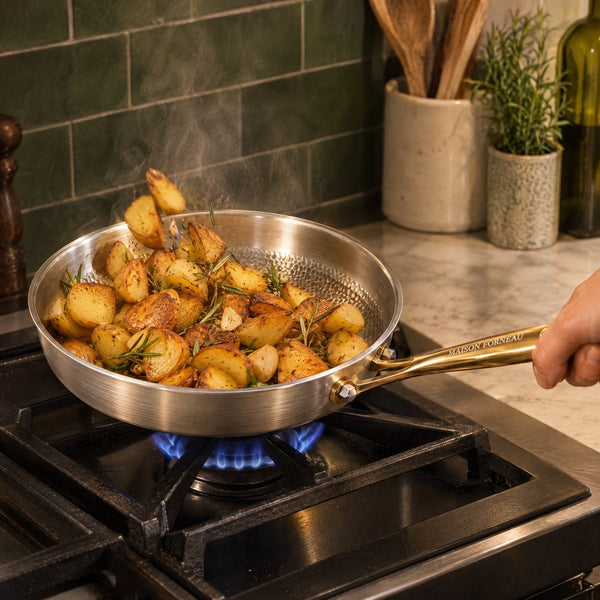
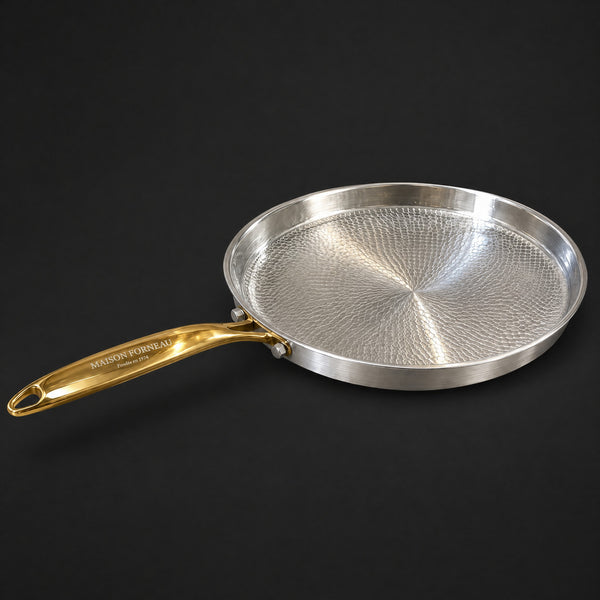
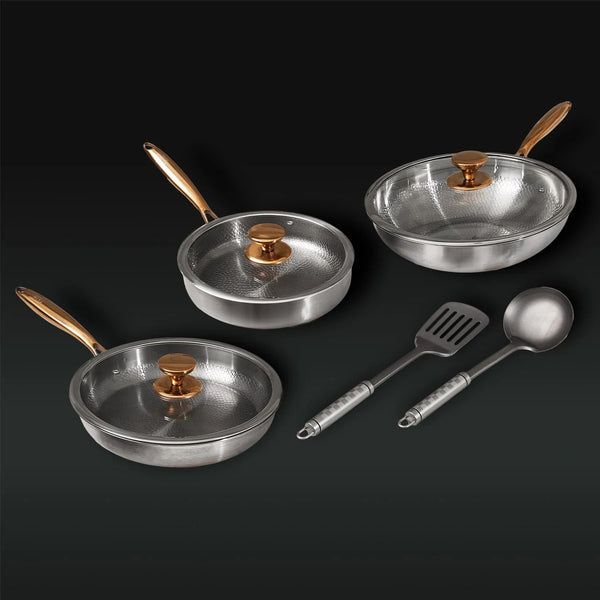
Titanium conducts heat poorly, and a pan made entirely of titanium would heat unevenly and weigh too much at a usable thickness. The Forneau Signature pan is therefore built in five layers: a solid layer of 100% pure grade 1 titanium as the cooking surface, the only part that touches your food; three recycled aluminum cores that spread and hold the heat; and a stainless steel base that makes the pan induction-compatible, on top of gas, ceramic glass, and electric. The titanium is independently lab-certified at 99.89% purity. We spell this out because several brands let people believe their pans are solid titanium throughout.
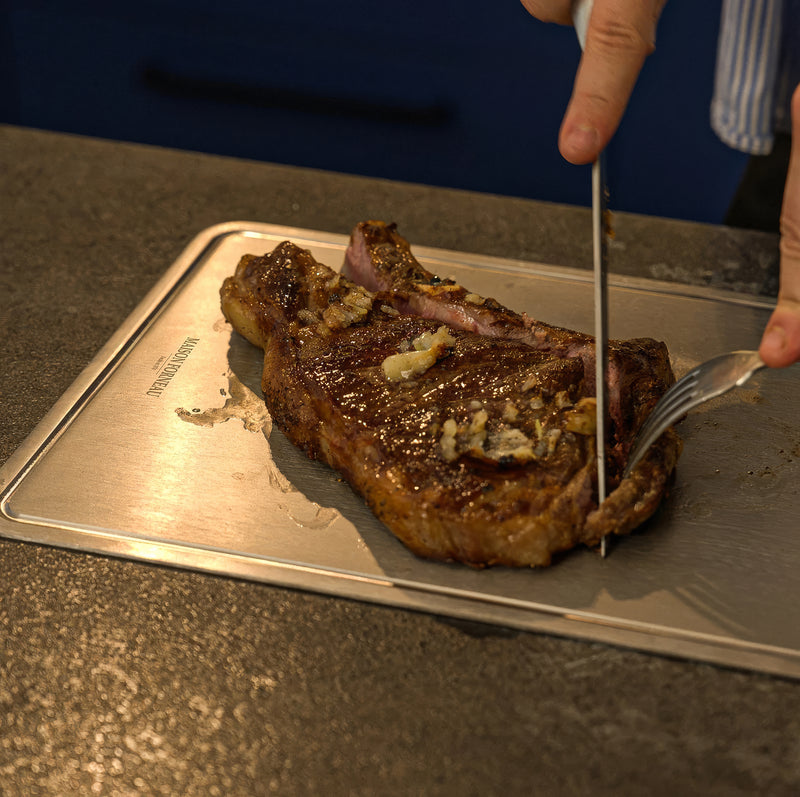
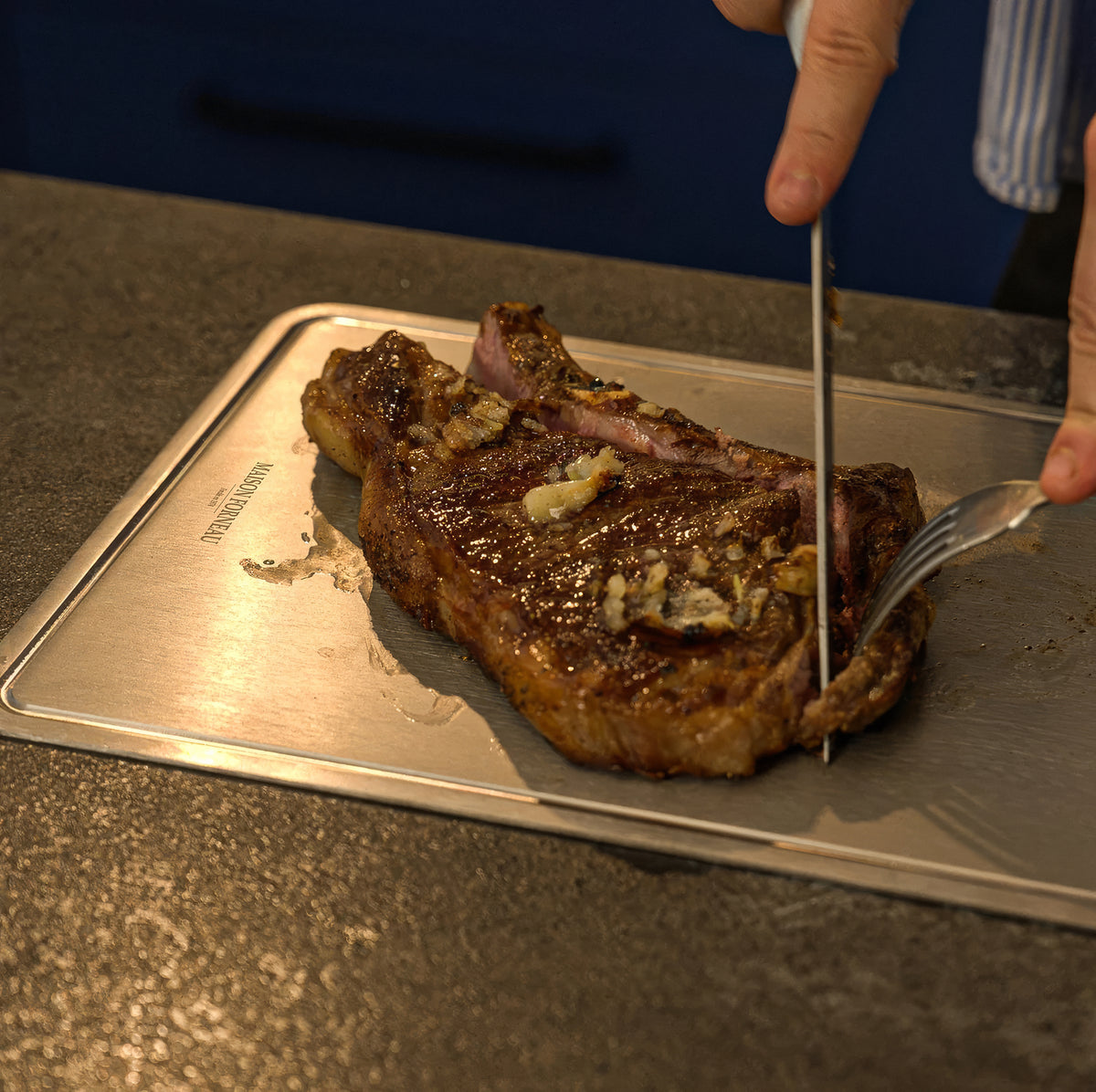
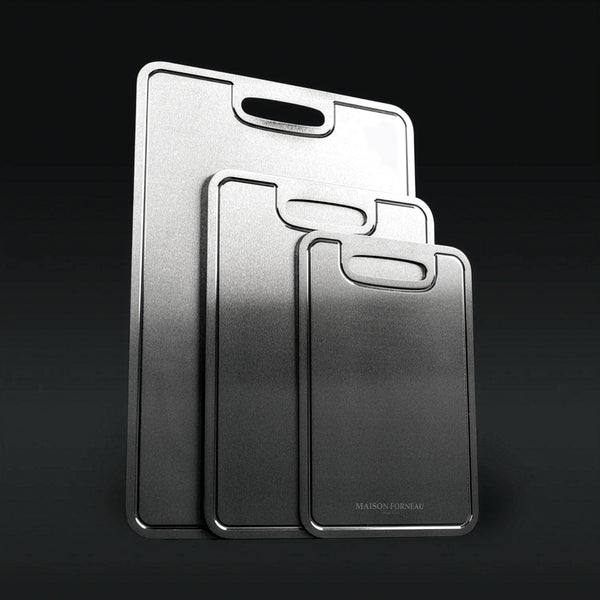
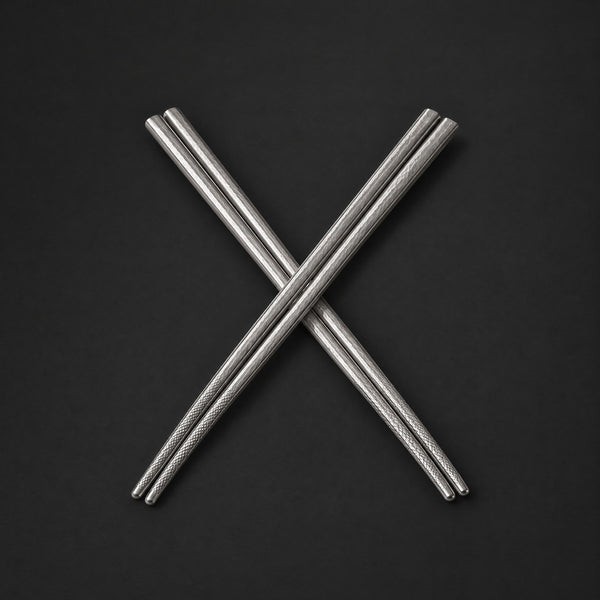
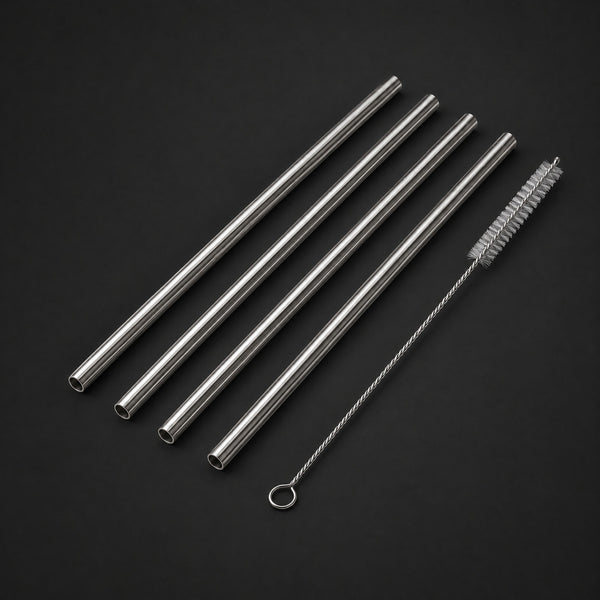
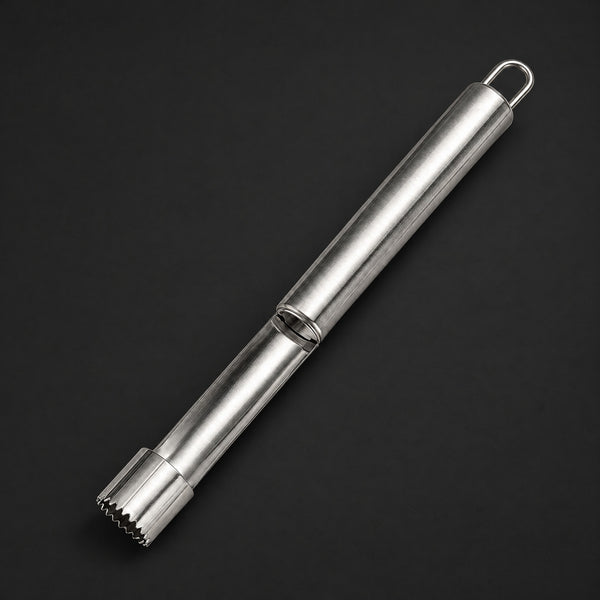
Our cutting boards and utensils, which don't need to conduct heat, are made of solid pure titanium.
The Forneau titanium range
- Signature Pan, 28 cm, glass lid included. The pan to start with.
- Sauté pan, 24 cm, high sides for sauces, stews, and one-pan meals.
- Wok, 24 cm, for high heat and quick cooking.
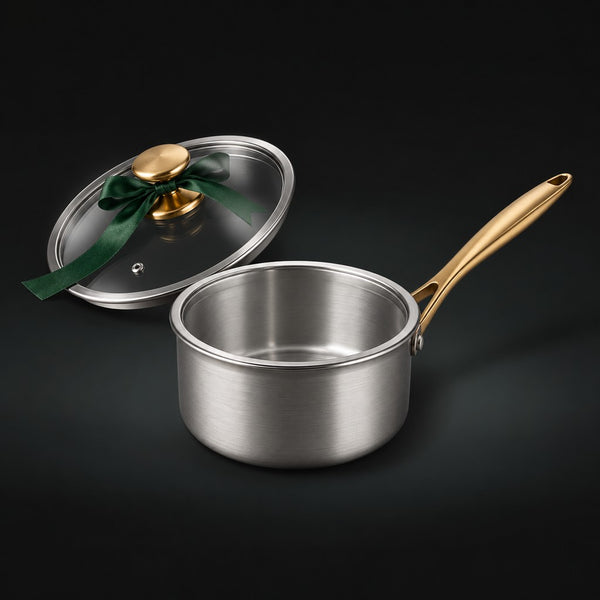
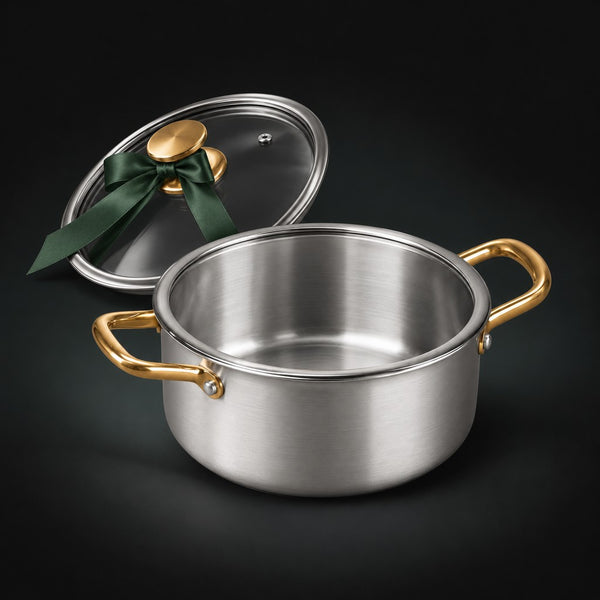
- Saucepan, 18 cm, and stockpot, 24 cm.
- Sets: the Everyday Duo 6-piece set, the Signature 8-piece set, and the Master Collection 14-piece set.
The full range lives in the titanium pans collection. Free worldwide shipping, free returns, and a lifetime guarantee on the titanium. Forneau utensils are designed in France.
What we don't say
We don't claim our pans are solid titanium throughout: the cooking surface is, the body underneath is aluminum and stainless steel. We don't say scratch-proof, we don't call it nonstick the way a coating is, and we don't say made in France. Everything we claim is on our Facts & Evidence page, and what we can't prove isn't there.
How to choose a titanium pan
- A bare surface, not a coated one. Grade 1 or 2 titanium, a material certificate, and the words "no coating."
- A multilayer build. Aluminum cores for even heat, and a stainless steel base if you cook on induction.
- Independent testing. A PFAS test on the finished product by an accredited lab, not a supplier's spec sheet.
- Honest claims. A brand that tells you its pan scratches and needs preheating is telling you the truth about bare metal.
- Warranty and returns. A lifetime warranty on the material and free returns, so you can try the pan in your own kitchen.
To go further: PFAS-free pan, where titanium pans are made, and the titanium cutting board guide.
Reviews after six months: what customers say
Forneau pans hold a 4.9/5 rating across more than 5,000 reviews. That score is built on several months of real use, not the first cook, which matters for a product whose whole promise is longevity.
The most common thread in reviews: getting the heat right takes a few days of learning at first, then becomes second nature. Customers note you need to preheat before adding fat, or food sticks. The pan's weight is mentioned as pleasant to hold, lighter than expected for a metal pan. Sponge cleaning comes up often: no special product or precaution needed. The matching cutting board is mentioned for one specific reason: it doesn't hold onto garlic or fish smells between uses.
What disappoints, too, deserves mention: some customers report sticking during the first few uses, when preheating is skipped or cut short. Titanium does scratch with use, especially with metal utensils; those scratches are cosmetic and don't affect cooking or safety. The full detail of these reviews, positive and negative, is available on our customer reviews page.
Is a titanium pan dangerous?
Grade 1 titanium is an inert metal, the same one used in medical implants. On a Forneau pan, the cooking surface is a solid layer of pure titanium, with no coating: there's nothing to chip away, nothing that can migrate into food over repeated use. That's the fundamental difference from a coated-surface pan, where wear always ends up exposing something other than what was advertised at the start.
To verify rather than simply claim it, our pans are PFAS-tested by SGS, an ISO 17025 accredited lab, with the latest check in July 2026: the substances tested for are below measurable levels. The real question to ask before buying a "titanium" pan isn't about pure titanium, it's about coated "titanium" products, where titanium is just an additive inside a PTFE layer that wears out like any other nonstick coating. Full testing details on Facts & Evidence, and product origin on designed in France, where does it come from.
Frequently asked questions
Is titanium cookware safe?
Pure titanium is inert and biocompatible, the same metal used in surgical implants. A pan whose cooking surface is solid pure titanium, with no coating, releases nothing into food. Caution is warranted for pans sold as "titanium" that are actually aluminum with a PTFE nonstick coating reinforced with titanium particles: there, the surface is PTFE, a PFAS.
Is a titanium pan nonstick?
Not on its own. A bare titanium surface isn't nonstick the way PTFE is. It becomes easy to cook on with the classic technique: preheat the empty pan, then add fat. It's the heat doing the work, not a coating. The first few uses take a bit of getting used to.
Does a titanium pan work on induction?
A pan made entirely of titanium wouldn't work on induction: titanium isn't magnetic and conducts heat poorly. The Forneau pan has a stainless steel base for induction and three recycled aluminum cores to spread the heat, under a solid layer of pure titanium on the cooking surface.
Is a Forneau pan solid titanium throughout?
No, and we say so clearly. The cooking surface, the only layer that touches your food, is 100% pure grade 1 titanium. Underneath, three recycled aluminum cores and a stainless steel base for induction, five layers in total. A pan made entirely of titanium would heat poorly and weigh too much at a usable thickness. Our cutting boards and utensils, however, are solid pure titanium.
Does titanium scratch?
Yes. Marks from metal utensils are cosmetic: there's no coating to break through, and the metal releases nothing more than before. We never describe titanium as scratch-proof.
Titanium or stainless steel for a pan?
Both offer a bare metal cooking surface and need preheating. Pure titanium is lighter and nickel-free; stainless steel is cheaper and more common. Our comparison article covers the differences in detail.
Where are Forneau utensils made?
Forneau utensils are designed in France. We don't say made in France. The company is based in Clovis, New Mexico, USA, with an office in Paris.
Frequently asked questions about titanium pans
Is a titanium pan bad for your health?
Not if the cooking surface is pure titanium with no coating: the metal is inert, used in medical implants, and nothing wears away or migrates into food.
Titanium pan or "titanium" coating: what's the difference?
Pure titanium is a solid layer with no coating. "Titanium" cookware is usually a PTFE nonstick coating reinforced with titanium particles: the surface touching food is still PTFE.
Does food stick to it?
Bare titanium isn't naturally nonstick. You need to preheat the empty pan, then add fat: skip that step and food can stick at first.
Is it induction-compatible?
Yes. The stainless steel base beneath the aluminum cores makes Forneau pans compatible with every stovetop, including induction.
How much does a titanium pan cost, and how long does it last?
Forneau pans cost €99, €109, or €119 depending on size, with a lifetime guarantee: with no coating to replace, the cooking surface doesn't wear out over time.
Which size to choose: 20, 24, or 28 cm?
20 cm for an egg or a small portion, 24 cm for a meal for two, 28 cm for cooking for the family or searing a generous cut of meat. All three share the same pure titanium.
