



















Fact-checked: composition and sources on our Facts & evidence page.
- 4.9/5 from over 5,000 reviews
- Lifetime warranty
- Ships within 48 h
- Free shipping
Short answer: yes, pure titanium cookware is safe — but the term "titanium pan" gets used for two very different products. Here's how to tell a solid titanium cooking surface from a titanium-infused ceramic coating, and what that difference means for your health.
The essentials in 30 seconds
- A pure grade 1 titanium cooking surface is a solid metal layer, not a coating that can flake
- Titanium contains no PFAS, PFOA, or PTFE, so there are no forever chemicals to worry about
- Titanium scratches like any metal, but scratches are cosmetic and release nothing into food
- Ceramic titanium pans are not solid titanium: they're ceramic coatings infused with titanium dioxide
- Bare titanium needs preheating and some fat to cook well, which is the honest trade-off
Are titanium pans safe: the short answer
Yes. Pure titanium is a biocompatible metal — it's the same material used in surgical implants and joint replacements because the body tolerates it so well. A cooking surface made of 100% pure grade 1 titanium has no PFAS, no PFOA, no PTFE, and nothing to flake off into your food. There's no coating to wear through, because the surface is the metal, all the way down.
But here's the catch: not every pan marketed as "titanium" is actually made of titanium. Some are ceramic pans with titanium dioxide mixed into the glaze — a completely different product with a different safety profile. We'll untangle that below.
Good to know
Titanium will scratch over time just like stainless steel, but those marks are cosmetic and don't release anything into your food. The real question isn't whether titanium is safe — it's whether what you're buying is actually titanium or a titanium-dusted coating.

What «titanium pan» actually means (grade 1 pure vs titanium-infused ceramic)
When you see "titanium" on a pan, it usually means one of two things:
- Grade 1 pure titanium surface: a solid layer of titanium metal forms the actual cooking surface. Not a coating, not a dusting — a full layer of the metal itself. This is what you're touching with your spatula.
- "Titanium-infused" or "ceramic titanium": a ceramic or sol-gel nonstick coating with titanium dioxide (a mineral pigment, also used in sunscreen and food coloring) added to the formula. The cooking surface is still ceramic, not titanium — and it behaves like ceramic: it wears, loses its slip, and eventually needs replacing.
Most of the confusion in is ceramic titanium pan safe searches comes from brands blurring this line in their marketing. A pan can legally say "titanium" on the box while having almost no titanium metal in its cooking surface at all.
How Forneau is built
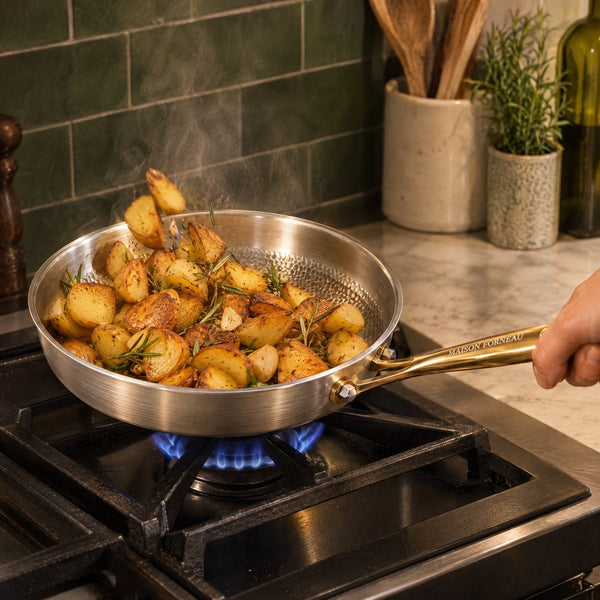
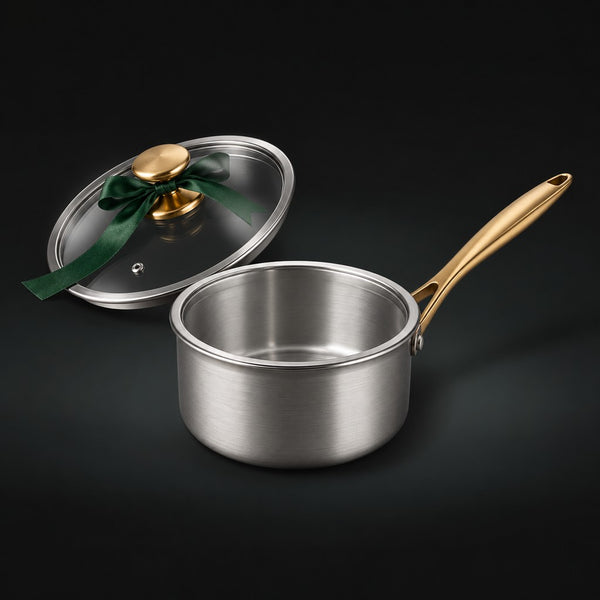
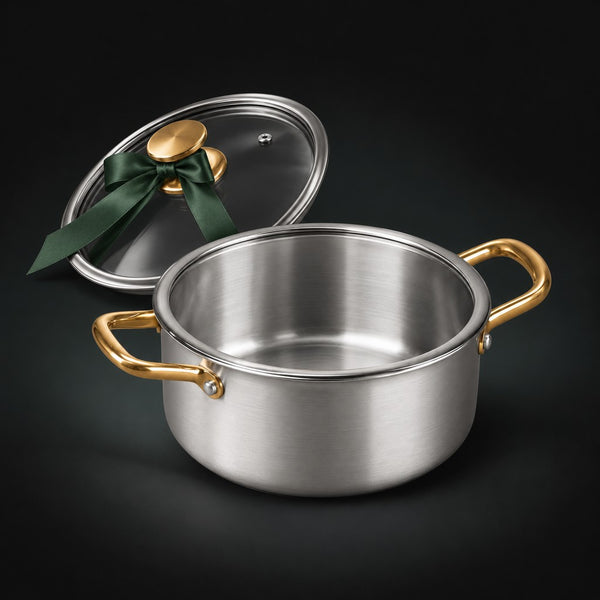
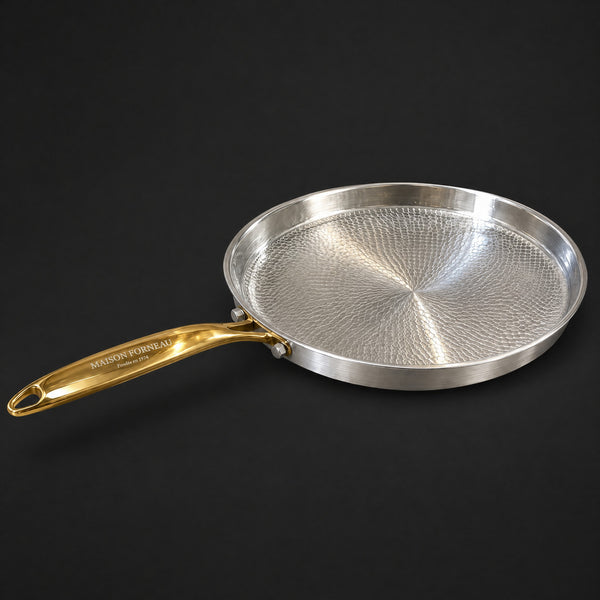
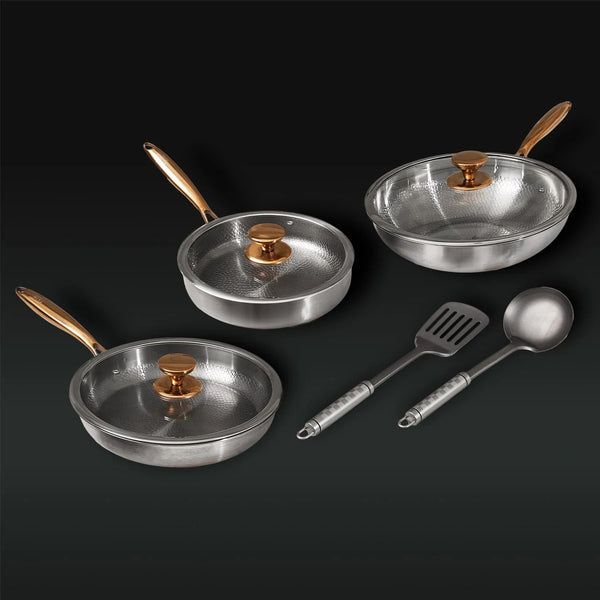
Forneau's cooking surface is 100% pure grade 1 titanium — it's not a coating. Underneath, three layers of recycled aluminum spread heat evenly and keep the pan light, with a stainless steel base for induction compatibility. The base and handle aren't titanium, and that's normal: titanium does the one job that matters most, sitting between your food and the metal, with nothing to scratch off or leach.
Is titanium reactive with food or heat
Titanium is one of the most chemically stable metals that exists. It doesn't react with acidic foods like tomatoes or citrus, it doesn't leach ions into your meal the way some reactive metals can, and it doesn't off-gas or produce fumes at normal cooking temperatures. That stability is exactly why it's used in medical implants that stay in the human body for decades without triggering a reaction.
What titanium does not do on its own is conduct heat particularly well. That's a known trade-off, which is why pure titanium cookware is built with conductive layers (like aluminum) underneath the titanium surface. The titanium handles food contact and durability; the layers below handle heat distribution.
« They just settled a lawsuit for lying to consumers about their pans being pfas and pfoa free »
r/BuyItForLife
Titanium vs PFAS/PTFE nonstick: the real difference
This is the comparison most people searching "are titanium pans safe" actually care about. Traditional nonstick pans rely on a PTFE (Teflon) coating, which can contain or be processed with PFAS — the "forever chemicals" that don't break down in the environment or the body. When that coating scratches or overheats, it can degrade and release particles into food, which is the exact fear driving people to "ditch" their old nonstick sets.
| Feature | PFAS / PTFE nonstick coating | Pure grade 1 titanium surface |
|---|---|---|
| What the surface is made of | A chemical coating applied over metal | A solid layer of titanium metal |
| Contains PFAS/PFOA/PTFE | Often yes | No |
| What happens when scratched | Coating can flake into food | Cosmetic mark only, nothing released |
| Lifespan of the cooking surface | Degrades, eventually needs replacing | Doesn't wear through — it's the base metal |
| Needs fat/preheating to release food | Less at first, more as it ages | Yes, from day one |
The trade-off is real and worth naming plainly: a brand-new PTFE coating glides more easily on day one than bare titanium. But that glide fades as the coating wears — and when it does, you're not just losing performance, you're potentially eating what flakes off. Titanium's answer isn't a magic nonstick trick; it's preheating the pan properly and using a bit of oil or butter, every time. That's the one honest trade-off of cooking on real metal instead of a coating.
Are titanium pots and pans safe for everyday cooking
Yes, with realistic expectations. A pure titanium surface is non-toxic; it scratches like any metal, but those scratches are cosmetic and release nothing harmful, and it's safe at high heat because there's no coating to break down or produce fumes. It's dishwasher-safe in the sense that nothing will strip off, though hand care extends the life of any pan's appearance.
What it's not: an instant nonstick miracle straight out of the box. Titanium rewards the same habits that make stainless steel and carbon steel work well — preheat the pan, add fat, let the food release naturally instead of forcing it. If you're coming from a lifetime of nonstick coatings, that's a learning curve, not a flaw.
Is ceramic titanium pan safe (the confusion explained)
Ceramic pans labeled "titanium" or "titanium-infused" are generally safe to use in the sense that they're usually PTFE-free. But they are not solid titanium, and they don't get titanium's durability. Ceramic/sol-gel coatings are known to lose their nonstick properties faster than people expect — often within a year or two of regular use — because the coating itself is a thin layer sitting on top of another metal, not a structural part of the pan.
So when someone asks "is ceramic titanium pan safe," the honest answer is: probably safe chemically, but don't expect titanium's longevity. You're buying a ceramic pan with a marketing name, not a solid-metal cooking surface.
What independent sources and regulators say
Titanium's biocompatibility is well documented in medical literature, which is why it's the standard material for surgical implants, dental work, and joint replacements — applications where the body's tolerance for a material matters more than almost anywhere else. Regulatory bodies in the US, UK, EU, and Australia do not list titanium metal as a substance of concern for food contact.
PFAS, by contrast, is under active regulatory scrutiny in multiple countries, with several jurisdictions moving to restrict or phase out PFAS use in consumer products, including cookware coatings. That regulatory direction is part of why so many home cooks are actively trying to move away from PTFE nonstick sets toward solid metal alternatives like stainless steel, carbon steel, and pure titanium.
For more on how titanium compares to PFAS cookware specifically, see our deep dive on titanium pans and PFAS, and for what actually causes food to stick on a titanium surface, read why food sticks to titanium pans. You can also browse our titanium pan collection to see the construction up close.
Frequently asked questions
Are titanium pans non stick?
Not in the PTFE sense. A pure titanium surface needs preheating and some oil or butter to release food well — it doesn't have the instant, zero-fat slip of a fresh nonstick coating. In exchange, there's no coating to wear out over time.
Are titanium pans better than stainless steel?
Both are solid metal with no coating to flake, and both need preheating and fat for good food release. Titanium adds biocompatibility and a cooking surface that won't react with acidic foods, while being lighter than comparable stainless cookware.
Do titanium pans contain PFAS?
A genuine pure titanium cooking surface contains no PFAS, PFOA, or PTFE. There's no chemical coating at all — the surface is solid metal. Always check whether a "titanium" pan is actual titanium or a ceramic coating with titanium dioxide added.
Is titanium pan safe for high heat cooking?
Yes. Titanium doesn't break down or release fumes at high cooking temperatures the way a degrading nonstick coating can. It's one of the reasons titanium is used in demanding industrial and medical applications.
Are titanium pots and pans safe for daily use?
Yes. Daily use is where pure titanium's advantage shows: no coating to gradually wear through, no flaking to worry about, and scratches stay purely cosmetic. The only daily habit it asks of you is preheating and a bit of fat before you cook.
