

















Fact-checked: composition and sources on our Facts & evidence page.
- 4.9/5 from over 5,000 reviews
- Lifetime warranty
- Ships within 48 h
- Free shipping
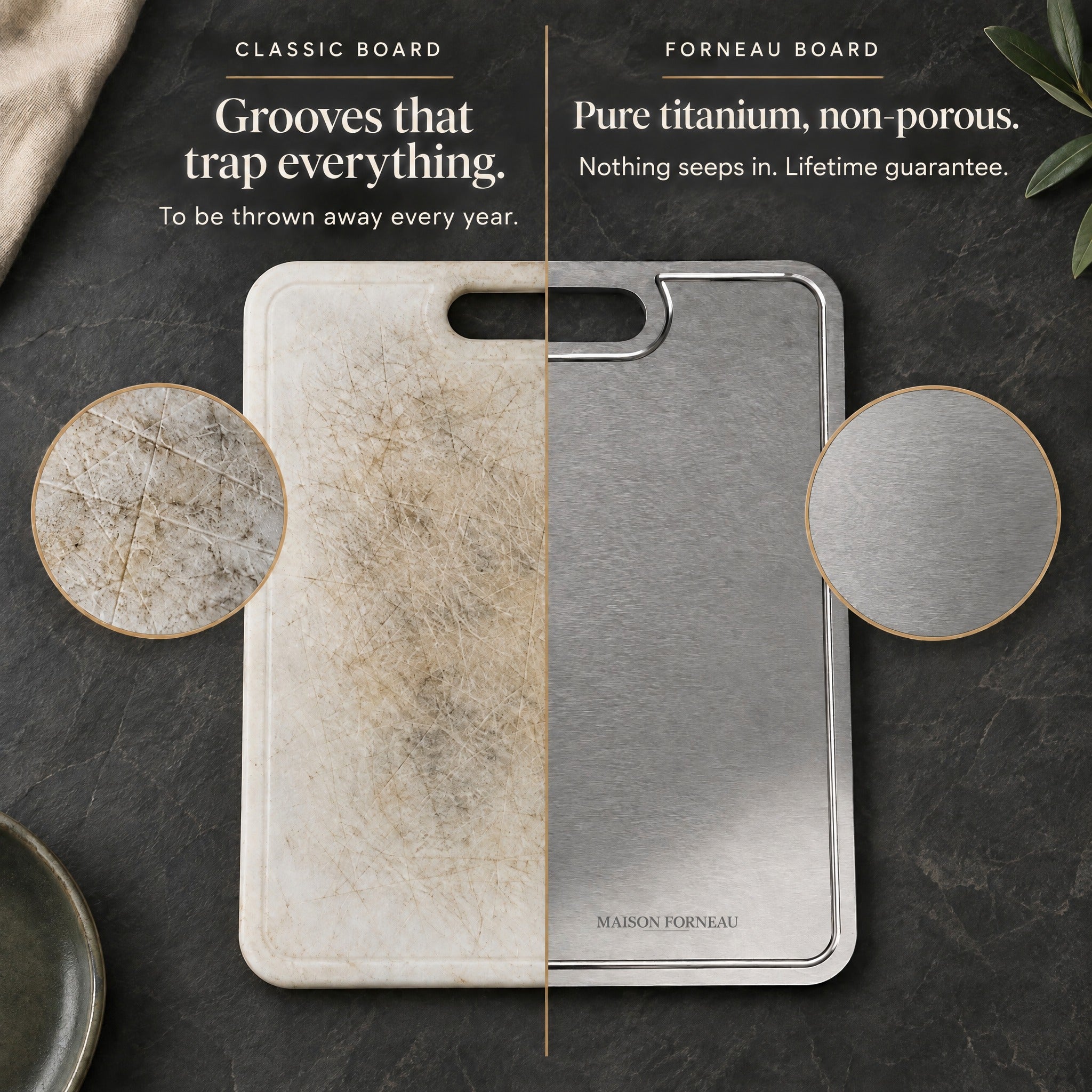
Do you need a titanium cutting board? If you're looking for a surface that absorbs nothing, the answer is yes: pure titanium holds no microplastics like plastic does, and no juices seep into it the way they do into wood fibers. It's dishwasher safe, and it's pure grade 1 titanium with no coating: nothing to chip, nothing to hide.
Two real questions remain, and we'll answer them honestly. Knives: titanium is harder than wood, so slicing on it is fine, but we avoid heavy chopping without a quick pass on the honing steel first. Noise: a metal surface resonates a bit more than a wooden board, especially in the first few days. Up next: what customers say after six months, why hygiene changes everything, and how to pick the right size.
The essentials in 30 seconds
- Pure titanium (grade 1, ASTM B265) is non-porous: it doesn't absorb juices, odors, or bacteria the way wood does, and it doesn't shed microplastics the way plastic does
- It's dishwasher safe, won't warp, won't rust, and weighs about 40% less than a stainless steel board of the same size
- It scratches. Knife marks are cosmetic and harmless. It's also harder on the blade than wood: a pass on the honing steel before cutting helps
- Be wary of "titanium" boards that are actually stainless steel with a thin coating: ask for the grade and a material certificate
- The Forneau board is 100% pure titanium, certified at 99.89%, PFAS-tested by SGS (ISO 17025), designed in France, lifetime warranty
What a titanium cutting board is
A titanium cutting board is a thin, rigid plate with a brushed or lightly textured surface, generally 2 to 3 millimeters thick. Titanium is the metal used for surgical implants and aircraft parts: inert, corrosion-resistant, and very strong for its weight. On a board, that translates into a surface that absorbs nothing, cleans completely, and never needs oil.
Two very different products share the same name. A solid titanium board is titanium all the way through. A "titanium-coated" board is a stainless steel or aluminum plate covered with a thin layer of titanium. The second costs less, and its layer can wear down to the base metal underneath. If a product listing doesn't state the titanium grade or offer a certificate, assume it's coated.
Titanium vs. wood, plastic, glass, and stainless steel
| Board | Porous | Dishwasher safe | Gentle on knives | Weight | Lifespan |
|---|---|---|---|---|---|
| Pure titanium | No | Yes | Moderate: honing steel before cutting | Light | Lifetime, cosmetic scratches |
| Wood (end-grain) | Yes | No | The best | Heavy | Years, with oiling and sanding |
| Plastic (HDPE) | Low, but knife grooves trap bacteria | Yes | Good | Light | A few months to a few years, sheds microplastics |
| Glass | No | Yes | The worst: dulls blades fast | Heavy, breakable | Long, until it chips |
| Stainless steel | No | Yes | Moderate | Heavy | Long, may contain nickel |
Wood remains the benchmark for anyone who prioritizes keeping their knives sharp above all else. Plastic is light and inexpensive, but the grooves a blade leaves behind are exactly where bacteria and microplastics come from. Glass is hygienic and terrible for blades. Titanium sits between wood and glass for knife-friendliness, and ahead of all of them for hygiene, weight, and lifespan.
Hygiene: why non-porous matters
Wood fibers absorb meat juices and take time to dry; plastic boards develop grooves that a sponge can't reach. Pure titanium is a continuous, non-porous metal surface: nothing seeps in, nothing hides. A rinse with hot soapy water or a dishwasher cycle leaves the surface as clean as day one. The board doesn't retain the smell of garlic, onion, or fish, which makes it the natural choice for raw meat, fish, and staining foods like beets or turmeric.
There's also no coating to break down. On non-stick pans and on painted or laminated boards, wear exposes the material underneath. On a solid titanium board, the surface is the same metal all the way through.
Knives, scratches, and everyday use
Two honest points. First, titanium scratches: after a few weeks, the board carries a fine network of knife marks. They're cosmetic, they trap nothing, and the board keeps working for decades. Second, titanium is harder than wood, so the blade meets more resistance. The practical answer is the same as for any hard board: a few passes on the honing steel before cutting, and a real sharpening when the edge calls for it. We don't claim the board preserves or protects the blade's edge.
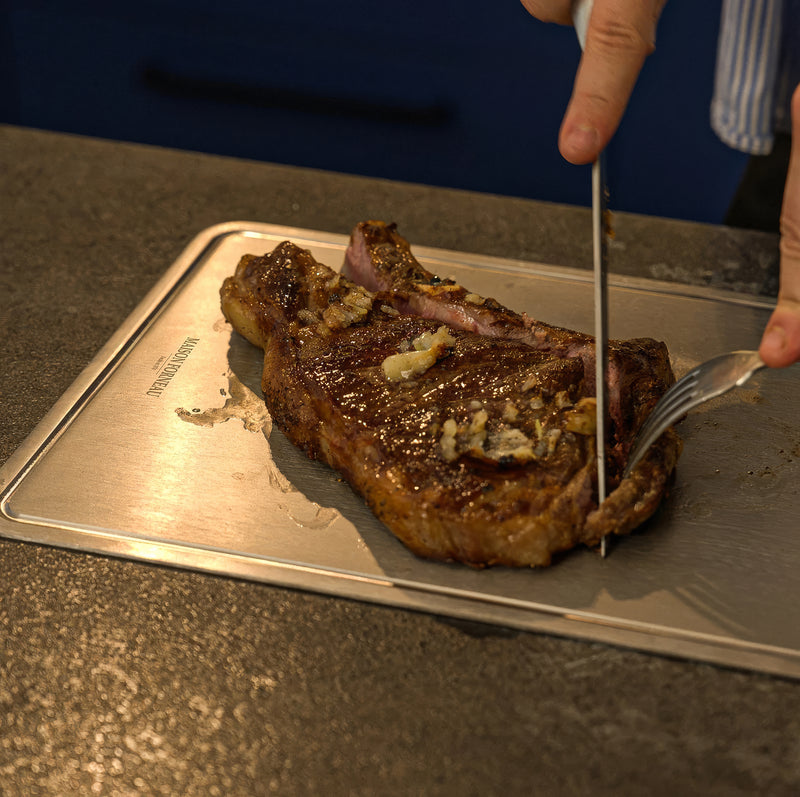
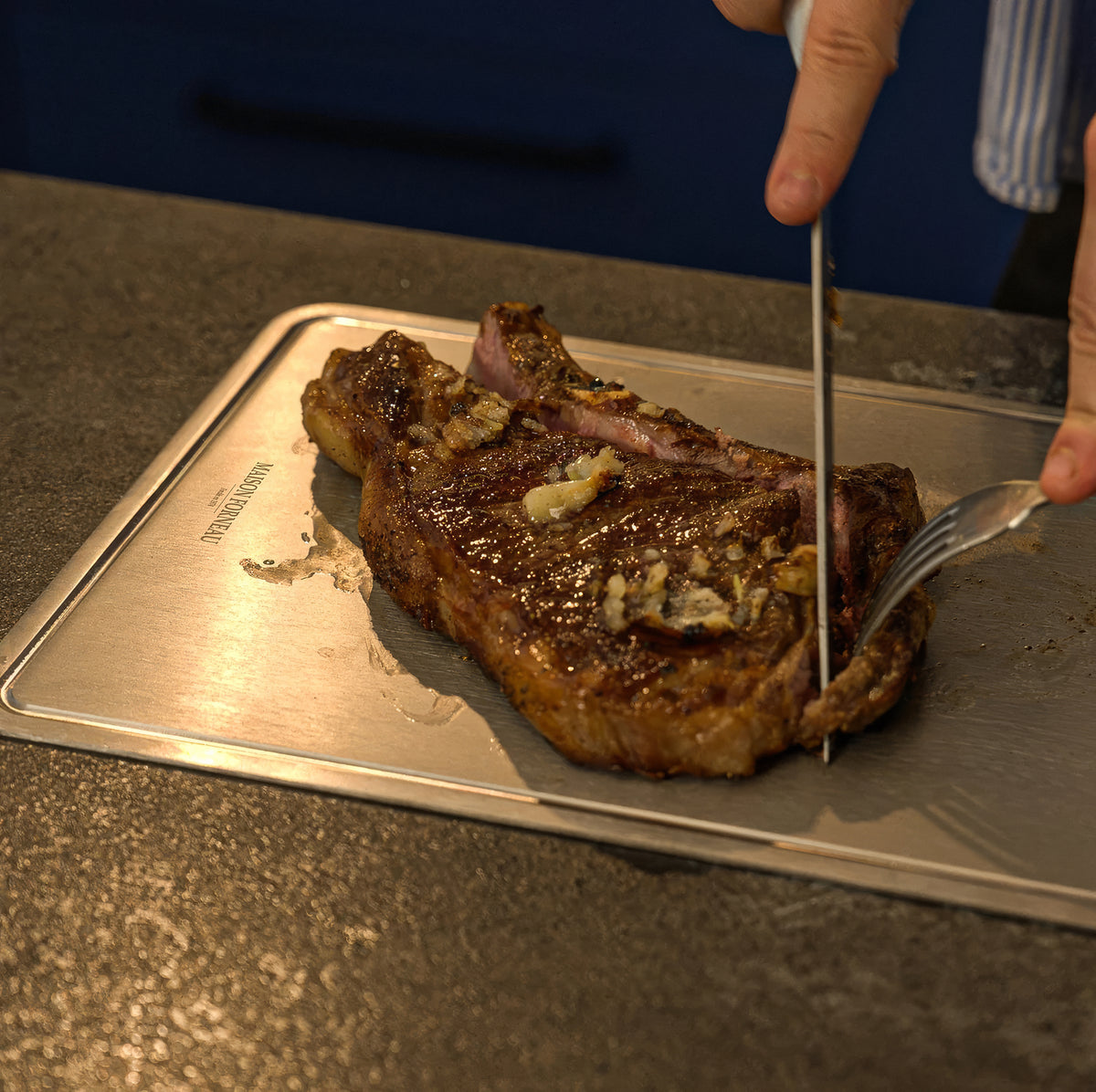
In daily use, the board is light enough to lift with one hand and slide ingredients straight into the pan, it won't shift when set on a damp towel, and it doubles as a serving tray straight out of the fridge.
How to choose a titanium board
- Solid titanium, not coated. Ask for the grade (grade 1 or 2 = commercially pure titanium) and a material certificate.
- Thickness. Between 2 and 3 millimeters, the board is rigid without being heavy. Thinner, and it flexes and resonates under the knife.
- Surface finish. A fine brushed finish gives the blade some grip; a mirror polish is slipperier and marks more easily.
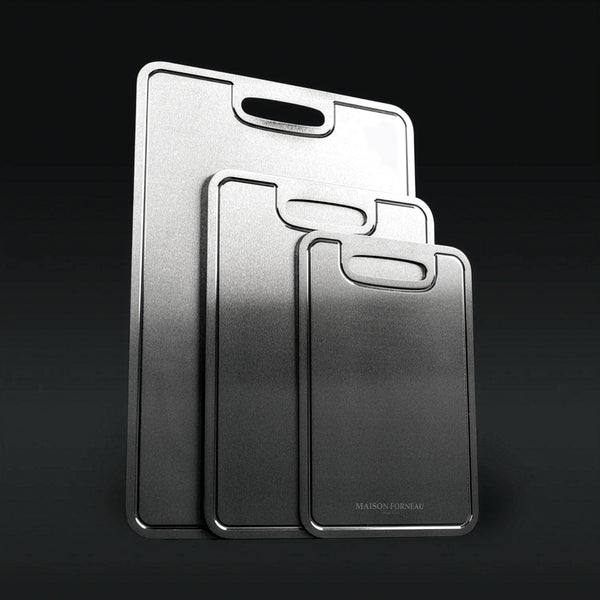
- Size. A medium for everyday use, a large for meat and whole vegetables, a small for fruit and garlic. A set of three covers an entire kitchen.
- Testing and warranty. Lab testing for PFAS and heavy metals, and a warranty that covers the material for life.
The Forneau titanium cutting board
The Forneau board is 100% pure titanium, grade 1, the purest grade under the ASTM B265 standard, certified at 99.89% by an independent lab. It has no coating, no paint, no plastic. PFAS testing is carried out by SGS, an ISO 17025-accredited lab, with the latest results from October 2026 coming in below measurable thresholds. The board is designed in France and comes with a lifetime warranty on the titanium.
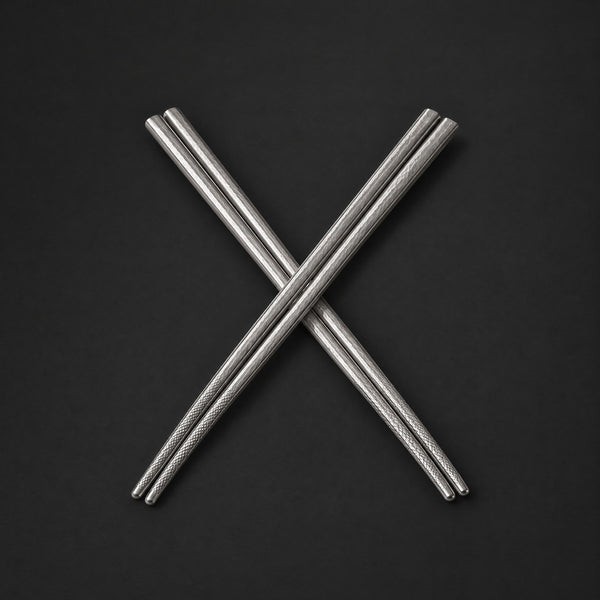
It's available on its own and as a set of three sizes. It pairs with the Forneau chef's knife and the pure titanium utensils. Free worldwide shipping, free returns. Every claim on this page can be checked on our Facts & Evidence page, which also lists what we don't claim.
What we don't say
We don't say the board is scratch-proof, we don't say it's made in France (it's designed in France), and we don't say it protects your knives. We'd rather be read back in ten years without having to correct anything.
Care and cleaning
- Hot water and soap, or the dishwasher. No oil, no treatment needed.
- Dry standing up or flat: it won't warp either way.
- Don't use it as a trivet for a pan straight off the heat: the metal conducts heat and the board will get hot.
- Scratches are normal. For a more uniform look, a scouring pad rubbed in the direction of the brushing evens out the surface.
To go further: wood, plastic, or titanium cutting board, and our titanium pan guide.
Reviews after six months: what customers say
The board holds a 4.9/5 rating across more than 5,000 reviews. The most common comment: garlic, onion, and fish odors don't linger on the surface, unlike a wooden board that needs a long scrub or time to air out. Going straight into the dishwasher comes up often too: no more standing it up to dry by the sink.
The lightness surprises many buyers who expected a heavy metal board like stainless steel. On sizing, the M (34×23) stands out as the best everyday compromise: big enough to break down a whole chicken, compact enough to store easily.
On the downside, two things come up repeatedly: the sound of the knife on metal, more noticeable than on wood, especially in the first few weeks before getting used to it. And the knife marks that become visible after a few uses — they're cosmetic and trap nothing, but some customers expected a surface that would stay looking brand new. All reviews are available on our customer reviews page.
Hygiene: the real difference with wood and plastic
A pure grade 1 titanium board has a non-porous surface: nothing seeps in, not meat juices, not bacteria, not odors. A wash at 70°C in the dishwasher is enough to leave it as clean as day one, with no oiling or sanding to plan for, unlike wood.
Plastic, on the other hand, develops grooves under the blade, and studies have shown that cutting on plastic can release microplastics directly into food. Wood needs regular care: oiling, full drying between uses, or the fibers end up trapping moisture and bacteria. Grade 1 titanium is an inert metal, and every Forneau board is PFAS-tested by the SGS lab under the ISO 17025 standard. To learn more about our testing and certifications, see facts and evidence and the origin of Forneau products.
Frequently asked questions
Is a titanium cutting board food safe?
Yes. Commercially pure titanium (grade 1, ASTM B265) is the metal used in surgical implants because it's inert and biocompatible. The Forneau board has no coating, no paint, no plastic layer: the surface is the metal itself, PFAS-tested by SGS, an ISO 17025-accredited lab.
Does a titanium board damage knives?
Titanium's surface is harder than wood, so the blade meets firmer resistance. In everyday use the difference is small: a pass on the honing steel before cutting is enough, as with any board. We never claim the board protects or preserves the blade's edge.
Can a titanium board go in the dishwasher?
Yes. The board isn't porous and is dishwasher safe. Unlike wood, it won't warp or crack and doesn't absorb water; unlike plastic, it doesn't shed microplastics when scratched.
Does a titanium board scratch?
Yes, titanium scratches. Knife marks are cosmetic: there's no coating to wear through, and the bare metal releases nothing further. We never sell it as scratch-proof.
Titanium board or wood board?
Wood is gentler on the edge but porous, needs oiling, and can't go in the dishwasher. Titanium is non-porous, machine washable, lightweight, and built to last a lifetime. Many people keep both: wood for bread, titanium for raw meat, fish, and anything that stains or smells.
What's the difference between a titanium board and a stainless steel board?
Both are non-porous metals. Pure titanium weighs about 40% less than stainless steel at the same size, doesn't rust, and contains no nickel, which matters for people with allergies.
What warranty comes with the Forneau board?
A lifetime warranty on the titanium, with free worldwide shipping and free returns. Full details are on our Facts & Evidence page.
Frequently asked questions about titanium cutting boards
Does a titanium board damage knives?
Titanium is harder than wood: if you chop forcefully or strike the blade flat against it, it will dull a bit faster, and honing it more often is enough to compensate. For normal slicing, there's no noticeable difference day to day.
Is it dishwasher safe?
Yes, with no limit. Pure grade 1 titanium isn't bothered by the heat or moisture of a dishwasher, unlike wood, which warps, or plastic, which deforms over time.
Which size should I choose: S 29×20, M 34×23, L 46×30?
The S (€65) works well for fruit and garlic, the M (€85) is the versatile everyday size, and the L (€125) is best for meat and whole vegetables. The full set of three comes to €249.
Is it noisy?
A metal board resonates more than a wooden one under the knife, especially the first few times you use it. It's the honest trade-off of a non-porous, inert surface.
Does it shed microplastics?
No. Pure grade 1 titanium is a metal surface with no plastic or coating: nothing breaks off during cutting, unlike plastic boards, which wear down under the blade.
What warranty comes with the Forneau board?
The warranty covers the material for life. Pure grade 1 titanium doesn't rust, doesn't corrode, and requires no replacement due to normal surface wear.
