

















Fact-checked: composition and sources on our Facts & evidence page.
- 4.9/5 from over 12,000 reviews
- Lifetime warranty
- Ships within 48 h
- Free shipping
A pure titanium pan releases eggs and fish once it is preheated for two minutes with a teaspoon of fat, and it never loses that release because there is no coating to wear. Cold pan, cold food: it sticks. That is the whole review; the rest is how we know.
The essentials in 30 seconds
- Review updated 15 November 2026; the pan tested is the Forneau 28 cm with a grade 1 titanium surface at 99.89 % purity (certificate on our Facts & proof page)
- Release depends on a 2-minute preheat and a little fat; the water-drop test tells you when the pan is ready
- Scratches appear with metal utensils and are cosmetic: the metal underneath is the same titanium, nothing migrates
- PFAS tested by SGS under ISO 17025 in July 2026; no coating, so no PFAS, PTFE or PFOA to find
- 4.9/5 from more than 12,000 reviews; the critical ones say the same thing: the first week has a learning curve
Is a titanium pan really nonstick?
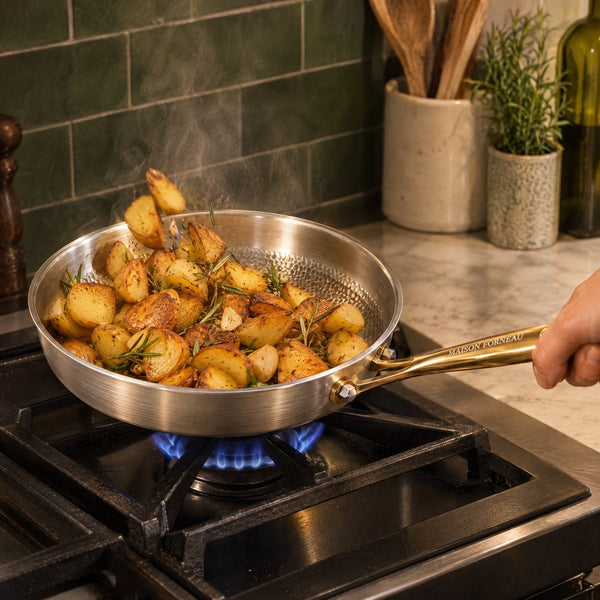
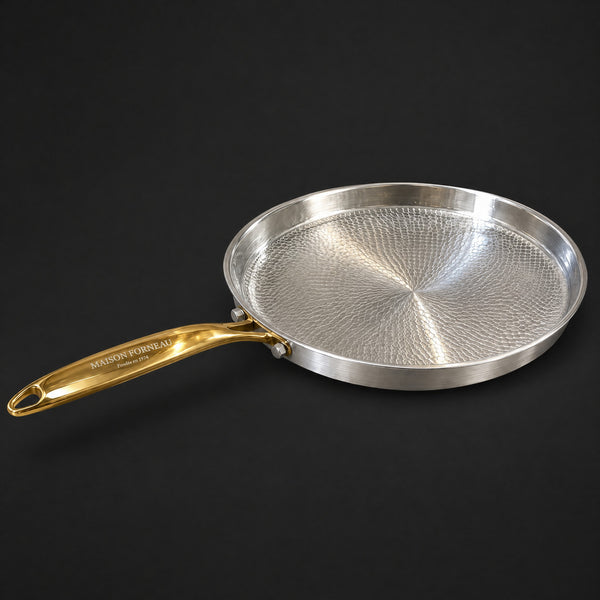
Yes once hot, no when cold. A bare titanium surface has no slick layer, so release comes from heat and fat, exactly as on stainless or carbon steel. Preheat the Forneau 28 cm titanium pan on medium for about two minutes, add a teaspoon of oil or butter, then the food: a fried egg slides, a fillet of fish lifts in one piece once the crust has formed.
What a coated pan does on day one with zero technique, a titanium pan does on day three with one habit. The difference is what happens afterwards: the coating fades, the titanium does not change. That is the trade we ask you to accept, and the reason this review exists.
How did we test it, and when?
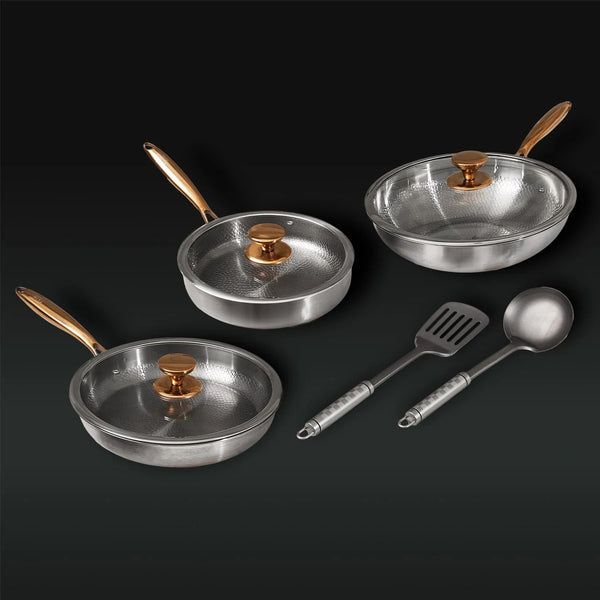
This page is updated on 15 November 2026. The pan is the 28 cm Forneau, cooking surface grade 1 titanium at 99.89 % purity, three recycled aluminium cores, stainless steel base. It is used daily in our own kitchen, on induction and on gas, for eggs, fish, meat, vegetables and pancakes, and washed by hand.
Three checks run on every session:
- The water-drop test. Heat the dry pan on medium. Flick in a few drops of water. When they bead and roll like marbles, the surface is ready; if they spread and hiss, wait another thirty seconds.
- The egg test. One teaspoon of butter, one egg, no touching for 60 seconds. If it slides when you tilt the pan, the technique is right. If it holds, the pan was too cold when the egg went in.
- The scratch check. We use metal spatulas on purpose. We look at the marks and at what comes off: nothing, because there is no layer to come off.
The material facts behind the test are not ours to claim lightly: the titanium certificate (99.89 %) and the SGS PFAS test under ISO 17025 of July 2026 are published on our Facts & proof page.
What still sticks, and why?
Three things, every time someone skips the preheat:
- Eggs into a cold pan. The most common complaint in our reviews and on cooking forums (“everything sticks to it, no matter what I do”). It is a heat problem, not a material problem; the water-drop test fixes it.
- Fish skin on a pan that is not hot enough. Skin needs a hot surface and patience: 2 to 3 minutes without moving it. Lift early and it tears.
- Sugary glazes. Caramel sticks to every bare metal. Deglaze with a little water while the pan is still warm and it lifts.
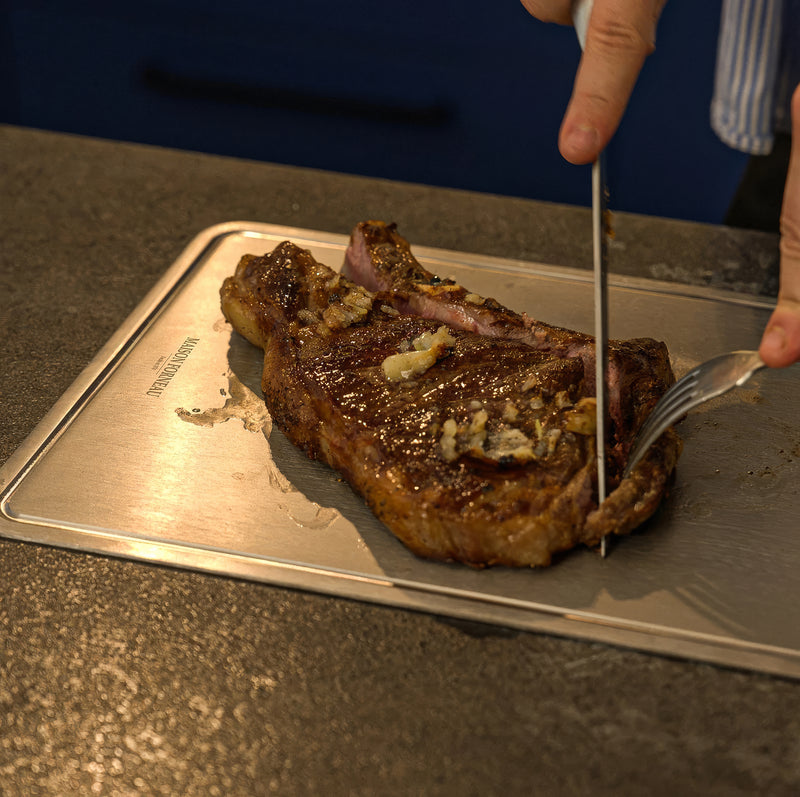
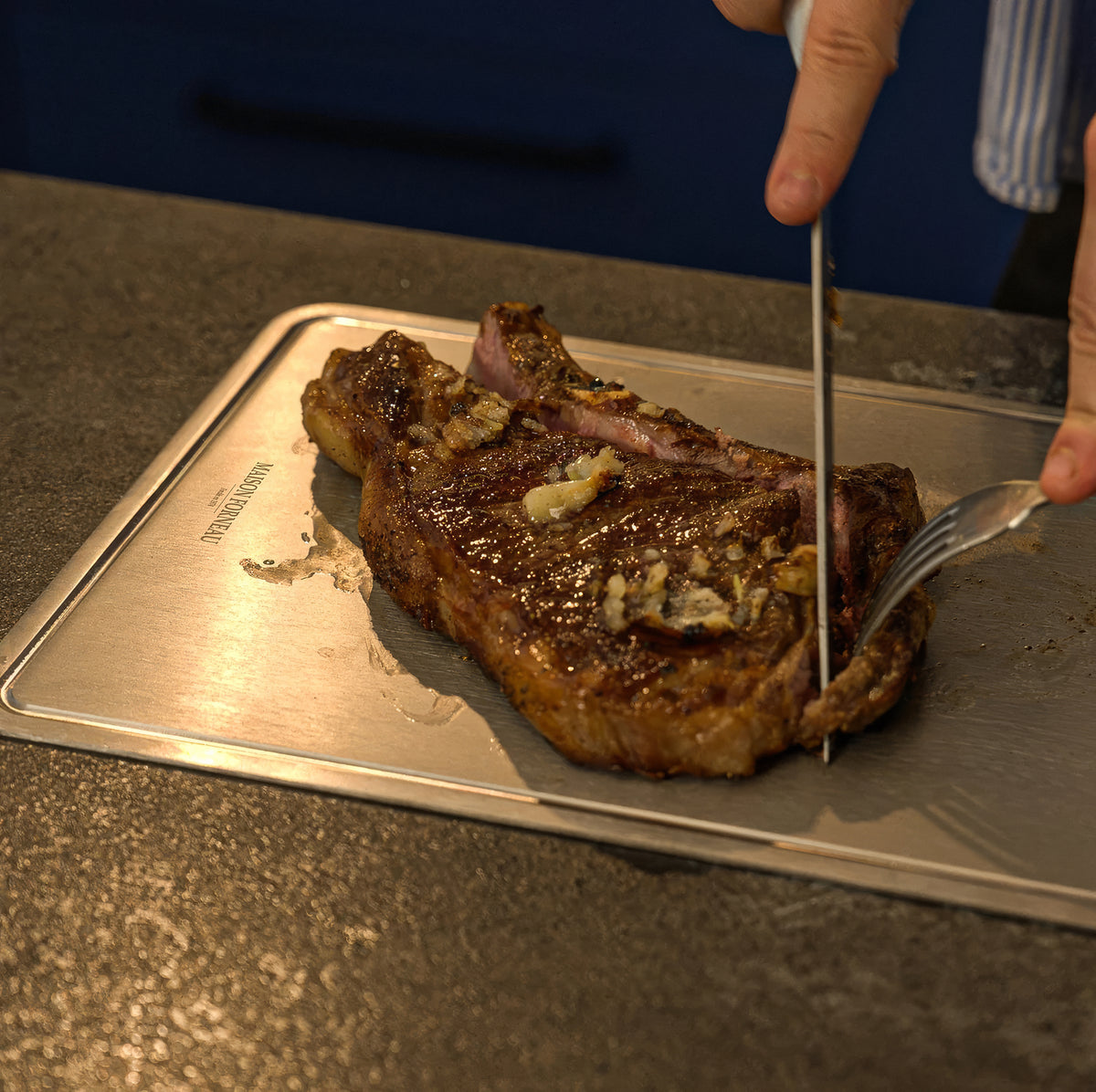
What does not stick once the pan is ready: eggs, pancakes, steak, chicken, mushrooms, vegetables. The preheating guide shows the timing on induction and on gas.
Do titanium pans scratch, and does it matter?
They scratch, and it does not matter for safety. Metal utensils, abrasive sponges and stacking leave fine marks after a few months. The mark is titanium; what is under it is titanium. There is no finish to expose and nothing to flake into the food, which is the whole difference with a coated pan, where a scratch opens the layer.
What changes with use: a light patina and heat tints, the same as carbon steel. What does not change: how the pan cooks. The release at month twelve is the release at week two, because release never came from a surface layer.
If you want to know whether bare titanium is safe to cook on daily, we answer that separately in are titanium pans safe.
What are the honest downsides?
- The first week. Expect one or two sticky meals while you learn the preheat. Nobody in our reviews describes it as instant.
- The price. $132 (US) / £101 (UK) for the 28 cm pan (read on forneau.com on 15 November 2026), free delivery, no duties. More than a supermarket nonstick pan; paid once rather than every two years.
- Hand washing. Nothing in the surface a dishwasher can destroy, but we recommend hand washing to keep the finish and protect handle and base.
- Heat management. Aluminium cores make the pan fast; high heat is for searing, not for eggs. Medium is the default.
What do buyers say in 12,000+ reviews?
The pan is rated 4.9/5 from more than 12,000 reviews on forneau.com. Reviews published on the product page are tied to a real order. Read the critical ones first: they cluster on three points, all of them in this review already.
- “It stuck the first time.” Almost always an egg in a cold pan. The same reviewers report success from the second or third attempt.
- “It scratched.” Yes. Cosmetic, nothing released, cooking unchanged.
- “More expensive than I expected.” True against a coated pan; false against five coated pans over ten years.
The five-star reviews repeat two phrases: “no more flaking” and “I finally stopped buying pans”.
Titanium vs stainless vs coated nonstick: which one?
One line per use. Verdict: a coated pan for the first year, stainless or titanium for the next ten; titanium if you also want a surface that does not react with acidic food and weighs less than clad stainless.
| Criterion | Titanium | Stainless | Coated |
|---|---|---|---|
| Layer that can flake | None: grade 1 titanium surface | None | Yes, the coating |
| Learning curve | Preheat + fat | Preheat + fat | None on day one, fades with use |
| Scratches | Cosmetic, nothing released | Cosmetic | Open the coating |
| Induction | Yes, stainless base | Yes if magnetic | Varies |
| Warranty | Lifetime, surface included | Usually limited | Usually excludes coating wear |
| Price of a large pan | $132 (US) / £101 (UK) | Varies | Varies |
Every piece with this surface is in the pure titanium cookware collection. The full comparison with stainless is in titanium vs stainless steel; the coated-pan question is covered in HexClad vs pure titanium.
How to read titanium pan reviews before buying?
- Check what “titanium” means on the box. Many “titanium” pans are coatings with titanium particles. Look for a stated purity and a certificate; ours is 99.89 %, grade 1.
- Read the 2- and 3-star reviews first. They show the real trade-offs: learning curve, weight, price.
- Read the warranty exclusions. A lifetime warranty that excludes coating wear covers the handle, not the pan.
- Look for a dated test. A review without a date can describe a pan that no longer exists. This one is dated 15 November 2026.
Frequently asked questions
Are titanium pans really nonstick?
Once preheated for about two minutes with a teaspoon of fat, yes: eggs and fish release cleanly, and that release never fades because there is no coating. Cold pan, cold food: it sticks.
Do you need to season a titanium pan?
No seasoning ritual like cast iron. Preheat before the food goes in and use a little oil or butter; that is the whole technique.
Does a titanium pan scratch?
Yes, with metal utensils or abrasive sponges. The scratch is cosmetic: the grade 1 titanium surface has no coating, so nothing is released and cooking does not change.
What is the real downside of a titanium pan?
A short learning curve the first week, hand washing, and a higher price than a coated pan ($132 (US) / £101 (UK) for the 28 cm, read 15 Nov 2026), paid once rather than every two years.
Is a titanium pan safe?
The Forneau surface is grade 1 titanium at 99.89 % purity with no coating; SGS tested it for PFAS under ISO 17025 in July 2026. There is no PTFE, PFOA or PFAS because there is no coating to contain them.
Where can I read verified reviews of the Forneau titanium pan?
On the product page, rated 4.9/5 from more than 12,000 reviews tied to real orders. Read the critical ones alongside the positive ones before buying.
