

















Fact-checked: composition and sources on our Facts & evidence page.
- 4.9/5 from over 12,000 reviews
- Lifetime warranty
- Ships within 48 h
- Free shipping
Yes: a pure titanium cooking surface is safe. It contains no PFAS, PTFE or PFOA because it has no coating, it does not react with acidic food, and the SGS PFAS test of July 2026 on Forneau’s material found nothing to find. “Titanium ceramic” pans are coatings; judge them as coatings.
The essentials in 30 seconds
- Pure grade 1 titanium is a solid metal surface, not a layer that can flake; Forneau’s is 99.89 % pure (certificate published)
- No coating means no PFAS, PFOA or PTFE; SGS tested the material under ISO 17025 in July 2026
- Titanium scratches like any metal; the scratch is cosmetic and releases nothing
- “Titanium ceramic” and “titanium-infused” pans are ceramic coatings with titanium dioxide, with a coating’s lifespan
- The honest trade-off: bare titanium needs a two-minute preheat and a little fat
Are titanium pans safe? The short answer
Yes. Pure titanium is biocompatible, the metal used for surgical implants and joint replacements because the body tolerates it over decades. A cooking surface made of grade 1 titanium has no PFAS, no PFOA, no PTFE and nothing to flake off, because the surface is the metal itself. The Forneau titanium pan has that surface at 99.89 % purity, with the certificate and the SGS PFAS test (ISO 17025, July 2026) published on our Facts & proof page.
The catch: not every pan sold as “titanium” has a titanium surface. Some are ceramic coatings with titanium dioxide in the formula, a different product with a coating’s lifespan. The rest of this page separates the two. Updated 15 November 2026.
What does “titanium pan” actually mean?
One of two things:
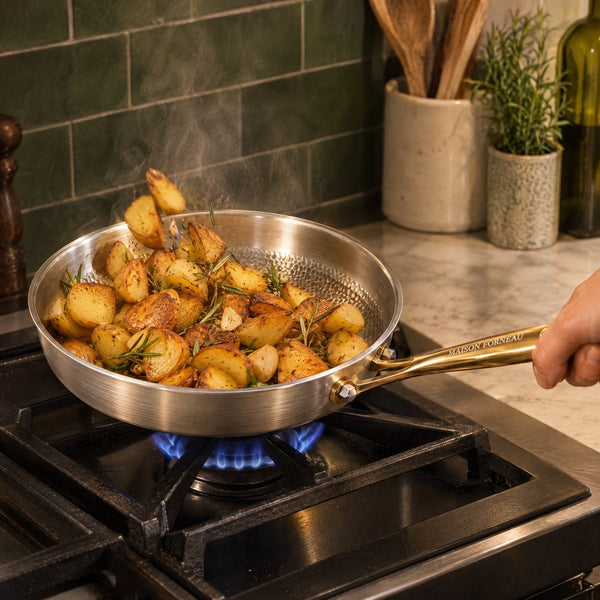
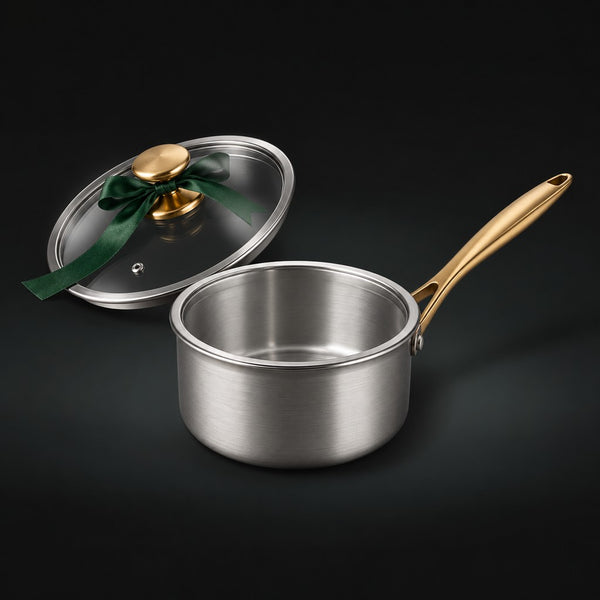
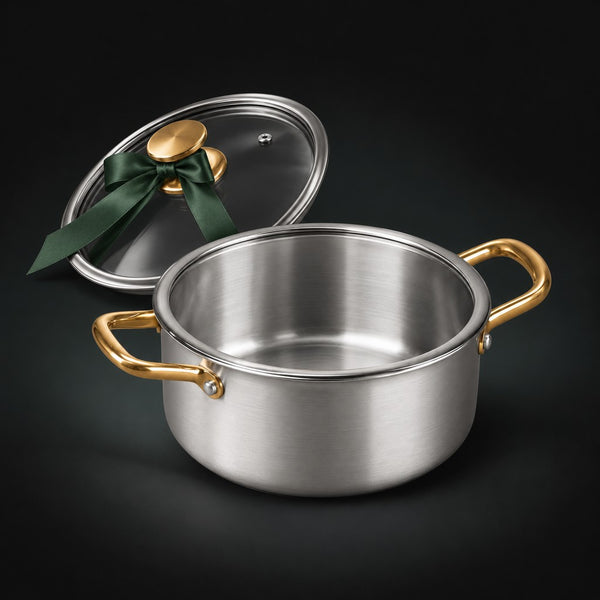
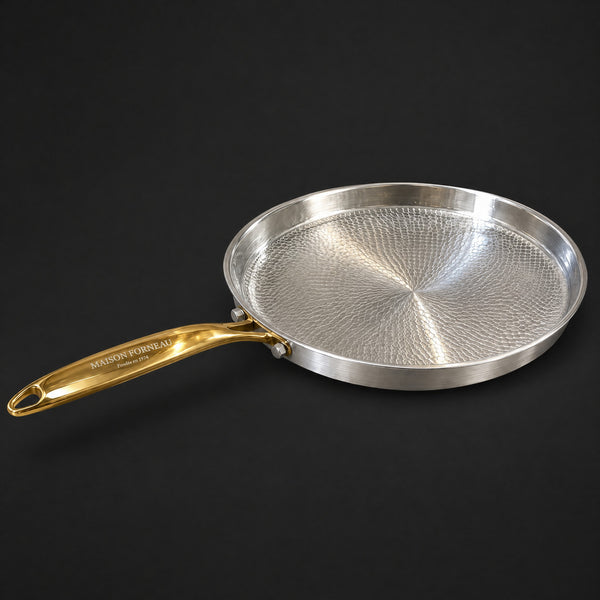
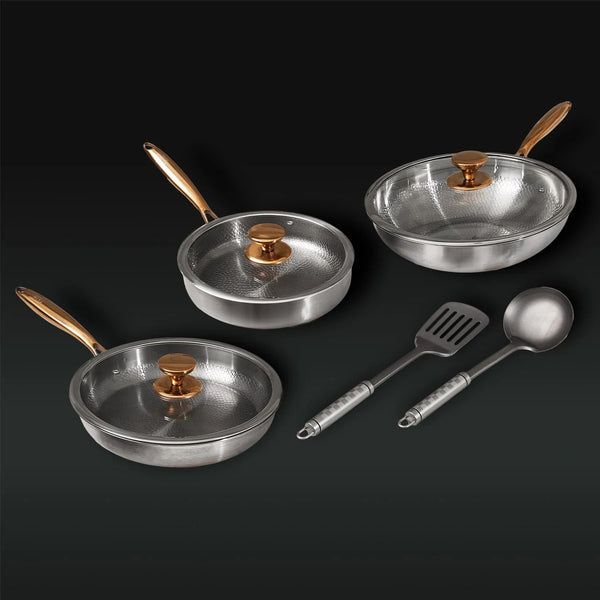
- Grade 1 pure titanium surface. A solid layer of titanium metal is the cooking surface. Not a coating, not a dusting. This is what Forneau makes: titanium on top, three recycled aluminium cores for heat, a stainless steel base for induction. The base and handle are not titanium, and that is normal: titanium does the one job that matters, sitting between the food and the pan.
- “Titanium-infused” or “titanium ceramic”. A ceramic or sol-gel nonstick coating with titanium dioxide (a mineral pigment also used in sunscreen) added. The cooking surface is ceramic, behaves like ceramic, wears like ceramic.
A pan can say “titanium” on the box with almost no titanium metal at the surface. Ask for the purity and the certificate.
Does titanium react with food or heat?
No. Titanium is among the most chemically stable metals: it does not react with tomatoes, lemon or vinegar, does not release ions into food the way reactive metals can, and does not produce fumes at cooking temperatures. That stability is why it stays in the human body for decades as an implant.
What titanium does poorly is conduct heat, which is why a real titanium pan has aluminium under the surface. Titanium handles food contact; the layers below handle the heat.
Titanium vs PFAS/PTFE nonstick: what is the real difference?
A PTFE coating is a chemical layer applied over metal. When it scratches or overheats it degrades and can shed into food; PFAS, the family PTFE belongs to, is under regulatory restriction in several jurisdictions. A titanium surface is the base metal: a scratch is a mark, not an opening.
| Feature | PTFE coating | Pure titanium |
|---|---|---|
| What the surface is | A chemical layer over metal | Titanium metal, a full layer |
| Contains PFAS / PFOA / PTFE | PTFE by definition | No; SGS test July 2026 |
| When scratched | Coating can flake into food | Cosmetic mark, nothing released |
| Lifespan of the surface | Degrades, replaced | Does not wear through |
| Needs preheat and fat | Less when new, more as it ages | Yes, from day one |
The trade-off, stated plainly: a new PTFE pan glides more than bare titanium on day one. Titanium’s answer is a two-minute preheat and a little fat, every time. Details in titanium pans and PFAS.
Are titanium pots and pans safe for everyday cooking?
Yes, with realistic expectations. A pure titanium surface is inert; it scratches cosmetically; it tolerates high heat because there is no coating to break down; and it needs the same habits as stainless or carbon steel: preheat, add fat, let the food release on its own. If you come from coated pans, that is a learning curve of two or three meals, not a flaw. Why food sticks and how to stop it is in why food sticks to a titanium pan.
Is a ceramic titanium pan safe?
Chemically, usually yes when new: ceramic sol-gel coatings are PTFE-free. Mechanically, it is a coating: it thins with use, loses release within one to three years and, as it wears, some of it leaves with the food. It does not have titanium’s longevity because the titanium in it is a pigment in a layer, not the surface.
So the honest answer to “is ceramic titanium pan safe” is: probably safe at the start, replaced later, and not comparable to a pure titanium surface. The titanium vs ceramic comparison goes through the wear question.
What do independent sources say?
- Biocompatibility. Titanium is the reference material for surgical and dental implants; its tolerance by the body is the reason, documented across the medical literature.
- Food contact. Titanium metal is not listed as a substance of concern for food contact by the regulators we checked in the US, UK, EU and Australia.
- PFAS. Under active restriction in several jurisdictions, with cookware coatings explicitly in scope in some of them; the direction of regulation is away from PTFE coatings.
- Forneau’s own evidence. Material certificate, grade 1 titanium at 99.89 % purity; SGS PFAS test under ISO 17025, July 2026; both on the Facts & proof page, dated.
Browse the pure titanium cookware collection to see the construction up close.
Frequently asked questions
Are titanium pans nonstick?
Not like a PTFE coating. A pure titanium surface needs a two-minute preheat and a little oil or butter; in exchange there is no coating to wear out.
Are titanium pans better than stainless steel?
Both are bare metal with nothing to flake and both need preheat and fat. Titanium adds biocompatibility, no reaction with acidic food, and a lighter pan than clad stainless.
Do titanium pans contain PFAS?
A genuine pure titanium surface contains no PFAS, PFOA or PTFE; SGS tested Forneau’s material under ISO 17025 in July 2026. Check whether a “titanium” pan is titanium metal or a ceramic coating with titanium dioxide.
Is a titanium pan safe for high heat?
Yes. Titanium does not break down or release fumes at cooking temperatures the way a degrading nonstick coating can.
Are titanium pots and pans safe for daily use?
Yes. No coating to wear through, scratches stay cosmetic, and the only daily habit is preheating with a little fat.
