


















Fact-checked: composition and sources on our Facts & evidence page.
- 4.9/5 from over 5,000 reviews
- Lifetime warranty
- Ships within 48 h
- Free shipping
A titanium pan without a coating doesn't behave like nonstick — here's exactly what changes, how long it takes to get comfortable with it, and the mistakes that make the learning curve longer than it needs to be.
The essentials in 30 seconds
- A titanium pan needs preheating and fat, not the cold-start habits that work on nonstick
- The learning curve is real but short — most people get it within 3 to 5 cooking sessions
- The water bead test tells you when the pan is actually ready to cook on
- Scratches on titanium are cosmetic only, unlike flaking nonstick coatings that end up in food
- Some foods like eggs will always need a bit more fat than a Teflon pan ever did
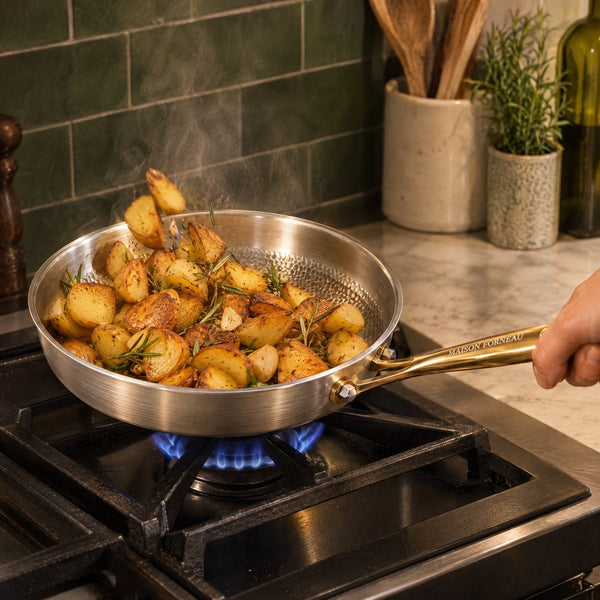
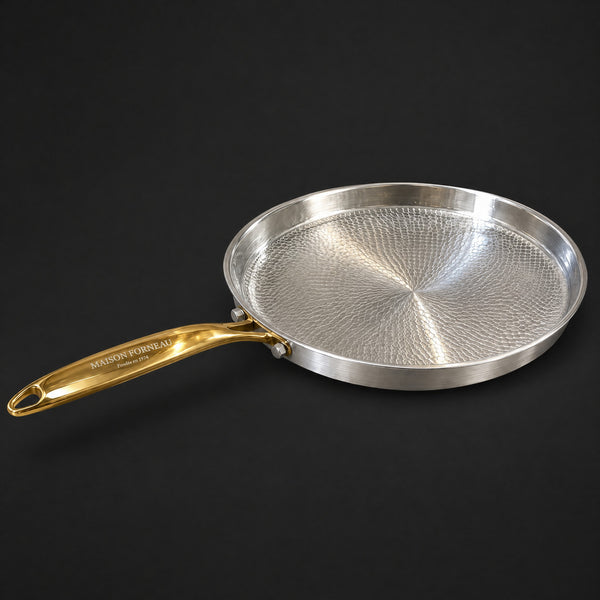
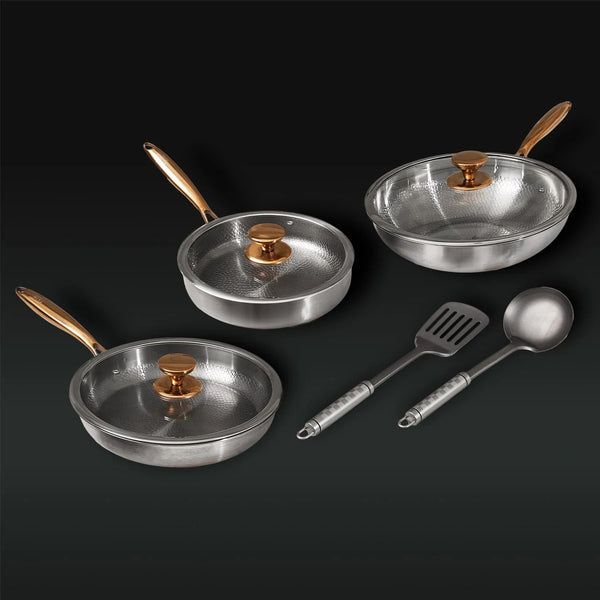
If you've ever stood over a pan thinking everything sticks to it, no matter what I do, you're not alone — it's a problem a lot of people run into with their first bare-metal pan. A titanium pan is not a Teflon pan with a different name. It has a 100% titanium pur grade 1 cooking surface — a solid layer, not a coating — which means no PFAS, no PFOA, no PTFE, and nothing to flake off into your food over time. But it also means the pan plays by different rules, and most of the "it's sticking, I'm about to give up" posts come from people still cooking like it's nonstick.
Why a titanium pan "sticks" at first if you don't change anything
Titanium has no slippery coating to fake food release for you. If you drop food into a cold pan with no fat, the way you might with a Teflon pan, it will stick — that's just how any bare metal surface behaves, titanium, stainless, or carbon steel included. The fix isn't the pan, it's the habit: this surface needs heat and a thin layer of fat to create its own release, every single time.
This is the part that trips people up the most, and it's exactly the "I have a problem a lot of us share" complaint you see repeated in cookware threads. The pan isn't broken. It's just not used to being treated like nonstick.
Good to know
A titanium pan has a 100% titanium pur grade 1 cooking surface, not a coating, so there's nothing to flake off into your food. It just means the first few cooks need preheating and a bit of fat before food stops sticking.

The 3 habits that are different from a classic nonstick pan
If you're coming from a Teflon or ceramic pan, these are the three things to unlearn first:
- Preheat before adding anything. Nonstick pans forgive a cold start. Titanium doesn't. Give the pan a couple of minutes on medium before food goes in — see our guide on preheating a titanium pan for the exact steps.
- Always add fat, even for "low-fat" cooking. A film of oil or butter is doing real work here — it's not optional like it sometimes felt with nonstick. More on how much and when in our fat and oil guide.
- Let food release itself instead of forcing it. If a piece of fish or an egg isn't lifting easily, it usually isn't ready yet — give it another 30 seconds instead of scraping.
None of this is complicated once it clicks. It's just different, and different feels like "galère" for the first week.
How long it takes to get the hang of it, cook by cook
Based on what people actually report once they stick with it, here's a realistic timeline rather than a promise of instant ease:
| Cook # | What usually happens |
|---|---|
| 1–2 | Some sticking, especially with eggs or delicate proteins. This is normal — you're still calibrating heat and fat. |
| 3 | The water bead test starts making sense: a few drops of water should bead and roll instead of sizzling away instantly or sitting flat. That's the pan telling you it's at temperature. |
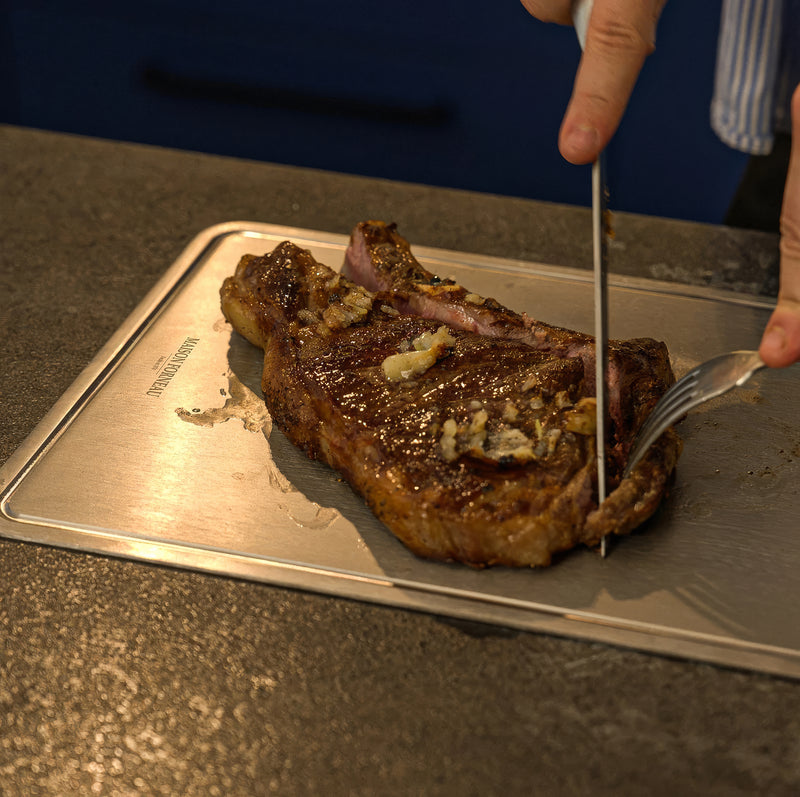
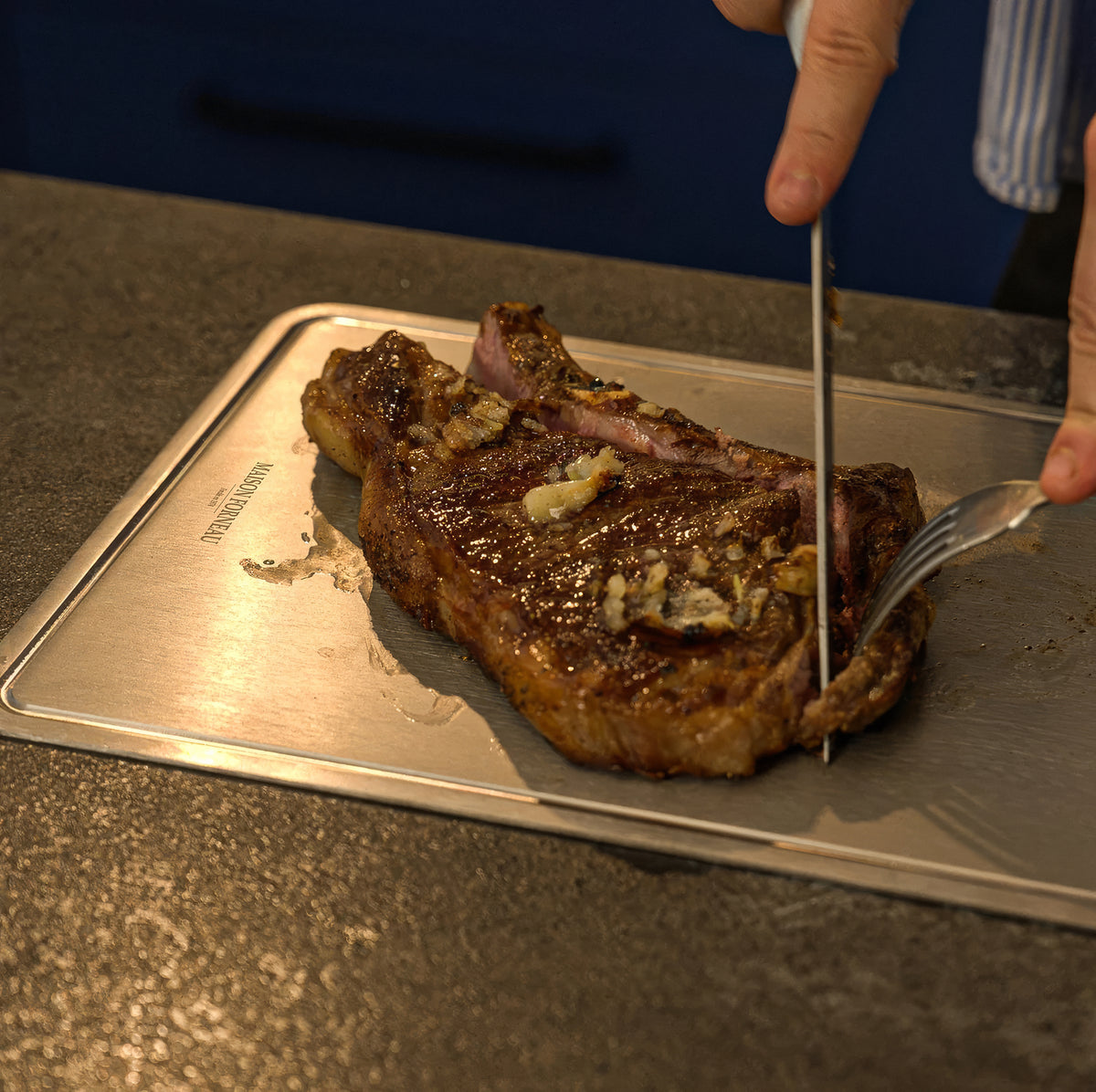
| 4 | Release gets noticeably easier. Searing a steak or browning onions stops feeling like a fight. |
| 5 | Most people report it feels automatic — same reflexes as any pan they've used for years, just with a different starting ritual. |
Five cooks is a realistic ceiling, not a minimum. Some people get there by cook 3. If you're still fighting the pan after 8 or 10 tries, something in the routine — usually heat level or fat quantity — needs adjusting. See why food sticks to a titanium pan for a full troubleshooting list.
« I don't mind a learning curve if it actually pays off »
r/BuyItForLife
The mistakes that stretch out the learning curve
Most people who say they're "two steps from giving up" on their titanium pan are making one of these mistakes, often without realizing it:
- Cooking on high heat out of habit. Medium is almost always enough; high heat just burns the fat before food goes in.
- Skipping the water bead test. It takes ten seconds and tells you exactly when the pan is ready — skipping it means guessing.
- Using too little fat because nonstick trained you to use almost none. A thin, even film is the baseline here, not the minimum.
- Flipping too early. If food resists when you try to move it, it's not stuck for good — it's not ready yet.
- Switching techniques every time instead of repeating one method. Consistency is what builds the muscle memory, not trying five different approaches in one week.
For the three core gestures that fix most of this at once, check out how to use an uncoated pan in three steps.
What will never change (and that's fine)
Being honest here is the point: a titanium pan will always need a bit more attention than a coated one. Preheating and a bit of fat aren't a one-time break-in step you graduate from — they're the routine, every time you cook, for the life of the pan. Eggs and other delicate foods will generally always want a touch more fat than they did on Teflon.
The surface will also scratch — titanium is a real metal, not a coating, and normal use leaves marks. That's cosmetic. Nothing flakes off, nothing leaches into food, and scratches don't change how the pan performs or how safe it is to cook on. That's the trade-off, and it's the only one: a few extra seconds of ritual in exchange for a cooking surface that's 100% titanium pur grade 1, with a lifetime warranty, and nothing to replace in five years because the coating wore out.
Frequently asked questions about learning a titanium pan
Why does my titanium pan still stick after several uses?
Usually it's one of three things: the pan isn't fully preheated, there's not enough fat, or you're trying to move the food before it's ready to release on its own. Run the water bead test before your next cook and give yourself a few extra seconds before flipping.
How long does it take to get used to a titanium pan?
Most people get comfortable within 3 to 5 cooking sessions. The first one or two can feel like a fight; by the fourth or fifth, preheating and adding fat become automatic.
Do I need more oil with a titanium pan than with a nonstick one?
Generally yes, a bit more. Nonstick coatings fake food release with very little fat; a titanium surface needs a proper thin film of oil or butter to do the same job, every time.
Is the learning curve the same for every food?
No. Eggs and fish are the trickiest and need the most attention to heat and fat. Searing meat or sautéing vegetables tends to feel natural much faster, often from the first or second try.
Why does my titanium pan have scratches already?
Titanium is a real metal, so it scratches with normal use, including metal utensils. Those marks are cosmetic — nothing flakes off and nothing changes about how safe the pan is to cook on.
What's the water bead test and why does it matter?
Drop a few beads of water into the dry, heating pan. If they sizzle and vanish instantly, it's too hot; if they sit flat and still, it's not hot enough. When they bead up and roll around, the pan is ready for fat and food.
