

















Fact-checked: composition and sources on our Facts & evidence page.
- 4.9/5 from over 5,000 reviews
- Lifetime warranty
- Ships within 48 h
- Free shipping
Titanium-coated or titanium pur grade 1? We break down what actually makes a cookware set "titanium," what non-toxic really means, and which sets hold up long enough to call buy-it-for-life.
The essentials in 30 seconds
- A real titanium cookware set has a titanium pur grade 1 cooking surface, not a titanium-infused coating
- Non-toxic means no PFAS, PFOA, or PTFE, not that the pan can't scratch
- Titanium scratches like any metal, but scratches are cosmetic and don't leach anything
- Coated nonstick wears out and gets replaced; a titanium pur grade 1 surface has nothing to flake off
- Buy-it-for-life only makes sense with a lifetime warranty backing it, not just marketing copy
What makes a cookware set « titanium » vs titanium-coated
Most « titanium » pans on the market are stainless steel or aluminum with a nonstick coating that has titanium particles mixed in for scratch resistance. That coating still wears down over time, the same way any nonstick does. A true titanium pur grade 1 cooking surface is a different thing entirely: it's 100% titanium pur grade 1, a full layer, not a coating sprayed or baked on.
Here's the distinction that matters when you're comparing sets:
- Titanium-coated: a nonstick or ceramic base layer with titanium mixed in, still a coating, still subject to wear, chipping, and eventual replacement.
- Titanium pur grade 1 cooking surface: the part of the pan that touches your food is titanium through and through, with nothing to flake off because there's no separate layer to begin with.
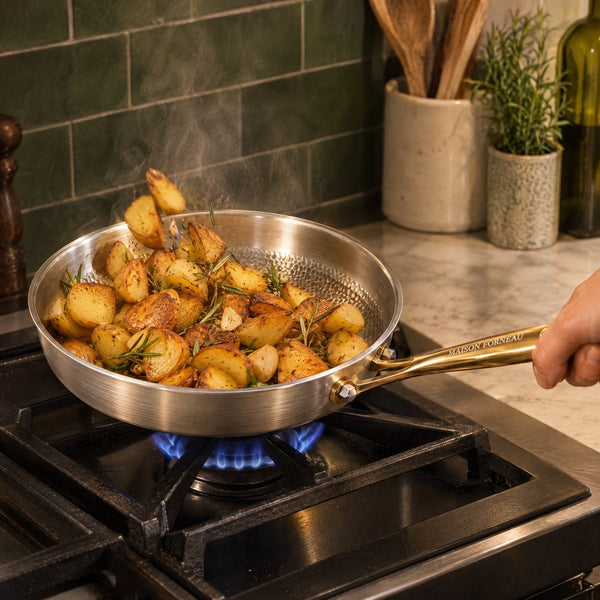
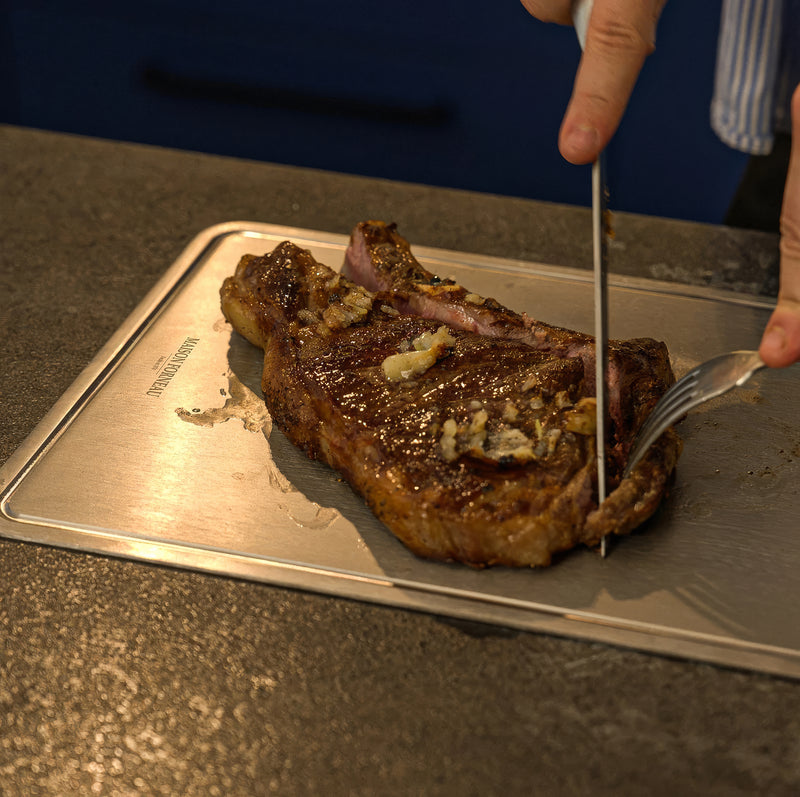
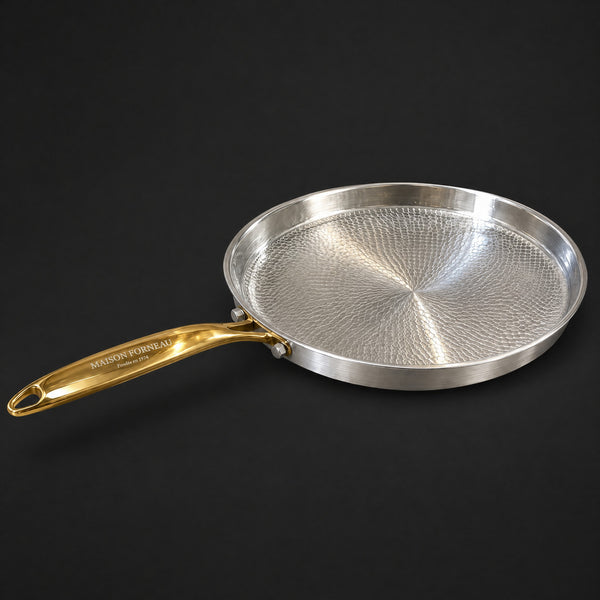
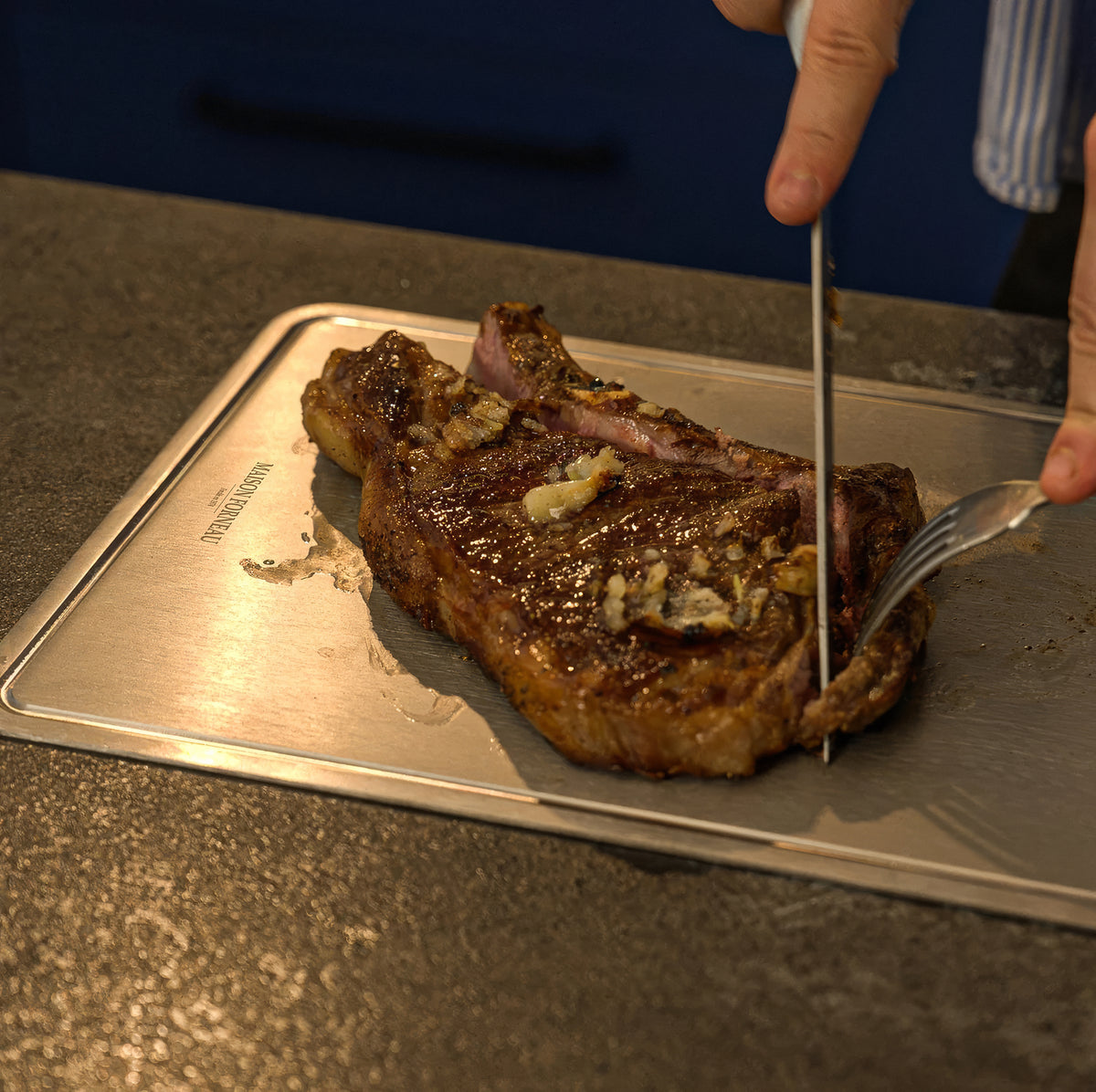
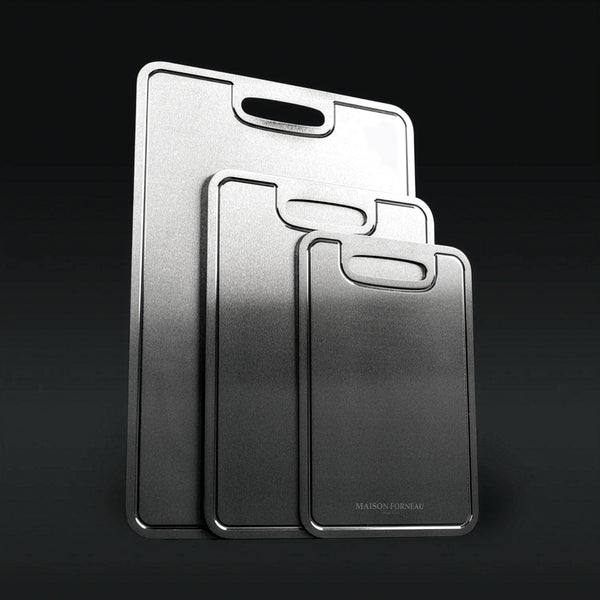
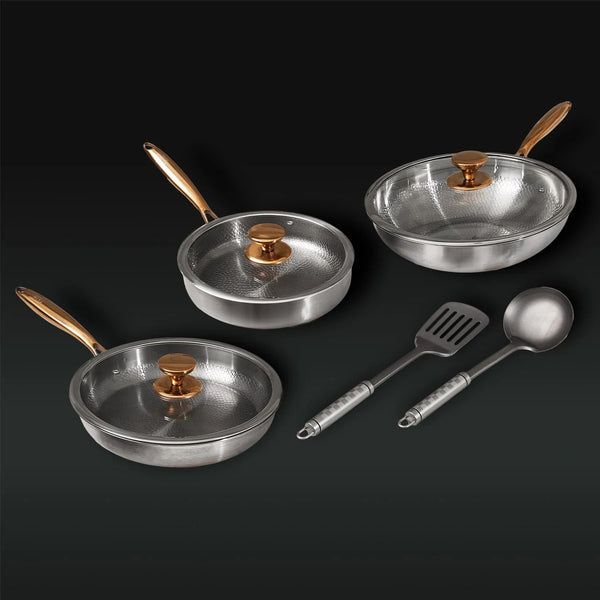
Forneau pans use a 100% titanium pur grade 1 cooking surface, sans revêtement. Underneath, three layers of recycled aluminum spread heat evenly, and a stainless steel base makes the pan work on induction. The surface itself isn't a coating, so there's nothing to peel, chip, or wear through to a substrate. To be clear: the base and handle aren't titanium, and we're not claiming the whole pan is titanium pur grade 1 end to end, just the cooking surface. That's the part that actually touches your food. Only our cutting board is made of titanium through and through.
Good to know
Bare titanium needs a quick preheat and a little oil or butter before food goes in, it's not a lazy nonstick. In exchange, you get a cooking surface with nothing to flake, peel, or off-gas.

Non-toxic claims: what PFAS-free really means
« Non-toxic » gets slapped on a lot of packaging, but what people actually want to know is whether a pan contains PFAS, PFOA, or PTFE, the so-called forever chemicals that don't break down and build up in the body over time. A pan can be marketed as non-toxic and still have a coating that degrades and introduces unknowns once it's scratched or overheated.
A titanium pur grade 1 surface has no PFAS, PFOA, or PTFE because there's no synthetic coating at all, just metal. That's a structural fact, not a claim that needs an asterisk.
One honest caveat: titanium scratches, like any metal does. We don't pretend otherwise. The scratches are cosmetic and don't leach anything into your food, since there's no coating underneath to expose.
Durability: buy-it-for-life expectations
« Buy it for life » gets thrown around in product descriptions constantly, but the real test is what happens after a year of daily use, not what the box says on day one. Coated nonstick, even the expensive kind, has a wear curve: the coating gets thinner with every scrub, every metal utensil slip, every high-heat sear, until it stops performing and eventually flakes.
A titanium pur grade 1 surface doesn't have that wear curve in the same way, because there's no separate layer to wear through. The honest tradeoff is that titanium takes a bit more technique than a fresh nonstick pan out of the box: preheat it, use a little oil or butter, and it performs the way it's supposed to. That's a real adjustment, not a hidden flaw.
- Coated pans: new-pan glide for the first months, then a slow decline as the coating wears.
- Titanium pur grade 1: a slight learning curve upfront, then a surface that doesn't degrade the same way because there's nothing coated to wear off.
Forneau backs its cookware with a lifetime warranty. That's not a marketing line, it's a direct statement about what we expect this cooking surface to hold up to.
« I spent nearly $1,000 on HexClad cookware because of their lifetime durability and non-toxic claims. My pans started peeling despite light use. »
r/BuyItForLife
Price vs cast iron, stainless steel, ceramic sets
Cast iron is cheap and durable but needs seasoning that a lot of people never quite get right, plus it's heavy and reactive with acidic foods. Stainless steel is also durable and affordable, but it's genuinely hard to get food to release without the right fat-and-heat technique, something plenty of home cooks fight with for years. Ceramic coatings look great out of the box and lose their nonstick properties fast, often within a year of regular use.
| Material | Upfront cost | Durability reality | Non-toxic status |
|---|---|---|---|
| Cast iron | Low | Durable if seasoned well, but seasoning takes real effort | Yes, but needs oil-based seasoning |
| Stainless steel | Low-mid | Durable, but sticking is a common frustration | Yes |
| Ceramic-coated | Low-mid | Nonstick fades within months to a year of regular use | Usually PFAS-free, but coating still wears |
| Titanium-coated (mixed into nonstick) | Mid-high | Coating wears like any nonstick, despite the name | Depends on the specific coating formula |
| Titanium pur grade 1 cooking surface | Higher upfront | No separate coating layer to wear through or flake | No PFAS, PFOA, or PTFE, just titanium |
The upfront price on a titanium pur grade 1 set is higher than a big-box ceramic set. The honest math is in replacement cycles: a ceramic set you replace every year or two costs more over time than a set designed to be used for decades under a lifetime warranty.
Induction, gas, oven compatibility
Yes, titanium cookware with a stainless steel base works on induction, along with gas, electric coil, and oven use. The stainless steel base is what makes induction possible in the first place, since titanium alone isn't magnetic enough to trigger an induction cooktop.
- Induction: works, thanks to the stainless steel base layer.
- Gas and electric: works, heat spreads through the recycled aluminum core.
- Oven: check the handle material and rating before going above a given temperature, since handles vary by set.
How to read warranty and return policies
A lifetime warranty is only as good as how it's enforced. Plenty of complaints about cookware brands aren't really about the product failing, they're about support ignoring the complaint, blaming the customer's technique, or requiring proof of purchase from years back that nobody kept.
Questions worth asking before you buy any « lifetime » cookware set:
- Is the warranty against manufacturing defects only, or does it cover normal wear like coating failure?
- Does the company require original packaging or receipts after year one?
- What's the actual response time when something goes wrong, not just what the policy page claims?
Forneau's warranty is a lifetime warranty, full stop. If the cooking surface is defective, that's covered, no fine print designed to get you to quietly give up.
Our picks by budget and household size
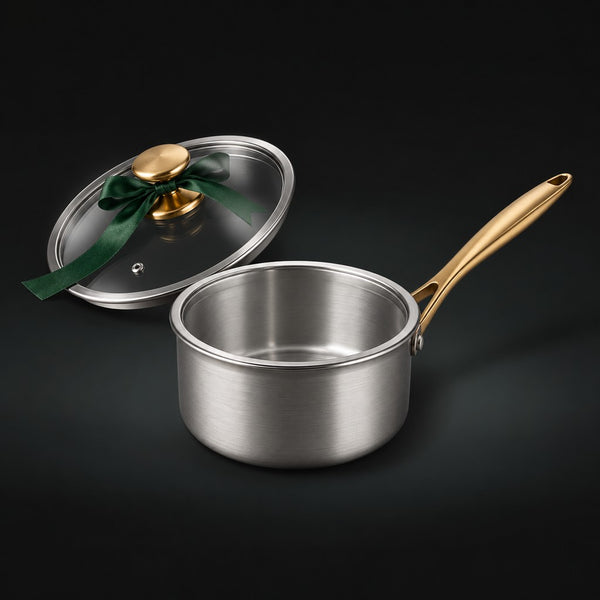
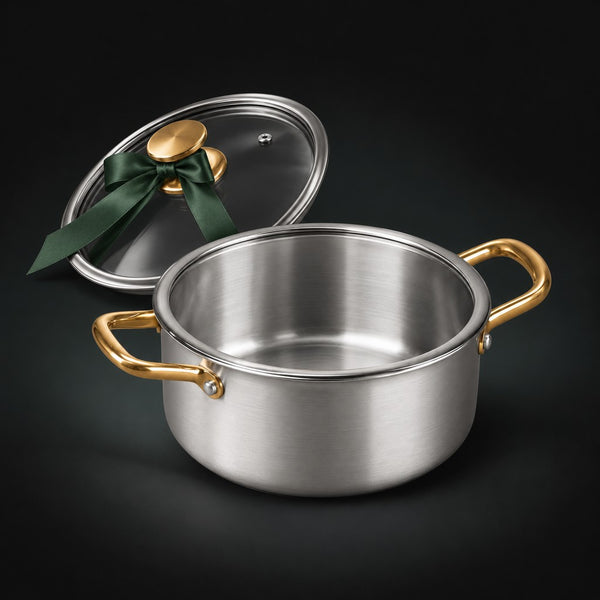
For a household of one or two people cooking daily, a set with one everyday pan, one sauté pan, and one pot covers most meals without clutter. For a family kitchen running multiple burners at once, a larger set with a wok or larger sauté pan makes sense.
- Smaller household, daily cooking: start with a frying pan and a sauté pan in a titanium pur grade 1 cooking surface, that's the combination that handles eggs, sears, and sauces.
- Larger household or batch cooking: add a bigger pot and a wok, the recycled aluminum core keeps heat even across larger surfaces.
- Anyone replacing scratched, flaking nonstick: a titanium pur grade 1 set is the one upgrade that removes the coating-wear problem at the root instead of just delaying it.
See the full range in our titanium cookware collection, or compare specs directly in our HexClad and Our Place comparison.
Frequently asked questions
Are titanium pans worth it?
If you're tired of replacing coated nonstick every year or two, yes. A titanium pur grade 1 cooking surface costs more upfront but doesn't have a coating to wear through, which changes the long-term math.
Are titanium pots and pans safe?
A titanium pur grade 1 surface has no PFAS, PFOA, or PTFE, since it's just metal with no coating involved. It does scratch like any metal surface, but scratches are cosmetic and don't release anything into your food.
Do titanium pans work on induction?
Yes, as long as the pan has a stainless steel base layer, which is what actually makes induction compatibility possible. Titanium alone wouldn't trigger an induction cooktop on its own.
What is the best titanium frying pan?
Look for a frying pan with a titanium pur grade 1 cooking surface, not a titanium-infused coating, backed by a lifetime warranty you can actually use. Forneau's frying pan is built this way, with recycled aluminum underneath for even heat.
Do titanium pans scratch?
Yes, titanium scratches like any metal does, and we're not going to tell you otherwise. The scratches are cosmetic only, there's no coating underneath to expose or leach into food.
Is a titanium-coated pan the same as titanium pur grade 1?
No. A titanium-coated pan is a nonstick or ceramic coating with titanium particles added for scratch resistance, and it still wears down over time. A titanium pur grade 1 cooking surface has no separate coating to wear through in the first place.
