

















Fact-checked: composition and sources on our Facts & evidence page.
- 4.9/5 from over 5,000 reviews
- Lifetime warranty
- Ships within 48 h
- Free shipping
Titanium and stainless steel both skip the PFAS coating, but they behave very differently in the kitchen. Here's an honest, side-by-side comparison to help you pick the right one.
The essentials in 30 seconds
- Titanium cooking surface has no coating, so it cannot flake into food over time
- Stainless steel sticks at first but releases food once the water bead test passes
- Titanium scratches cosmetically but never flakes; coated nonstick wears down and sheds
- Both work on induction; Forneau's titanium surface sits on an aluminum and steel core
- Stainless lasts if you learn the technique; coated nonstick needs replacing every few years
Titanium and stainless steel: two different approaches
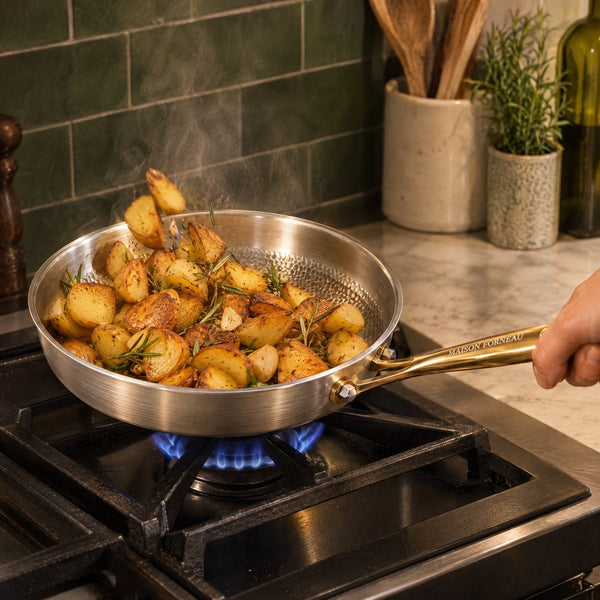
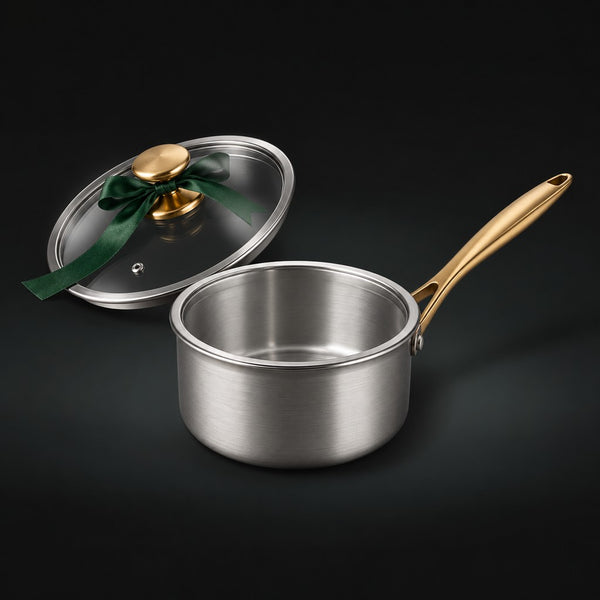
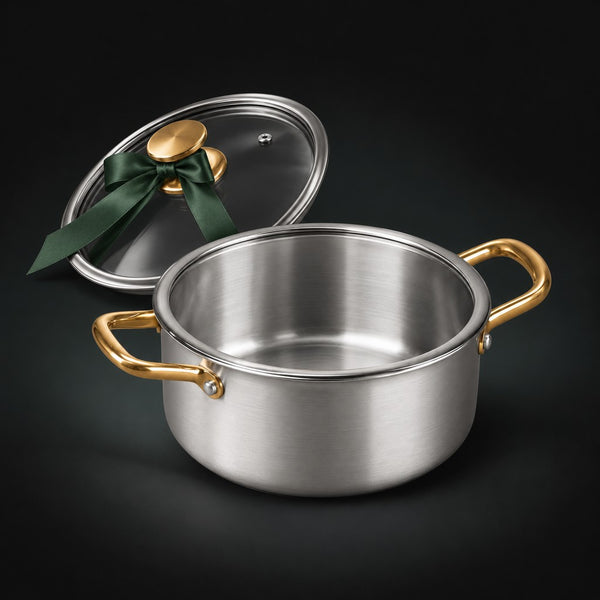
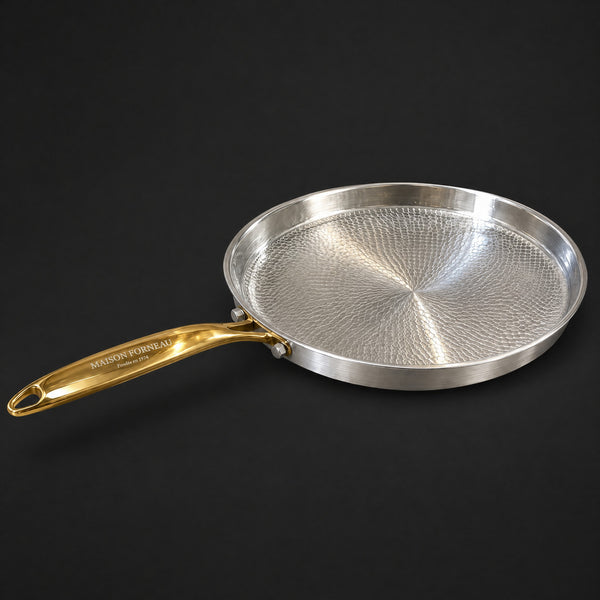
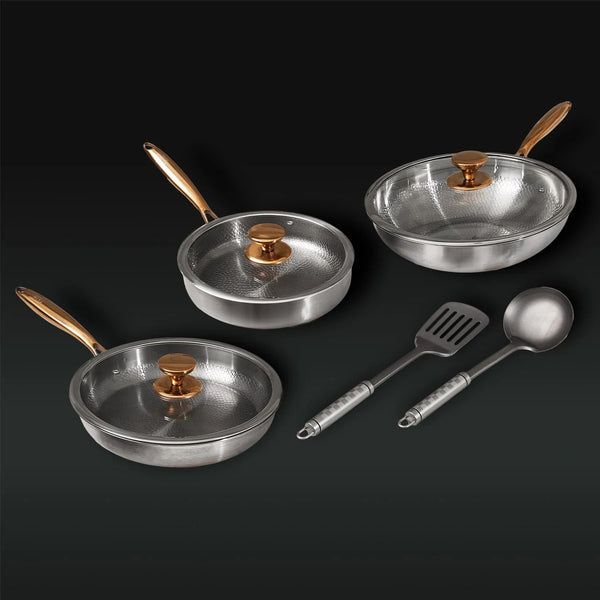
Stainless steel cookware has been a kitchen staple for decades: an uncoated metal surface that sears beautifully once you know the technique. Titanium is newer to home kitchens, and at Forneau it means a cooking surface that's 100% pure grade 1 titanium, uncoated — a solid layer, not a coating. No PTFE, no PFOA, nothing to flake off, ever. Underneath, three recycled aluminum cores spread the heat and a stainless steel base makes it induction-ready. Both materials are naked metal with no nonstick layer to wear out. The difference is how they feel on day one, and how they age over years of cooking.
Good to know
Titanium needs the same habit stainless steel rewards: let the pan heat up before food goes in, and use a little fat. Scratches on titanium are cosmetic and don't release anything into your food.

Sticking and the water bead test
This is the question everyone asks first: does it stick? The honest answer for both metals is yes, if you skip the preheat. Stainless steel cooks swear by the water bead test: heat the empty pan, drop in water, and wait until the droplets roll around like mercury instead of hissing away. That's your cue the pan is ready. Titanium works the same way — it needs to come up to temperature before oil and food go in, because a cold titanium surface sticks just like cold stainless does.
The difference shows up after that point. Once stainless and titanium are properly preheated with a bit of fat, both release food cleanly for searing, browning, and building a fond for sauces. Neither will ever match a fresh nonstick coating for a delicate fried egg straight out of the box — that's the trade-off for having no coating at all.
Daily cleaning and care
Stainless steel is famous for stuck-on crust that needs a soak, a scrub, or a splash of water deglazed right in the pan. It's not hard, but it's a step. Titanium behaves the same way on the days you forget to preheat: food welds on, and you'll need to soak it. On good days, both wipe clean with barely any effort.
- Stainless steel: dishwasher safe, but hand-washing keeps the shine longer.
- Titanium (Forneau): same rule — preheat, a little fat, and cleanup is quick.
- Neither needs seasoning the way cast iron does.
- No coating means no risk of ingesting flaking nonstick particles with either one.
« Thinking of ditching nonstick, is a stainless steel cookware set worth the switch »
Reddit cookware forum
Scratch resistance and durability
Stainless steel is hard and shrugs off metal utensils without much drama, which is part of why people call it indestructible. Titanium is technically softer than hardened steel, so it will pick up cosmetic scratches over the years — it is not the "scratch-proof" miracle some marketing suggests, and titanium does scratch. What it won't do is flake. There's no coating sitting on top that can chip away into your food the way a worn nonstick pan does. A scratched titanium pan still has a cooking surface that's 100% titanium; a scratched nonstick pan is exposing whatever is underneath the coating.
This is the real fork in the road compared to coated "titanium-reinforced" nonstick pans sold elsewhere: those are still a nonstick coating with titanium particles mixed in for hardness. They still wear down and eventually flake, by design. A pure grade 1 titanium cooking surface has nothing to wear through to.
Induction, gas, and oven compatibility
Both materials work on every heat source. Stainless steel is naturally magnetic in most cookware-grade alloys, so induction is a non-issue. Forneau's titanium cookware is built the same way: the titanium surface sits on aluminum cores for even heat and a stainless steel induction base underneath, so it works on induction, gas, and electric, and it goes in the oven.
Budget and real lifespan
| Factor | Stainless steel | Titanium (pure cooking surface) |
|---|---|---|
| Upfront cost | Lower, widely available | Higher, specialized cookware |
| Coating to wear out | None | None |
| What happens over years | Cosmetic scratches, possible discoloration | Cosmetic scratches, surface stays titanium |
| Replacement driver | Rarely needed | Rarely needed |
| Learning curve | Preheat + water bead test | Preheat + a little fat |
Coated nonstick pans look cheaper on day one, but the real cost shows up two or three years in when the coating wears down and food starts sticking again — that's when people end up replacing their "nonstick set" on a loop. Stainless steel and a pure titanium cooking surface both skip that cycle because there's no coating to lose in the first place.
Which one fits your cooking style
If you already love stainless steel and don't mind the water bead test, there's no reason to switch — it's a genuinely solid, coating-free option for searing and sauce work. Where titanium earns its place is for cooks who want that same coating-free honesty with a lighter pan and a surface that never needs re-seasoning or special oils to maintain. Both ask for the same habit: heat the pan, add fat, then food.
Our take at Forneau
We don't think stainless steel is a bad choice — far from it. It's one of the few honest, coating-free materials on the market, and for good reason it's a go-to for people ditching nonstick. What we built differently is a cooking surface that's 100% pure grade 1 titanium, uncoated, not a coating, not titanium-infused nonstick that eventually flakes like the rest. It's lighter in hand than most stainless steel cookware, it goes on induction thanks to the steel base underneath, and it comes with a lifetime warranty because there's no coating to wear out and void the point of buying it in the first place. The only honest trade-off: preheat it, use a bit of fat, and expect cosmetic scratches over time — they don't release anything, they're just proof the pan has been used. For a deeper look at the two, see our full breakdown in titanium vs stainless steel, how Forneau's titanium pans are designed, why a pan sometimes sticks at first, and how to get preheating right every time.
Frequently asked questions
Is titanium better than stainless steel for cooking?
Neither is strictly "better" — both are coating-free metals that need preheating and a little fat to release food well. Titanium's advantage is a lighter pan and a surface that never flakes because there's no coating; stainless steel's advantage is a slightly lower price and decades of proven use.
Why does stainless steel stick more at first?
Stainless sticks when the pan isn't hot enough: food bonds to the metal before a proper sear forms. The water bead test — heating the pan until droplets roll instead of evaporating instantly — tells you when it's ready, and the same logic applies to titanium.
Does titanium scratch like stainless steel?
Yes, titanium scratches, just like stainless steel does with metal utensils or abrasive scrubbers. On Forneau cookware those scratches are cosmetic only — the surface underneath is still pure titanium, not an exposed coating.
Which material should I choose for induction cooktops?
Both work. Stainless steel is naturally induction-compatible, and Forneau's titanium cookware is built with a stainless steel base under the titanium surface specifically so it works on induction, gas, and electric.
Which lasts longer, titanium or stainless steel?
Both can last for years because neither relies on a coating that wears out. The real lifespan killer for most cookware is a nonstick coating flaking away — something neither a pure titanium cooking surface nor stainless steel has to deal with.
