




















Fact-checked: composition and sources on our Facts & evidence page.
- 4.9/5 from over 5,000 reviews
- Lifetime warranty
- Ships within 48 h
- Free shipping
PFAS, forever chemicals, PTFE, FEP: here's what these acronyms actually mean, where they hide in your kitchen, and which materials are genuinely PFAS-free.
The essentials in 30 seconds
- PFAS are a family of synthetic chemicals that barely break down, hence 'forever chemicals'
- Scratched or flaking Teflon can shed particles, even if intact PTFE is considered chemically inert
- HexClad settled a lawsuit over 'non-toxic' and 'PFAS-free' marketing claims on coated pans
- Stainless steel, cast iron, and solid titanium are naturally PFAS-free, with different trade-offs
- A titanium cooking surface needs preheating and a little fat, but never flakes or chips off
What are PFAS, in plain terms
PFAS stands for per- and polyfluoroalkyl substances, a family of thousands of synthetic chemicals built around a carbon-fluorine bond so strong it barely breaks down in the environment. That's why they're nicknamed forever chemicals: once released, they persist in soil, water, and living tissue for years, sometimes decades.
PTFE (the chemical name behind Teflon) and FEP are both part of this PFAS family. Not every PFAS behaves the same way, but regulators and scientists group them together because they share that same persistent backbone.
Good to know
Intact PTFE is considered chemically inert by most regulators, but scratched or flaking nonstick can shed particles into food. A full titanium cooking surface has nothing to flake, because there's no coating to begin with.

Where they hide in the kitchen
PFAS turn up in more places than most people expect, not just in nonstick pans.
- Nonstick coatings on pans, baking sheets, and waffle irons
- Grease-resistant food packaging, popcorn bags, and some takeout containers
- Stain-resistant textiles, including some oven mitts and aprons
- Certain water-repellent treatments on cutting boards or utensils
The main exposure risk from cookware comes when a coating is damaged. A pan that's scratched, flaking, or overheated can shed microscopic particles into food, which is why so many people online describe scratched Teflon pans with a black plastic flipper as a turning point for switching materials.
What studies and health authorities actually say
Health agencies including the FDA and EPA have flagged certain PFAS compounds as endocrine disruptors linked to potential health effects at high, sustained exposure levels, which is why some have been phased out or restricted. PFOA, an older PFAS once used to manufacture Teflon, was voluntarily phased out by major manufacturers years ago.
On the cookware side specifically, regulators have generally considered solid, intact PTFE to be chemically inert and not readily absorbed by the body. The real concern raised in independent testing isn't the coating itself at rest, it's what happens when it's scratched, overheated, or starts flaking, since that's when particles or fumes can be released.
Separately, the FDA has also issued guidance around lead and heavy metals in certain imported cookware and ceramic glazes, a different but related concern for anyone trying to lower overall exposure in the kitchen.
« They just settled a lawsuit for lying to consumers about their pans being pfas and pfoa free »
The case of Teflon and nonstick coatings
Teflon isn't inherently dangerous when new and undamaged. The problem is durability: every nonstick coating is a thin layer applied on top of a base metal, and that layer wears down with time, scraping, dishwashers, and high heat. Once it starts to flake, you're no longer deciding whether to trust the chemistry, you're just eating the coating.
This is also where trust got damaged publicly. HexClad, a brand that marketed its hybrid pans as non-toxic and metal utensil safe, faced a class action lawsuit over claims that its cookware was PFAS and PFOA free. HexClad agreed to a settlement, paying into a fund for affected customers, without admitting wrongdoing. For a lot of home cooks, that lawsuit is the moment the words sans PFAS ou sonstiges Zeug stopped being automatically trusted on a label and started requiring an actual material check.
PFAS-free alternatives: stainless, cast iron, titanium, ceramic
Several materials are naturally free of PFAS because they're not coated at all, they're just metal. Each comes with its own learning curve.
| Material | PFAS-free | Main trade-off |
|---|---|---|
| Stainless steel | Yes | Food sticks until you master heat and fat; the Leidenfrost water-bead test helps |
| Cast iron | Yes | Needs seasoning and maintenance; many report it never seasons as well as promised |
| Ceramic coating | Mostly, but coating still wears | Nonstick properties fade over time, same flaking risk as Teflon longer term |
| Titanium cooking surface | Yes | Needs preheating and a bit of fat; titanium scratches but scratches are cosmetic |
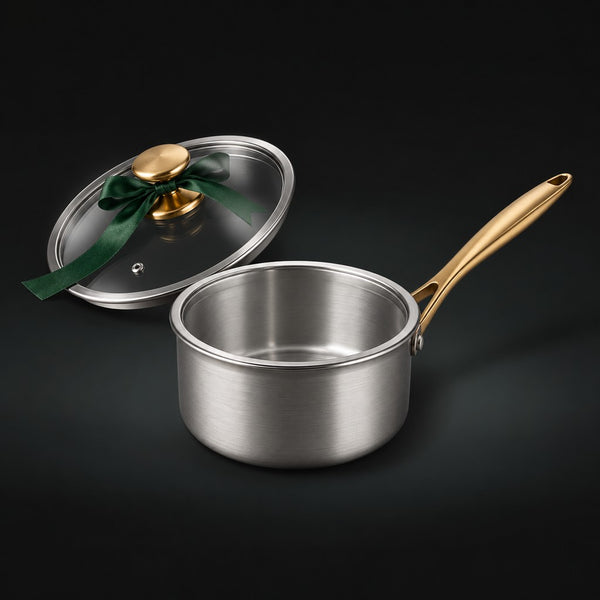
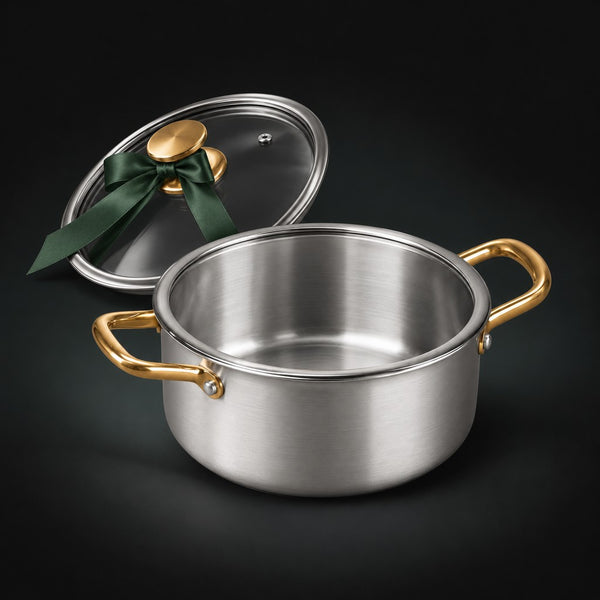
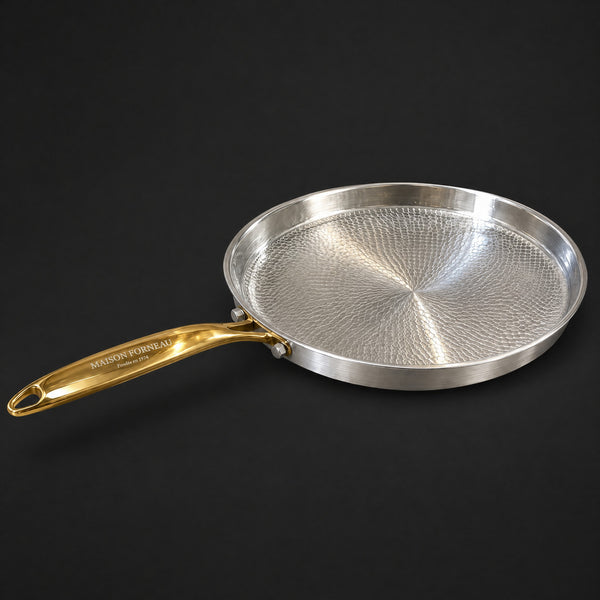
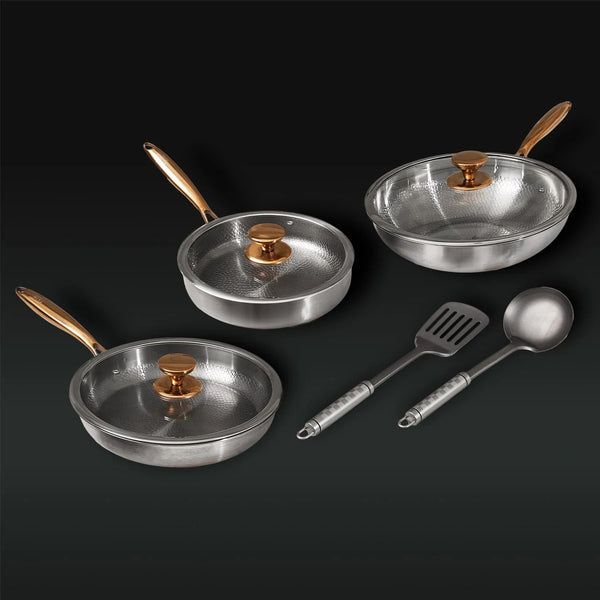
Forneau pans, saucepans, and woks use a 100% titanium pure grade 1 cooking surface: a full layer, not a coating, so there's nothing to flake off into food. Underneath, three recycled aluminum cores spread heat evenly and a stainless steel base makes it induction-compatible. Titanium does get scratched with use, but a scratch is cosmetic, it doesn't release anything, unlike a chipped nonstick layer. The honest trade-off: like stainless, raw titanium needs a short preheat and a little fat before food releases cleanly. More on how this surface compares to classic nonstick in our guide on titanium pans and PFAS.
How to verify a product is truly PFAS-free
Marketing claims alone aren't enough anymore, as the HexClad settlement showed. Here's what actually tells you something:
- Check the cooking surface material, not just the label. "Non-toxic" or "PFAS-free" printed on a box doesn't guarantee the full supply chain was verified; ask what the surface actually is.
- Look for a full metal layer, not a coating. If a brand can't tell you the exact composition of each layer, that's a red flag.
- Favor brands with a lifetime warranty on the cooking surface. A warranty that only covers the handle or base, not the surface, suggests the maker expects that surface to wear out.
- Be skeptical of greenwashing language. Terms like "eco," "green," or "natural" without a stated material (steel, cast iron, titanium, ceramic) are marketing, not proof.
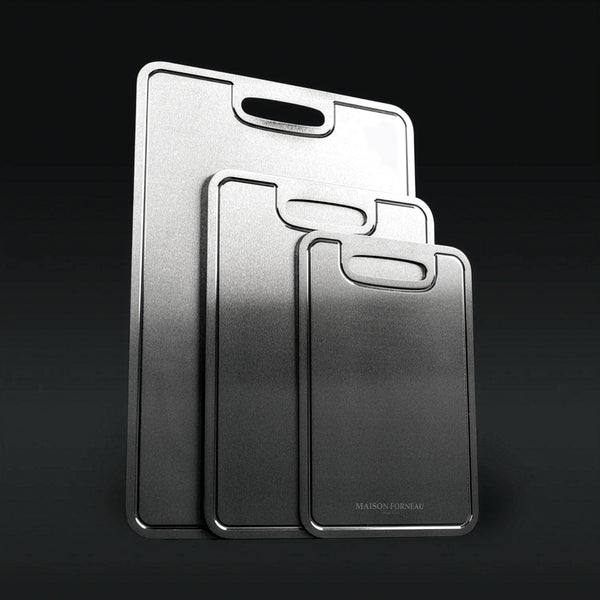
- Check if the cutting board and utensils match. A kitchen that's PFAS-free on the pan but not on the board or spatula hasn't solved the whole problem; see our notes on titanium cutting boards and hygiene.
For a broader comparison of what counts as genuinely non-toxic cookware in 2026, see our guide on non-toxic cookware and our dedicated page on PFAS-free pans.
Frequently asked questions
What exactly are PFAS?
PFAS are a family of thousands of synthetic chemicals built on a very strong carbon-fluorine bond, which makes them resist breaking down in the environment or the body. That persistence is why they're called forever chemicals, and why some, like PFOA, have been phased out of cookware manufacturing.
Does Teflon contain PFAS?
Yes, Teflon is a brand name for PTFE, which is itself part of the PFAS family. Intact PTFE is generally considered chemically inert by regulators, but older manufacturing processes historically used PFOA, a different PFAS now phased out by major producers.
How can I tell if a kitchen tool is really PFAS-free?
Check the actual material of the cooking surface, not just a label claim, since lawsuits like the HexClad settlement showed that marketing and composition don't always match. Solid metals like stainless steel, cast iron, and titanium are naturally PFAS-free because there's no coating at all.
Are PFAS dangerous for health?
Health authorities including the FDA and EPA have linked long-term, high exposure to certain PFAS compounds to potential health effects, including acting as endocrine disruptors. The main cookware-related risk comes from damaged or flaking coatings, not from an intact nonstick surface.
Which cookware is naturally PFAS-free?
Stainless steel, cast iron, and solid titanium cooking surfaces are PFAS-free by design, since they're bare metal rather than a coating. Each has a trade-off: stainless and titanium need preheating and a bit of fat, while cast iron needs ongoing seasoning.
Why do nonstick pans eventually stick anyway?
Every coating, ceramic or PTFE, wears down with scraping, heat, and dishwasher cycles, and once it degrades, both the nonstick effect and the safety of an intact surface are gone. A full titanium cooking surface doesn't have this failure point, because there's no separate layer to wear through, though it does get cosmetically scratched over time.
