

















Fact-checked: composition and sources on our Facts & evidence page.
- 4.9/5 from over 5,000 reviews
- Lifetime warranty
- Ships within 48 h
- Free shipping
A side-by-side look at what actually makes a cookware set titanium in 2026 — and why most "titanium" pans on the market are still coated pans wearing a titanium label.
The essentials in 30 seconds
- A true titanium cookware set has a pure grade 1 titanium cooking surface, uncoated, not a coating
- Our Place Titanium Pro and most "titanium" lines use a reinforced nonstick coating that wears down
- Forneau's titanium surface has no PFAS, no PFOA, no PTFE, and nothing to flake into food
- Works on induction, electric and gas thanks to an aluminum core and stainless steel base
- Titanium scratches cosmetically but needs preheating and a little fat to release food well
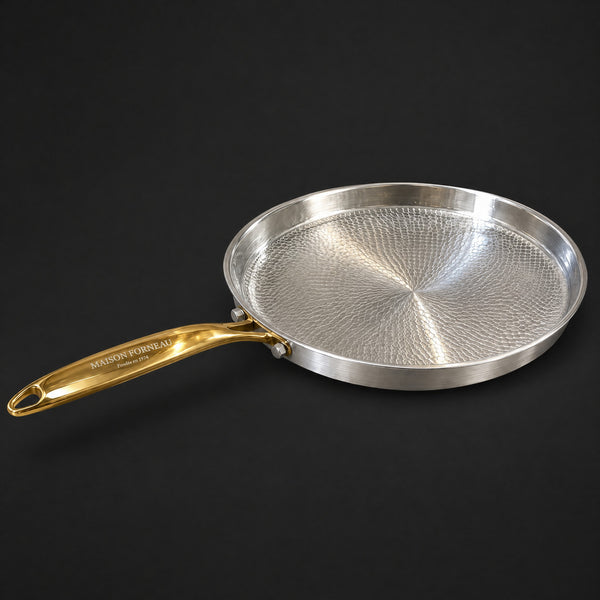
The best titanium cookware set in 2026 is the one where titanium isn't just marketing copy on the box. Most pans sold as "titanium" are actually stainless or aluminum pans with a nonstick coating reinforced with titanium particles — not a pan with a true titanium cooking surface. Forneau's cooking surface is pure grade 1 titanium, uncoated, a full layer, not a coating, which is the detail that separates buy-it-for-life cookware from pans you'll replace in three years.
What makes a cookware set "best" in 2026
After years of PFAS lawsuits and settlements, "best" no longer just means nonstick performance. It means non-toxic, durable, and honest about what's actually touching your food. Reddit threads about ditching Teflon and HexClad settlements show people are done trusting vague "non-toxic" claims — they want to know exactly what the surface is made of.
- No PFAS, PFOA or PTFE in the cooking surface
- A surface that doesn't flake, chip or wear down with use
- Even heating across the pan, not just the center
- Works on the stove you actually have — electric, induction or gas
- Built to last, not to be replaced every few years
A set that checks these boxes is rare. Most "non-toxic" cookware still relies on a coating, which by definition wears down. Forneau's approach is different: the cooking surface is 100% titanium pur grade 1, a solid layer with nothing to peel, flake or release into your eggs.
Good to know
Titanium is harder than most knife steel but not immune to scratches, so expect cosmetic marks over time. They don't flake, they don't leach, and they don't affect food safety — that's the trade-off for a coating-free surface.

Titanium vs Our Place Titanium Pro: side-by-side
Our Place's Titanium Pro line, launched in 2024, is the most talked-about "titanium" release in years — and it's worth being precise about what it actually is. It's a nonstick coating infused with titanium particles over an aluminum body, not a pure titanium cooking surface. That coating gives great glide out of the box, but like any coating, it's designed to wear.
| Feature | Forneau | Our Place Titanium Pro |
|---|---|---|
| Cooking surface | 100% pure titanium, grade 1 | Nonstick coating with titanium particles |
| Coating to wear off | None — it's not a coating | Yes, over time |
| PFAS/PFOA/PTFE | None | Brand states PFAS-free formula |
| Induction compatible | Yes | Yes |
| Scratches | Cosmetic, doesn't affect safety | Scratches can wear into the coating |
| Warranty | Lifetime | Limited |
A coating infused with titanium particles still behaves like a coating: it releases well when new, then slowly loses that nonstick edge as it wears, the same arc people describe when their "non stick set is finally giving up" faster than expected. A pure titanium surface doesn't have that wear curve because there's no coating to wear through in the first place.
Titanium vs Heritage Steel: the Made-in-USA argument
Heritage Steel is a legitimate option for buyers who want fully American-manufactured, PFAS-free stainless cookware, and its five-ply stainless construction is genuinely durable. But stainless steel is not titanium, and it comes with the classic stainless problem Reddit cooks complain about constantly: food sticking to a hot pan no matter the technique.
Forneau is designed in France, not manufactured in the US, so if domestic manufacturing is a hard requirement, Heritage Steel wins that specific point. But if the goal is a non-coated, non-stainless cooking surface that releases food more easily than bare stainless while staying just as free of PFAS, titanium is the material built for that job, not steel reinforced with marketing.
« They just settled a lawsuit for lying to consumers about their pans being pfas and pfoa free »
r/BuyItForLife
Compatibility with electric, induction and gas ranges
A titanium cooking surface alone wouldn't heat evenly or work on induction — titanium itself is a poor conductor. That's why a real titanium pan needs engineering underneath: Forneau pans use three layers of recycled aluminum core beneath the titanium surface to spread heat evenly, with a stainless steel base on the bottom to make the pan induction-ready.
- Induction: yes, via the stainless steel base
- Electric coil or glass-top: yes, full contact with a flat base
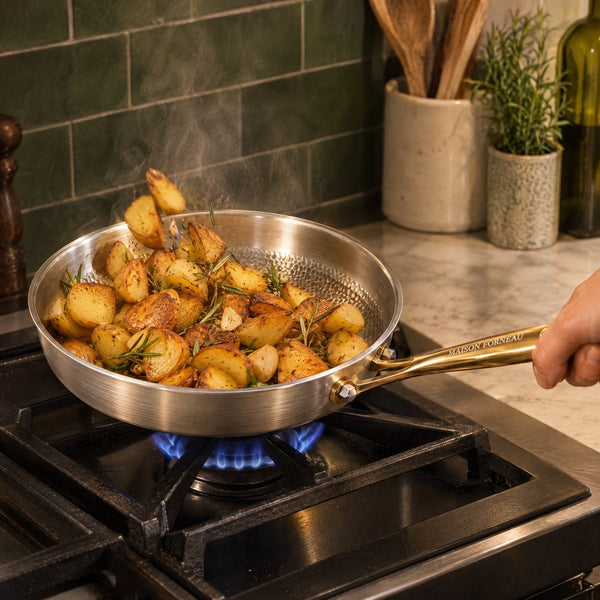
- Gas: yes, aluminum core spreads the flame's heat evenly
This is the part people miss when they assume "titanium" means titanium all the way through. It doesn't, and it shouldn't — a pan made entirely of titanium with no aluminum core would heat unevenly and be far heavier. The titanium is where it needs to be: on the cooking surface, where food actually touches metal.
Price breakdown in USD per piece
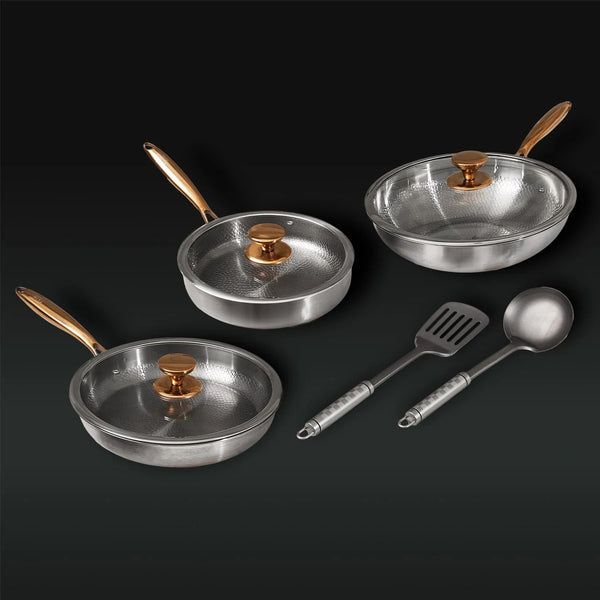
Full sets are rarely the best way to buy cookware — most home cooks use two or three pans on repeat and let the rest sit in a cabinet. Buying individual pieces as you need them, starting with a frying pan or sauté pan, is usually the smarter way to test a titanium surface before committing to a full set.
- Frying pan: entry point for most buyers, used daily
- Sauté pan: for searing and dishes with sauce
- Wok: for high-heat, fast cooking
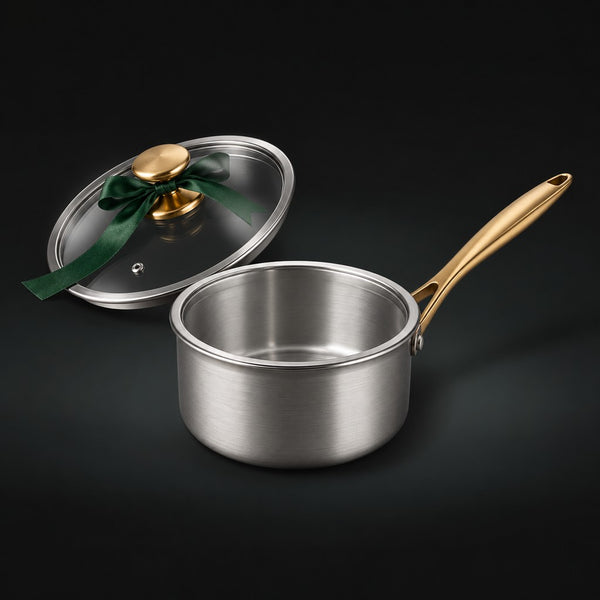
- Saucepan: for sauces, grains and reheating
Compare that to constantly replacing a $40 nonstick pan every 18 months as the coating fades — the lifetime warranty on a titanium pan changes the math over a decade, even if the upfront piece price is higher.
What reviewers on Reddit and forums actually say
The recurring theme across cookware forums isn't really about titanium specifically — it's about trust. After HexClad's settlement over PFAS claims, people are reading ingredient lists and material specs more carefully than ever. The phrase "buy it for life" comes up constantly, alongside skepticism toward any brand that doesn't clearly explain what its surface is made of.
Common threads people raise:
- Distrust of "non-toxic" claims that aren't backed by a clear material breakdown
- Frustration with coatings that looked great on day one and failed within a year
- A preference for materials that are durable even if they come with a learning curve
- Skepticism toward anything that sounds gimmicky or over-marketed
A pure titanium surface answers most of that skepticism directly: there's no coating to make claims about, because there's no coating at all.
Who should buy a full set vs a single pan
If you're replacing a dying nonstick set and want to go non-toxic for good, a full set makes sense — it gets your whole kitchen off coated pans in one move. If you're cautious or just curious about a bare metal cooking surface for the first time, starting with one frying pan or sauté pan is the lower-risk way to learn the small habits titanium asks for: preheating the pan and using a bit of oil or butter before food goes in.
That one adjustment is the honest trade-off of a coating-free surface. It's a small habit, and it's the only one — in exchange, there's nothing to flake off, no PFAS, no PTFE, and a surface that's still the same pure titanium years from now, scratches and all.
For more on how the different layers work together, see our full guide to titanium cookware sets, our detailed Our Place Titanium Pro comparison, our breakdown of HexClad vs. pure titanium, and our sauté pan buying guide.
Frequently asked questions
What is the best titanium cookware set in 2026?
The best set is one where the cooking surface is pure titanium, not a nonstick coating with titanium particles added. Forneau's surface is 100% grade 1 titanium with no PFAS, PFOA or PTFE, backed by a lifetime warranty.
Is Forneau better than Our Place Titanium Pro?
Forneau's cooking surface is pure titanium with nothing to wear through, while Titanium Pro is a nonstick coating reinforced with titanium particles that will wear down like any coating over time. If a non-coated surface matters to you, Forneau is the one built that way from the start.
Does titanium cookware work on electric stoves?
Yes. The titanium surface sits on top of an aluminum core that spreads heat evenly, with a stainless steel base underneath, so the pan works on electric, induction and gas ranges.
How much does a full titanium cookware set cost?
Pricing depends on which pieces you choose — frying pan, sauté pan, wok and saucepan are typically priced individually rather than bundled, so you can build a set piece by piece based on what you actually cook most.
Does titanium cookware scratch?
Yes, titanium scratches like any metal surface. The marks are cosmetic and don't affect food safety since there's no coating to wear through or flake into food.
Is titanium cookware non-toxic?
A pure titanium cooking surface has no PFAS, PFOA or PTFE, and nothing to leach or flake into food, which is why it's increasingly the material people switch to after ditching coated nonstick pans.
